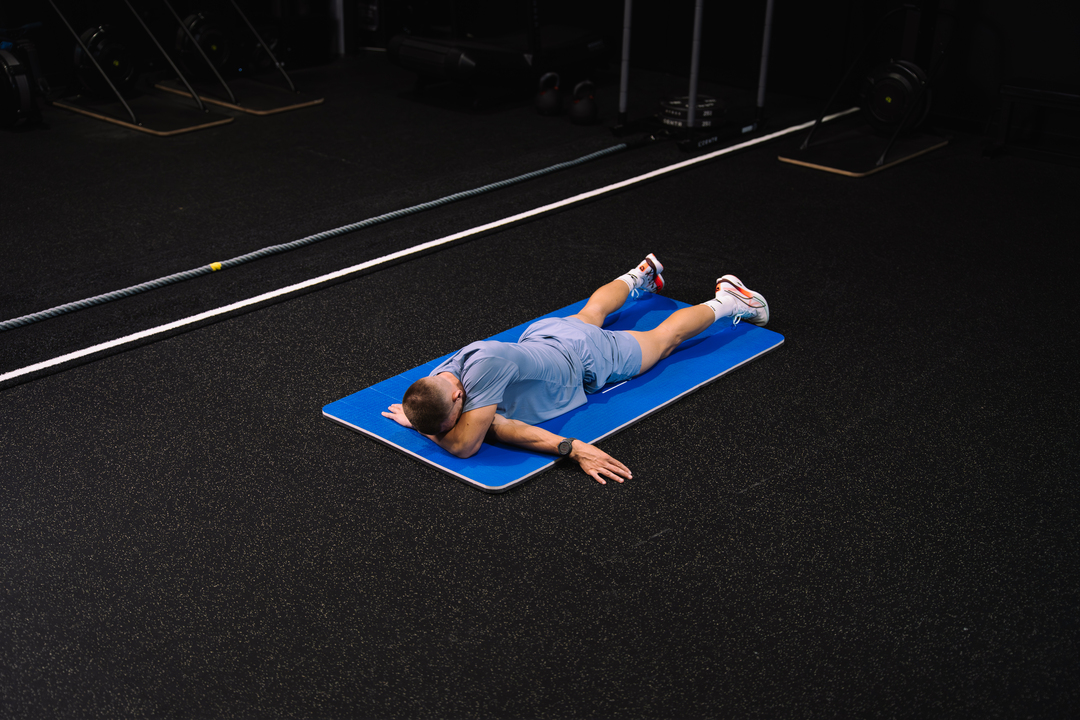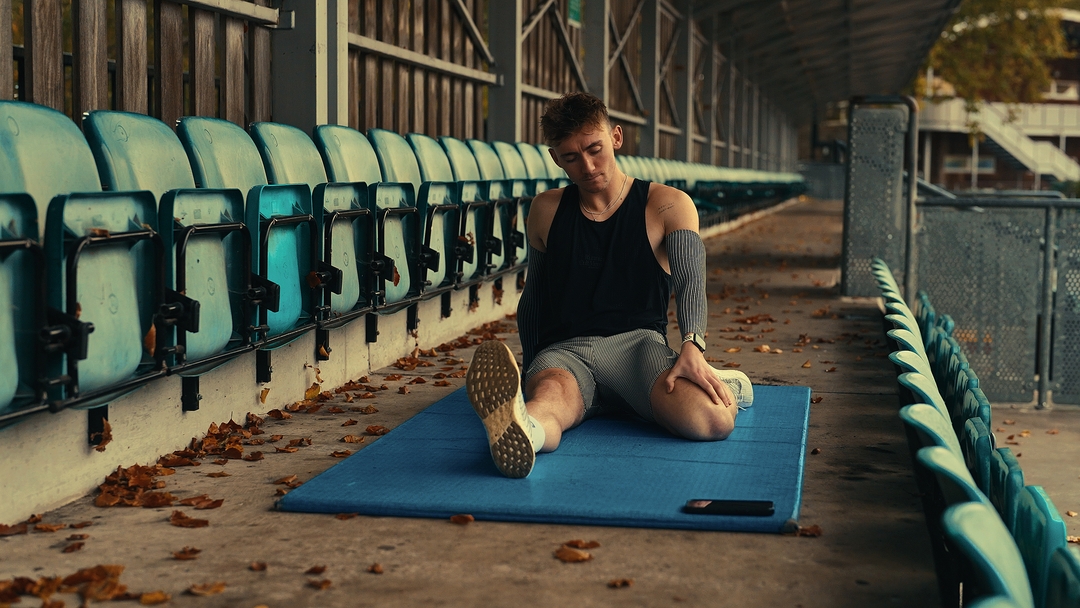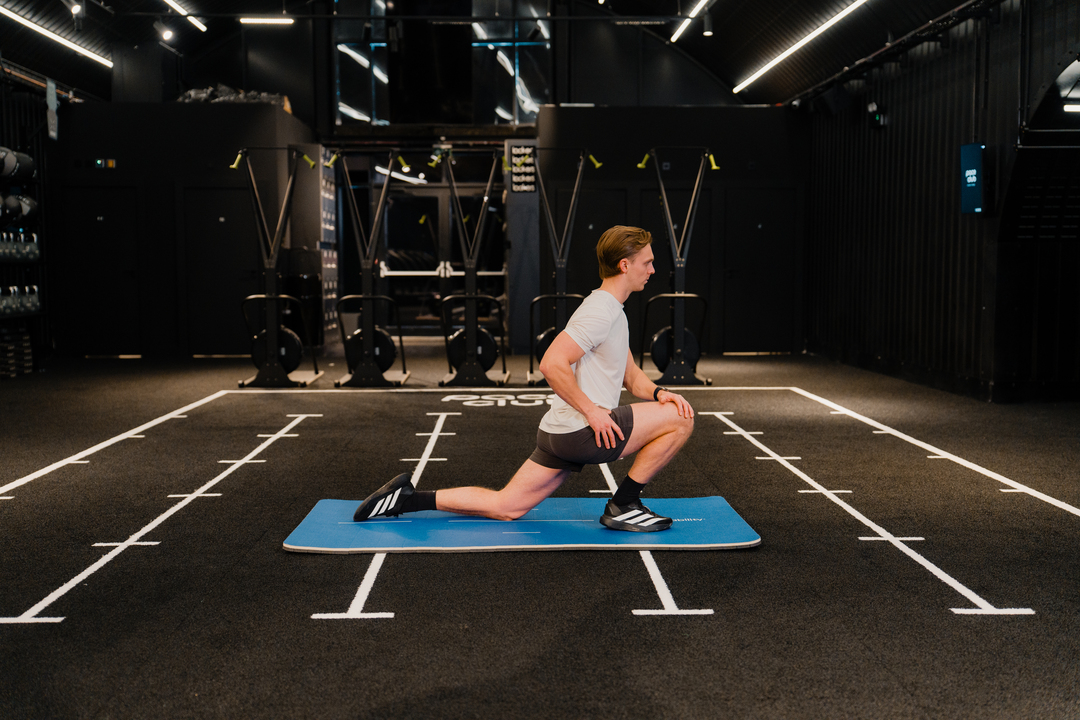
20 Ankle Injury Prevention Exercises to Strengthen and Stabilize
.webp)
Whether you're a weekend warrior, a dedicated athlete, or someone who simply wants to stay active without constantly worrying about rolling an ankle, the truth is that ankle injuries can derail your progress faster than almost any other setback. Weak or unstable ankles leave you vulnerable during every run, jump, cut, or even casual walk on uneven ground. This article outlines practical ankle injury-prevention exercises that strengthen and stabilize this often-overlooked joint, helping you build resilience so you can train harder, move with confidence, and avoid the frustration of repeated sprains or chronic pain.
The good news is that you don't need to figure this out alone or spend hours searching for the right mobility drills and strengthening routines. Pliability's mobility app provides structured guidance through targeted exercises designed to bulletproof your ankles, improve your balance, and enhance the stability you need for peak performance. Instead of guessing which movements actually work, you'll get clear direction on building ankle strength and flexibility that translates directly to fewer injuries and better movement in everything you do.
Summary
- Daily ankle sprains affect 25,000 Americans, according to WebMD, and these injuries aren't limited to athletes or weekend warriors. Half of all ankle sprains occur during non-athletic activities such as walking on cracked sidewalks, stepping off curbs, or navigating stairs in dim lighting. The vulnerability arises because most people never strengthen stabilizing muscles, improve proprioception, or address limited mobility that leads to compensatory movements under unexpected stress.
- Forty percent of ankle sprains lead to chronic ankle instability, creating a cycle where each injury weakens ligaments, reduces proprioception, and makes re-injury twice as likely within the first year. People caught in this pattern aren't unlucky. They're dealing with inadequate rehabilitation that leaves stabilizing muscles weak and ankle mobility restricted long after pain and swelling subside.
- Balance training exercises reduced ankle injury rates by 68% in soccer players, according to a systematic review in the Journal of Physiotherapy. That reduction comes from addressing specific weaknesses: proprioception, which allows your body to sense and correct foot position before a roll becomes a sprain; multi-directional strength, which absorbs forces that ligaments alone can't handle; and dynamic stability, which maintains joint position during sudden movements.
- Footwear directly influences ankle health in ways most people ignore until injury forces the issue. High heels shorten calf muscles and Achilles tendons over time, reducing dorsiflexion range and creating compensatory patterns. Flip-flops provide no lateral support, forcing the foot muscles to work overtime just to keep the shoe attached.
- Walking or running on varied surfaces like grass, sand, and trails builds ankle adaptability that flat, predictable terrain never provides. The instability isn't dangerous at controlled speeds with attention to foot placement. It becomes a training stimulus that teaches stabilizers to handle unpredictability through repeated exposure.
Pliability's mobility app addresses these vulnerabilities by using body scanning to detect tight areas and mobility restrictions, then delivering daily routines with video guidance that target your specific limitations rather than generic programming.
Why Ankle Injuries Happen (and Why Prevention Matters)
.jpg)
Ankle injuries don't discriminate. They happen to marathon runners and desk workers, to teenagers on basketball courts and parents chasing toddlers across uneven playground surfaces. According to WebMD, 25,000 ankle sprains occur daily in the United States. That's not a sports epidemic. That's a human movement problem affecting everyone who walks, runs, or navigates stairs.
Ankle Injuries are Predictable
Ankle injuries don't happen because you're unlucky or careless. They happen because the architecture supporting your ankle has been quietly weakening, often for months or years, until one wrong step on an uneven surface exposes what was already fragile.
According to the National Athletic Trainers' Association, ankle sprains account for approximately 2 million injuries annually in the United States. Most of those injuries weren't inevitable. They were predictable.
The Myth That Ankle Injuries "Just Happen"
You've probably heard someone say it after rolling their ankle on a curb or twisting it during a pickup basketball game: "It just happened." That phrase implies that ankle injuries are random, like getting caught in the rain without an umbrella.
Something as simple as walking on an uneven surface causes a painful, debilitating sprain, not because the surface was particularly treacherous, but because the stabilizing structures around your ankle weren't prepared for the demand.
The Real Causes Aren't Mysterious
Weak stabilizing muscles around the ankle, particularly the peroneal tendons that run along the outside of your lower leg, fail to provide the dynamic support needed when your foot lands awkwardly. Poor proprioception (your body's awareness of where it is in space) means your ankle doesn't sense and correct for instability quickly enough.
Limited ankle mobility restricts your range of motion, leading to compensatory movements that increase the risk of injury. Repetitive stress from running, hiking, or even standing on hard surfaces all day gradually degrades tissue integrity. Worn-out shoes that have lost their structural support, or unstable footwear such as loose-fitting sandals, reduce the external stability your ankles rely on.
These Factors Don't Work in Isolation
A hiker learned this the hard way at 550 miles into their thru-hike when severe Achilles tendonitis forced them off the trail. The combination of insufficient stretching, worn-out shoes with over 400 miles on them, and pushing 18 to 22 miles daily created the perfect storm.
What followed was 10 months of physical therapy and struggling to reach even 3,000 steps per day. The injury wasn't sudden. It was a cumulative effect, microscopic tears from repeated overstretching that the body couldn't repair fast enough.
Why Athletes and Non-Athletes Both Get Hurt
Half of all ankle sprains occur during athletic activity, meaning the other half occur in people who aren't playing sports. Men between 15 and 24 have higher rates of ankle sprains, but women over 30 surpass men in that age group, and ankle injuries affect people across every demographic.
The belief that only weekend warriors or competitive athletes need to think about ankle strength ignores a basic truth. Your ankles bear your full body weight with every step, whether you're training for a marathon or walking to your car.
Ankle Structure and Stability
The ankle is where three bones meet (the tibia and fibula of your lower leg with the talus of your foot), held together by ligaments that function like strong elastic bands. These ligaments allow normal motion while preventing excessive movement. Tendons attach muscles to bones, enabling movement and providing stability.
When any part of this system weakens, the entire structure becomes vulnerable. You don't need to be an athlete to have weak peroneal tendons or poor proprioception. You just need to have spent years not specifically training those systems.
Why Lateral Ankle Injuries are so Common
Eighty-five percent of all ankle injuries involve the lateral ankle ligaments on the outside of your ankle. This isn't coincidental. The lateral side absorbs most of the stress during side-to-side movements and inward rolling when you step on uneven ground.
Without targeted strengthening and mobility work, these ligaments and the muscles supporting them remain underprepared for the forces they'll eventually face.
The Compounding Cost of Ignoring Prevention
The immediate pain of an ankle sprain is obvious, including sudden, severe discomfort, swelling, bruising, and often an inability to walk or bear weight on the injured joint. With a severe sprain, the pain is typically intense, and the ankle becomes stiff, limiting your range of motion. But the acute injury is only the beginning of the problem.
The Cycle of Re-Injury
Strong evidence shows that you increase your risk of re-spraining your ankle two-fold within the first year after the initial injury. That statistic reveals a critical point: ankle injuries create a cycle. Once the stabilizing structures are damaged, they don't automatically return to their pre-injury strength without proper rehabilitation.
Chronic instability and weakness develop, leaving you vulnerable to the next twist or roll. Tendinosis, a condition in which microscopic tendon tears accumulate without proper healing, can take years to develop and causes intermittent pain, weakness, and progressive dysfunction.
The Hidden Cost of Ankle Sprains
The financial burden is substantial as well. Every year in the US, lateral ankle sprains affect 2.15 out of every 1,000 people, resulting in $2 billion in healthcare costs. More than 1 million people visit emergency rooms each year for ankle injuries.
These aren't just statistics. They represent lost work days, disrupted training schedules, abandoned recreational activities, and the quiet frustration of not being able to move through life without pain or hesitation.
When Confidence in Movement Is Lost
Recurrent sprains lead to reduced athletic performance, longer recovery times with each subsequent injury, and the nagging sense that your body can't be trusted anymore. You start avoiding activities you love, not because you've lost interest, but because you've lost confidence in your ankles' ability to support you.
Prevention Isn't Optional, It's Foundational
Routinely practicing targeted ankle exercises improves overall ankle strength, providing better support and stability for the joint. Enhanced stability directly improves proprioception, giving you better balance and faster reflexes when your foot lands on an unexpected surface. Adding stretches to your routine reduces the risk of strain and overuse injuries by maintaining tissue elasticity and promoting circulation that speeds recovery.
Simple Work That Prevents Serious Injury
These aren't complicated interventions. Dynamic stretching before activity helps warm up and prepare muscles, tendons, and ligaments for the demands ahead.
Static stretching afterward, especially when muscles feel tight, helps maintain mobility and prevents the chronic tightness that gradually restricts your ankle's range of motion. Strengthening the peroneal tendons specifically builds lateral stability, which protects against the most common injury pattern.
Prevention vs. Damage Control
The alternative to prevention is reactive. You wait until pain forces you to stop, then spend months in physical therapy trying to rebuild what you could have maintained with consistent, proactive work.
You replace the shoes you should have retired 200 miles ago. You finally start the stretching routine you skipped because you were tired or in a hurry. But by then, you're not preventing injury anymore. You're managing damage.
Building Injury Resistance Before Pain Starts
Solutions like the Pliability approach this differently, treating mobility work not as rehabilitation after injury but as essential infrastructure before problems develop. Guided video routines target ankle strength, balance, and flexibility, using movements designed to address the weak points that lead to sprains.
Sessions adapt to your schedule, some lasting just a few minutes, making consistency achievable even when time is limited. The focus isn't on recovering from injury. It's about building a body that doesn't get injured in the first place.
Related Reading
- Injury Prevention Strategies
- What is Injury Prevention
- Cold Therapy for Athletes
- Can Tennis Elbow Cause Shoulder Pain
- Basketball Injury Prevention
- How to Prevent Pickleball Injuries
- How To Stop Wrist Pain From Lifting Weights
- Most Common Tennis Injuries
- How to Prevent Knee Pain When Running
- How Can You Prevent Injury While Cycling
- Injury Prevention for Athletes
20 Core Ankle Injury Prevention Exercises
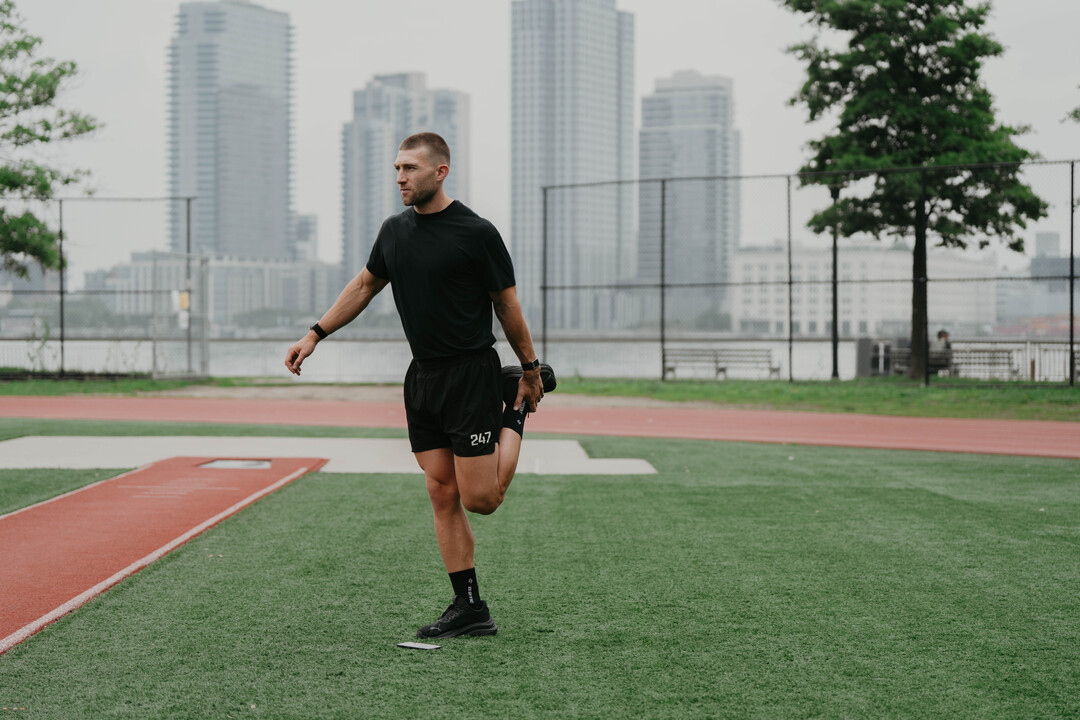
1. Single-Leg Balance
Stand on one leg for 30 seconds, then switch. For a challenge, close your eyes or stand on a soft surface, such as a pillow. This simple move builds proprioception (your body's awareness of where your foot is in space) and improves stability by forcing the small muscles around your ankle to constantly adjust and correct your position.
2. Heel-to-Toe Walk
Walk in a straight line, placing the heel of one foot directly under the toes of the other. This helps improve ankle alignment and control by challenging your balance through each step. The narrow base of support requires precise ankle positioning and strengthens the stabilizers that keep you upright on uneven ground.
3. Dorsiflexion with Resistance Band
Secure a resistance band for ankle fracture recovery around a stable object and loop it over your foot. Pull your toes toward your shin while resisting the band. This strengthens the front of the ankle (the tibialis anterior muscle), which controls how your foot strikes the ground and helps prevent your ankle from rolling inward during landing.
4. Plantar Flexion with Resistance Band
Reverse the motion by pressing your toes down against the band, mimicking a gas pedal motion. Great for rebuilding strength post-injury, this targets your calf muscles and Achilles tendon, which provide the power for pushing off during walking, running, and jumping.
5. Ankle Inversion and Eversion with Resistance Band
Attach the band sideways and move your foot inward (inversion) and outward (eversion). These movements target the supporting muscles on both sides of the ankle. Inversion strengthens the muscles that prevent outward rolling, while eversion strengthens the peroneals that protect against the most common mechanism of ankle sprain (inward rolling).
6. Towel Scrunches
Place a towel on the floor and scrunch it toward you using only your toes. These athlete ankle sprain exercises with a towel activate the foot and ankle's small stabilizing muscles, particularly the intrinsic foot muscles that create a stable foundation for all ankle movements. Perform 15-20 repetitions per foot.
7. Calf Stretch
Stand facing a wall, place one foot behind the other, and gently press your back heel to the floor. Hold for 20-30 seconds. These stretching exercises for ankle pain help reduce tension in the Achilles and calf, which, when tight, limit ankle dorsiflexion and force compensatory movements that increase injury risk.
8. Seated Achilles Stretch
Sit with one leg extended and a towel wrapped around the ball of your foot. Gently pull the towel toward you. This stretch supports the Achilles and reduces ankle tightness without placing weight-bearing stress on the joint, making it ideal during early recovery phases or for those with limited mobility.
9. Ankle Circles
While seated or lying down, slowly rotate your ankle in a full circle (10 times in each direction). These ankle stretches for pain improve mobility and lubricate the joint by moving synovial fluid through the ankle's full range of motion. The controlled rotation also helps maintain cartilage health and reduce stiffness.
10. Seated Foot Flexes
Extend your leg and flex your foot toward and away from your body. Perform slowly for 10-15 reps. This builds control and helps ease stiffness by strengthening the muscles that move your ankle through its primary planes of motion without load, perfect for maintaining mobility during desk work or long flights
11. Ankle Alphabet
Sit in a chair with your feet flat on the floor (you can also do this lying on your back with your affected leg propped on a pillow). Lift the heel of your affected foot off the floor, and slowly trace the letters of the alphabet. This exercise combines mobility work with proprioceptive training, requiring precise control through multiple movement patterns. Repeat with your other foot.
12. Side-to-Side Knee Swing
Sit in a chair with your affected foot flat on the floor. Slowly move your knee from side to side while keeping your foot pressed flat. Continue this exercise for 2-3 minutes. This movement targets ankle eversion and inversion strength while the foot remains grounded, building stability through a functional range of motion. Repeat with your other foot.
13. Resistance Band Exercises
Wrap a resistance band around a sturdy object, sit down, and loop the other end around your forefoot. Flex your foot against the band's resistance, then point it away from you. Repeat this motion to target the muscles that support the ankle through its sagittal plane movements (forward and backward). Perform 12-15 repetitions for 2-3 sets.
14. Ankle Eversion
Sit in a chair with your affected foot flat on the floor and next to a wall or a piece of furniture that doesn't move. Push your foot outward against the wall or piece of furniture. Hold for about 6 seconds, and then relax. Repeat 8-12 times. After you feel comfortable with this, try using an exercise band for resistance instead of a wall.
Place the loop around the outside of your affected foot, then step on the band with your other foot. Push your affected foot to the side against the band, then count to 10 as you slowly return it to the center. Repeat 8-12 times. Then repeat the steps with your other foot.
15. Ankle Opposition (Isometric)
Sit up straight with your feet together, flat on the floor. Press your affected foot inward against your other foot. Then place the heel of your other foot on top of the affected foot. Push up with your affected foot against the heel of your other foot.
Your muscles will tighten, but your affected foot should not move up. Hold for about 6 seconds, and then relax. Repeat 8-12 times. This isometric exercise builds strength without joint movement, reducing stress during early rehabilitation while still activating stabilizing muscles. Repeat these steps with your other foot.
16. Resisted Ankle Inversion
Sit on the floor with your legs straight out in front of you. Cross your good leg over your affected leg. Hold both ends of an exercise band in one hand and loop the band around the inside of your affected foot. Then press your other foot against the band.
Keeping your legs crossed, slowly push your affected foot against the band until it moves away from your other foot. Then slowly relax. Repeat 8-12 times. This targets the muscles that prevent lateral ankle instability. Repeat these steps with your other leg.
17. Resisted Ankle Eversion
Sit on the floor with your legs straight. Hold both ends of an exercise band in one hand and loop the band around the outside of your affected foot. Then press your other foot against the band.
Keeping your leg straight, slowly push your affected foot outward against the band, away from your other foot, without allowing your leg to rotate. Then slowly relax. Repeat 8-12 times. The peroneals (targeted here) are critical for preventing the inward ankle roll that causes most sprains. Repeat these steps with your other foot.
18. Four-Square Drills
Four-square drills are excellent for improving agility and ankle stability. Start by drawing or laying out a large square on the ground, then subdividing it into four smaller squares. Stand in one square and quickly hop to the next square, moving clockwise or counterclockwise. Focus on landing softly to minimize impact stress on your ankles.
This drill not only enhances your ankle strength but also boosts your quickness and coordination. Perform the drill for about 30 seconds, rest for 30 seconds, and repeat this cycle five times.
19. Resisted Ankle Dorsiflexion
Tie the ends of an exercise band together to form a loop. Attach one end of the loop to a secure object, or close a door on it to hold it in place (or have someone hold one end of the loop to provide resistance). Sit on the floor or in a chair, and loop the other end of the band over the top of your affected foot.
Keeping your knee and leg straight, slowly flex your foot back toward you, pulling on the exercise band. Then slowly return to the starting position. Repeat 8-12 times. This movement strengthens the tibialis anterior, which controls eccentric foot lowering and prevents foot slap during walking. Repeat these steps with your other foot.
20. Front "Push-Out," Front "Push-Up," and Inner "Push-In."
With the chair beside a wall, hold your foot flat on the floor and against the wall. Push the foot against the wall and hold for 3 seconds. For the front "push-up," put your injured foot flat on the floor. Place the heel of the other foot on top of the hurt one. Push down with the heel of your top foot while pushing up with the other foot. Hold for 3 seconds.
For the inner "push-in," keep your feet flat on the floor and push them together. Hold for 3 seconds. Do three sets of 20 reps most days of the week. These isometric exercises build strength in multiple directions without joint movement, making them safe during early recovery while still activating the stabilizing muscles that prevent re-injury.
Related Reading
- Do Muscle Tears Heal On Their Own
- Forearm Strain
- How Can Strengthening Muscles Prevent Injury
- Quad Strain Recovery Time
- Urgent Care For Pulled Muscle
- How To Heal A Calf Strain Quickly
- How To Prevent Hamstring Injuries
- How Long Does a Sprained Knee Take to Heal
- How Does Stretching Prevent Injury
- How To Strengthen Shins For Running
- Athletic Injury Recovery
Tips to Combine Prevention With Everyday Life

Strengthening ankles isn't confined to gym sessions. Balance work integrates seamlessly into moments you're already standing, like brushing your teeth on one leg, waiting for coffee to brew while practicing single-leg holds, or doing calf raises while washing dishes.
These micro-sessions accumulate. Three 90-second balance drills spread throughout your morning routine provide more consistent proprioceptive training than a single 20-minute session you keep postponing.
Making Ankle Training Part of Daily Life
According to the World Health Organization, adults need 150 minutes of moderate-intensity activity per week for basic health maintenance. But ankle-specific work doesn't require dedicated workout blocks. Standing desk users can practice shifting their weight from foot to foot throughout the day.
Parents can turn playground time into balance training by walking across low beams or uneven surfaces alongside their kids. The goal isn't perfection. It's consistent exposure to the small instabilities that force your ankle stabilizers to engage.
How Core and Hip Strength Protect the Ankles
Core and hip strength directly influence ankle stability because your body functions as a kinetic chain. Weak hips force the ankles to compensate during single-leg movements, increasing the risk of injury. Weak cores reduce your ability to maintain upright posture during unexpected balance challenges, placing excess strain on ankle ligaments.
Incorporating exercises such as planks, side planks, and hip bridges into your routine builds upstream strength that protects downstream joints. When your hips can properly stabilize your pelvis during a stumble, your ankle doesn't have to absorb the full corrective load.
The Footwear Decision That Changes Everything
Shoes either support ankle health or undermine it. High heels plantarflex the ankles, which, over time, shorten the calf muscles and Achilles tendons, reducing dorsiflexion range and creating compensatory movement patterns.
Flip-flops and loose sandals provide zero lateral support, forcing your foot muscles to work overtime just to keep the shoe attached, which fatigues stabilizers before you even encounter uneven ground. Worn-out athletic shoes lose their cushioning and structural integrity, typically after 300 to 500 miles of use, so the shock absorption that protects your ankles during impact gradually diminishes.
How Proper Footwear Protects the Ankle
Proper footwear provides three critical elements:
- Adequate arch support that distributes pressure evenly across your foot
- Cushioning that absorbs impact before it reaches your ankle
- Secure fit that prevents your foot from shifting inside the shoe
Athletic Annex, a specialty running store with locations in Carmel, Fishers, and Nora Plaza, uses advanced fitting technology and staff expertise to match runners with shoes that address their specific biomechanics.
The right shoe accounts for your foot shape, gait, and the surfaces you'll be moving on. That specificity matters because a trail-running shoe built for uneven terrain provides different ankle support than a road-running shoe designed for pavement.
Why Activity-Specific Shoes Matter
Activity-specific footwear isn't marketing hype. Basketball shoes have higher ankle collars and reinforced lateral support because the sport demands frequent cutting and jumping.
Hiking boots feature stiffer midsoles and deeper lugs because trails often include roots, rocks, and mud that require different traction and stability than sidewalks. Wearing running shoes on a rocky trail or casual sneakers during a pickup basketball game removes the protection your ankles need for those specific movement demands.
Warm-Up and Cool-Down as Injury Insurance
Most ankle injuries occur when tissues are cold, fatigued, or not prepared for sudden loads. According to research-backed guidance from Yale SOM faculty, dedicating just 30 minutes of exercise per day yields measurable health improvements, but the quality of that movement matters as much as the duration.
Skipping warm-ups to "save time" is a false economy. Five minutes of dynamic movement (leg swings, ankle circles, light jogging) increases blood flow to muscles and ligaments, raises tissue temperature, and activates the neuromuscular pathways that coordinate ankle stability.
Dynamic and Static Stretching for Ankle Health
Dynamic stretching before activity prepares your body for movement by taking joints through their full range of motion under control. Static stretching after activity, when muscles are warm, improves flexibility and reduces tightness from repetitive use.
Holding calf stretches for 30 seconds post-workout lengthens muscle fibers that have been contracting for the past hour, preventing the chronic tightness that limits ankle dorsiflexion and increases Achilles strain.
Cool-Downs Protect Mobility and Reduce Soreness
Cool-downs also signal to your nervous system that intense activity has ended, allowing heart rate and breathing to return to baseline gradually. This transition reduces the buildup of metabolic waste (such as lactic acid) that contributes to next-day soreness and stiffness.
Ankle circles and gentle range-of-motion work during the cool-down maintain joint lubrication and prevent stiffness that can make you more vulnerable during your next training session.
Surface Awareness That Prevents Rolls
Uneven terrain is where most non-athletic ankle injuries occur. Cracked sidewalks, gravel paths, grass fields with hidden divots, wet leaves covering roots. Your ankle's ability to handle these surfaces depends on proprioception (sensing foot position without looking) and reactive strength (correcting position before a roll becomes a sprain). Both improve with exposure, but only if you're paying attention.
Why Pace and Terrain Matter
Hikers who've experienced preventable ankle injuries often discover they were moving too fast for the terrain, not giving their body time to process visual information and adjust foot placement. Trail running on technical terrain requires constant micro-adjustments.
Your foot lands on a rock, your ankle begins to roll inward, and your peroneals fire within milliseconds to correct the position. That correction only works if the muscles are strong enough and the neural pathways are trained through repeated exposure to instability.
Training Ankle Adaptability on Varied Surfaces
Walking or running on varied surfaces (grass, sand, trails) several times per week builds the ankle adaptability that flat, predictable surfaces like treadmills and sidewalks don't provide.
The instability isn't dangerous when you're moving at controlled speeds with attention to foot placement. It becomes a training stimulus. Your stabilizers learn to handle unpredictability, which is exactly what they'll face during the unexpected stumble that would otherwise cause injury.
Take Your Ankle Health Further With Guided Mobility
Ankle strengthening and balance exercises build the foundation, but even consistent practice can miss the subtle mobility restrictions or weak points that increase injury risk. You might be doing calf raises daily without realizing your dorsiflexion is still 3cm short of what your running gait requires.
You might practice single-leg balance without addressing the tight peroneals that limit your ankle's ability to correct an inward roll. These gaps don't announce themselves until the moment your ankle gives out on uneven pavement.
Structured Mobility for Targeted Ankle Strength
Pliability turns scattered exercises into structured programming that identifies exactly where your limitations exist. The app uses body scanning to detect tight areas you may not consciously notice, then delivers daily, data-driven mobility routines with high-quality video guidance that targets those specific restrictions.
Instead of guessing whether you're doing enough or doing the right movements, you get expert-designed sequences that build ankle strength, restore flexibility, and address the root causes of pain and instability. The programming adapts as you progress, ensuring your work translates into real-world stability and injury prevention rather than just temporary relief.
Build Real-World Stability With Pliability
Start your free 7-day trial on iPhone, iPad, Android, or web. Build ankles that can handle the unexpected, move through a full range without compensation, and support the life you want to live without fear of the next roll or sprain.
Related Reading
- How To Fix Lower Back Pain From Running
- How To Prevent Stress Fractures From Running
- Care And Prevention Of Athletic Injuries
- Compression Therapy For Athletes
- Soccer Injury Prevention Exercises
- Best Foam Roller For Runners
- Ankle Injury Prevention Exercises
.jpg)