How Long Does Neck Stiffness Last and When Should I Worry?
.webp)
You've woken up with a crick in your neck that makes turning your head feel impossible, or maybe you slept wrong, and now every movement sends a sharp reminder through your shoulders. Neck stiffness is one of those common ailments that can disrupt your entire day, affecting everything from driving to working at your computer. Understanding how long neck stiffness typically lasts, what factors influence recovery time, and when persistent pain might signal a need for medical attention helps you recover confidently and seek help at the right time.
Most cases of neck stiffness resolve within a few days to a week with proper care, though recovery time depends on the underlying cause and your treatment approach. Simple muscle strains from poor sleeping positions usually improve quickly, while more complex issues may require longer healing periods. Rather than guessing which stretches might help or wondering if you're doing them correctly, Pliability's mobility app offers guided routines specifically designed to ease stiffness and restore your range of motion.
Summary
- Most neck stiffness from sleeping wrong resolves in 1 to 3 days, while muscle strain from activity persists for 3 to 7 days. Cleveland Clinic notes that most cases resolve within one to two weeks, but that timeline assumes you stop doing the things that caused the stiffness in the first place. If you continue hunching over your laptop or sleeping on an unsupportive pillow, the clock resets, and you cycle through the same pattern with brief reprieves.
- Your head weighs roughly 10 to 12 pounds, and when positioned directly over your spine, your neck muscles exert about 12 pounds of force. Move your head forward two inches (the position most people adopt while working at a computer), and those muscles now exert 32 pounds of force. Spend six hours a day with your head two inches forward, and your neck muscles are working three times harder than they're designed to, creating chronic tension that never quite releases.
- Stretching provides temporary relief but creates dependency when done without strengthening. Tight muscles often result from weakness elsewhere, with neck muscles tightening to stabilize joints that lack proper support from deeper stabilizers. The moment you return to your desk after stretching, weak stabilizers fail again, and superficial neck muscles re-engage to compensate, requiring you to stretch constantly just to maintain baseline function.
- Research from the Institute for Quality and Efficiency in Health Care shows that addressing neck dysfunction is often essential for full shoulder recovery when both restrictions coexist. Treatment that ignores this relationship leaves a key component unresolved, which is why shoulder pain keeps cycling back even after weeks of dedicated stretching.
- Recovery speed depends on what you do in the first 72 hours and whether you address the mechanical cause alongside symptoms. Slow neck rotations, side bends, and chin tucks performed every two to three hours during the initial phase maintain blood flow and prevent joints from locking further. These movements should feel like exploration rather than stretching, with small, frequent inputs mattering more than intensity.
- Pliability's mobility app addresses this by providing guided routines that systematically target neck and shoulder restrictions and the postural patterns that create them, turning reactive symptom management into proactive movement restoration.
How Long Does Neck Stiffness Usually Last?
Mild stiffness from sleeping in the wrong position typically resolves in 1 to 3 days, while muscle strain from activity lasts 3 to 7 days. Poor posture or desk-related tension tends to recur or persist, whiplash or injury may require weeks to months to heal, and underlying medical causes persist until you receive proper treatment.
"The duration of neck stiffness varies significantly based on the underlying cause, with minor issues resolving in days while serious injuries may require weeks to months of recovery." — Clinical Guidelines, 2024
🎯 Key Point: Most neck stiffness from everyday causes like sleeping wrong or minor strain resolves within a week with basic self-care measures.
⚠️ Warning: If your neck stiffness persists beyond 7-10 days or worsens despite rest, it's essential to seek professional evaluation to rule out more serious underlying conditions.
Why does neck stiffness sometimes persist longer than expected?
Cleveland Clinic notes that most cases improve within 1 to 2 weeks, provided you stop the behaviours causing stiffness. If you continue hunching over your laptop, sleeping on an unsupportive pillow, or carrying unprocessed stress in your shoulders, the timeline resets. You're not healing; you're cycling through the same pattern with brief breaks.
How does ignoring neck stiffness affect your daily movement?
Letting neck stiffness persist can trigger a chain of problems. Your range of motion shrinks: you stop checking blind spots while driving, twist your whole torso to look over your shoulder, or tilt your head awkwardly to read your phone. Headaches follow—that dull pressure at the base of your skull that pain medicine barely relieves. Shoulder pain creeps in as those muscles compensate for work your neck can no longer perform.
What happens to your sleep and recovery patterns?
Sleep becomes harder. You wake multiple times searching for a pain-free position, leaving you tired the next day, which worsens your posture and perpetuates the cycle. Your upper back starts hurting from tension patterns developed to avoid moving the painful areas.
How does chronic neck stiffness build throughout the day?
Chronic neck stiffness may not seem as serious as sudden neck pain, but it can be equally difficult to manage. It worsens throughout the day, intensifies when you're stressed, and flares after exercise: a constant mild discomfort that affects your movement and quality of life.
What happens when your neck muscles go into spasm?
When you wake with intense, pinchy pain that makes lifting your head off the pillow feel impossible, you're experiencing muscle guarding. Your neck muscles have gone into spasm, and the joints they surround become stuck, unable to move because the muscles won't release. This acute response typically lasts three to seven days with proactive treatment.
How does inflammation compound the problem?
Swelling exacerbates the problem. When tissue is injured or overworked, it swells and irritates surrounding nerves, which restricts movement. Your body sends extra fluid to the area to support healing, but that fluid can create pressure. When the small joints between your vertebrae don't move smoothly, even turning your head requires more effort and causes more pain.
Why does nerve irritation extend the timeline?
Nerve irritation extends the timeline further. Compressed or inflamed nerves send sensations down your arm, into your shoulder blade, or up into your head. These patterns persist long after the original problem resolves if the underlying compression remains unfixed.
What's the difference between acute and chronic neck stiffness?
Acute neck stiffness happens suddenly from turning your head the wrong way, sleeping in an awkward position, or a sharp catch during exercise. It typically follows a predictable pattern: intense pain for one to two days, gradual improvement over three to five days, and near-complete relief within a week. Activity level during the first 48 hours significantly affects recovery speed.
Chronic stiffness builds slowly over weeks or months, often so gradually that you don't notice until it becomes constant. It rarely has a single cause; instead, it builds on sustained poor posture, unresolved emotional tension, breathing pattern dysfunction, or core weakness that forces your neck to stabilize your body rather than stay mobile. Clients seeking help for chronic neck stiffness have typically dealt with it for years.
Why do acute and chronic cases need different approaches?
The distinction matters because solutions differ. Acute cases respond to rest, gentle movement, and avoiding aggravating positions. Chronic cases require identifying and changing the underlying patterns that perpetuate the problem.
What does forward head posture do to your neck muscles?
Your head weighs roughly 10 to 12 pounds. When it sits directly over your spine in neutral alignment, your neck muscles use about 12 pounds of force to keep it upright. Move your head forward two inches—the position most people adopt while working at a computer or scrolling their phone—and those muscles now use 32 pounds of force. Four inches forward? 42 pounds.
Spend six hours a day with your head two inches forward, and your neck muscles work three times harder than designed. This chronic overload creates persistent tension and morning stiffness that sleep cannot resolve.
How can mobility routines address this workload problem?
For many people who do desk work or use phones frequently, neck stiffness isn't an injury requiring recovery—it's a daily work problem that persists until work habits change. Movement routines targeting neck and shoulder tightness can restore mobility and reduce tension, especially when designed to address the specific patterns created by forward head posture.
How does stress physically manifest in neck muscles?
Muscle and fascia hold mental and emotional stress, with the neck, head, and jaw storing more than most other regions. Unprocessed stress from work deadlines, relationship tension, and financial pressure causes your body to tighten and restrict as it tries to manage what you haven't emotionally processed.
Why do physical treatments fail for stress-related neck tension?
This is why ongoing, unprocessed stress causes lasting neck stiffness. You can stretch, change your pillow, and fix your posture, yet still wake up tight because stress builds tension overnight. Getting better depends less on physical fixes and more on addressing the emotional and mental pressures that cause the physical symptoms.
How does core weakness lead to neck compensation?
A weak core creates a pathway to chronic neck stiffness. Your diaphragm has two jobs: breathing and core stabilization. When it's not working properly for breathing—often due to stress, postural compensations, or habitual stomach-sucking—it also fails at core stabilization.
Your body needs stability to lift, carry, reach, and move through daily activities. When your core fails to provide it, your neck becomes the backup plan, creating stiffness and a level of stabilization it was never designed to handle.
Why does neck stiffness persist despite treatment?
But necks are made to move freely, letting you look in all directions. When they take on a stabilizing role, they become tight over time. You'll notice this if your neck tires out first during core exercises or if it feels sore the day after an ab workout.
This compensation pattern can last for months or years until you rebuild proper core function and breathing mechanics. The neck stiffness won't fully resolve while your neck performs a job it wasn't designed for.
Understanding why conventional fixes keep failing is essential to breaking this cycle.
Related Reading
- How to Relieve Body Stiffness
- Can Neck Stiffness Cause Headaches
- What Causes Neck Stiffness
- Ankle Stiffness
- How To Relieve Body Stiffness
- What Causes Knee Stiffness
- What Causes Muscle Stiffness
- Pain And Stiffness Behind Knee
- What Does Muscle Stiffness Feel Like
- What Causes Stiffness In Legs
Why Your Neck Stiffness Isn’t Going Away
Stiffness continues because you're treating the symptoms while the root causes accumulate daily. Stretching a tight neck without changing how you sit, sleep, or breathe is like bailing water from a boat without plugging the leak. Relief lasts hours or a day, then tension returns because the underlying pattern never changed.
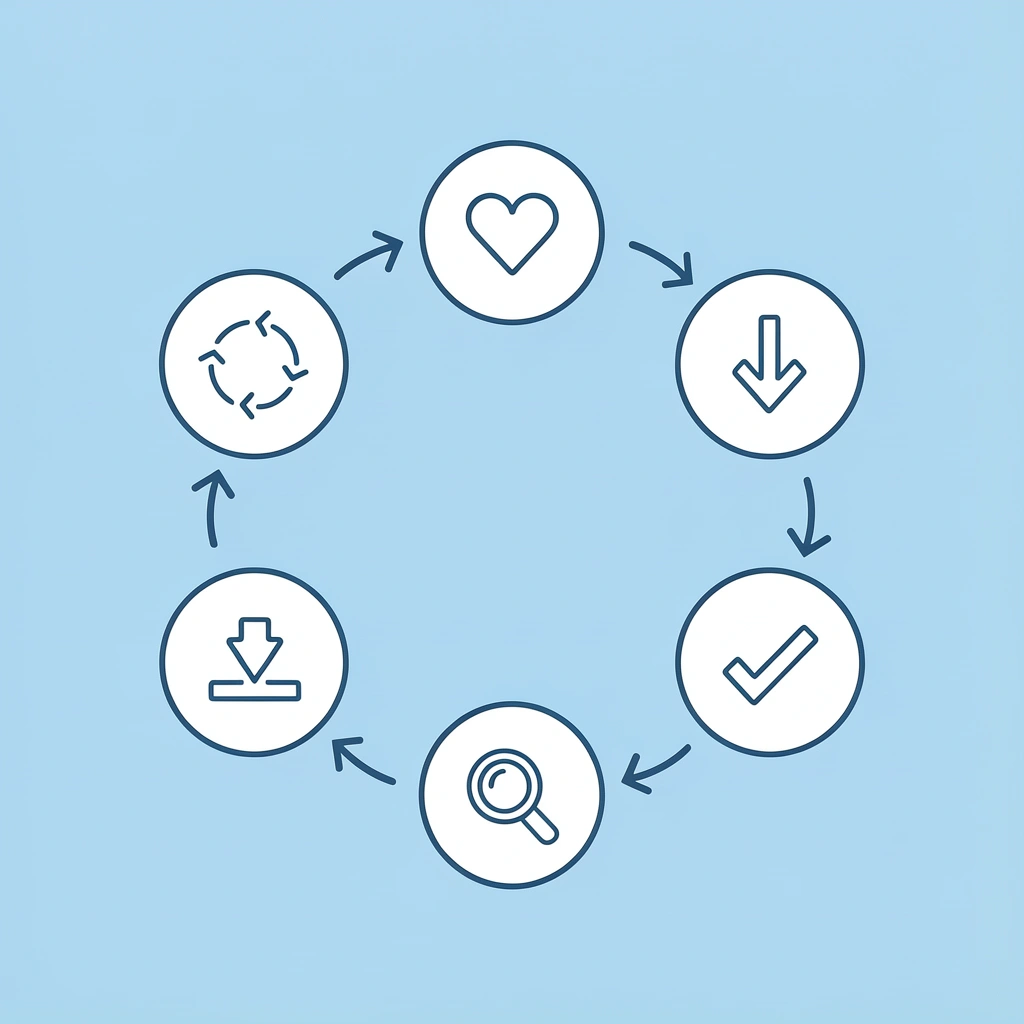
🎯 Key Point: Neck stiffness rarely stands alone. It's the visible result of multiple system failures working together: postural collapse, breathing dysfunction, stress buildup, and movement compensation patterns that reinforce each other in a self-perpetuating loop.
"Temporary fixes like heat packs, massage, and rest don't address why the problem keeps returning."
⚠️ Warning: Without addressing the root causes, you'll find yourself in an endless cycle of temporary relief followed by recurring stiffness. The real problem isn't your neck—it's the daily patterns that keep recreating the same tension.
Why does stretching provide only temporary relief?
You stretch your neck every morning. It feels better for a few hours. By afternoon, the tightness returns. This cycle continues because stretching temporarily lengthens tissue without addressing the underlying cause of the shortening.
How do weak stabilizers create dependency loops?
Tight muscles often result from weakness elsewhere. Your neck muscles tighten to stabilise joints lacking proper support from deeper stabilisers. Stretching provides temporary relief, but returning to your desk or picking up your phone causes the weak stabilisers to fail again, forcing surface neck muscles to compensate.
You've created a cycle in which you constantly need to stretch to keep things working normally.
Why does shoulder mobility restriction affect neck recovery?
The pattern becomes long-lasting when shoulder mobility is restricted. If your neck is stiff and your shoulder lacks range of motion, focusing only on shoulder stretches misses the connection.
According to research from the Institute for Quality and Efficiency in Health Care, addressing neck dysfunction is essential for full shoulder recovery when both neck and shoulder restrictions coexist. This explains why shoulder pain recurs even after weeks of dedicated stretching.
Why does heat without movement lock in restriction?
Heat increases blood flow, relaxes muscle tissue, and temporarily reduces pain signals. However, heat without subsequent movement teaches your body to stay in the restricted position more comfortably, making the dysfunction feel better without changing it.
What happens during the therapeutic window after heat?
Heat works best for about 20 to 30 minutes, when your tissue becomes more flexible and ready to move. If you apply heat and then return to the same position that caused stiffness (hunched over your laptop, head tilted toward your phone), the tissue cools in that tight position, reinforcing the stiff pattern.
How can you pair heat with movement for recovery?
Good recovery means using heat with purposeful movement to help your joints and muscles function properly. Guided mobility routines targeting neck and shoulder tightness can rebuild proper movement patterns after heat application, especially when they address the specific movement problems caused by desk work and forward head posture.
Why does complete rest often backfire for neck stiffness?
It makes sense to rest when something hurts, but resting your neck for too long when it feels stiff often backfires, because your body adapts to poor movement patterns that become your new normal.
How do compensatory movement patterns develop?
When you stop moving your neck to avoid pain, you unconsciously use other areas to compensate. You rotate your entire torso instead of turning your head to check blind spots while driving. You tilt your whole body to the side to look at your phone. These changes train your nervous system to avoid certain movement patterns.
What happens when your brain learns new movement strategies?
After a week of protective rest, your brain has learned a new movement strategy that bypasses your neck. When you finally try to restore normal neck rotation, it feels foreign and difficult because neural pathways have reorganized around the compensation. You haven't healed; you've adapted to dysfunction.
Why does massage provide only temporary relief?
Massage guns, foam rollers, and manual pressure break up adhesions, increase local blood flow, and temporarily reduce muscle tension, with relief lasting 30 minutes to two hours.
What happens when you return to poor posture after a massage?
The problem emerges when you massage tight neck muscles, then return to the posture that created the tension. Your head drifts forward, your shoulders round, and the same mechanical stress pressures the tissue you just released.
This creates what feels like addiction to self-massage: needing it every few hours to work. Massage alone fixes the tissue state without changing the mechanical load that created it. Until the load changes, the tissue reverts to the same restricted condition.
Prolonged forward head posture creates structural adaptation
Your body adapts to positions you hold for extended periods by changing tissue. Forward head posture, the position most people adopt while working or using phones, initiates this change process.
After months of holding your head forward, the muscles in the back of your neck shorten and thicken while those in the front lengthen and weaken. Fascia reorganizes to support this new alignment, structurally embedding the dysfunction.
Fixing this requires consistent, progressive loading that gradually restores tissue length and strength. Since the adaptation took months to develop, expecting resolution in days ignores how tissue remodeling works.
How does emotional stress create physical tension?
When you feel emotional stress, your body tightens up. You might feel tension in your neck, jaw, and shoulders. As stress hormones rise, your muscles tense as part of your body's response to danger. This evolutionary sense protected us from short-term physical threats, but it becomes problematic when stress persists and stems from worry or other emotions.
Why does chronic stress perpetuate muscle tension?
Chronic stress keeps baseline muscle tension boosted. Even when relaxed, your neck muscles remain in a state of unwanted contraction. This constant tension restricts blood flow, increasing the buildup of metabolic waste in tissues, which generates more pain signals that your brain interprets as a greater threat, perpetuating the stress response.
How can you break the stress-tension cycle?
Breaking this cycle requires addressing both physical tension and the stress driving it. Removing major stressors—changing jobs, ending toxic relationships, delegating responsibilities—often produces more dramatic improvements in neck stiffness than any physical intervention. When that's not immediately possible, consistent stress-reduction practices (exercise, meditation, therapy, boundary-setting) become essential for physical recovery.
How does stomach sleeping damage your neck
Sleeping on your stomach forces your head to turn to one side for six to eight hours, compressing joints on one side while overstretching tissue on the other. You wake up stiff because you've spent the night in a position that would be uncomfortable to hold for even five minutes while awake.
What makes side sleeping problematic for neck health
Sleeping on your side with the wrong pillow height can cause similar problems. If your pillow is too thin, your head will tilt down, compressing the lower part of your neck. If your pillow is too thick, your head tilts up, straining the upper neck. Your neck should remain level with your spine, forming a straight line from your head through your torso.
Why back sleeping isn't automatically safe
Back sleeping seems safest, but it fails when your pillow is too thick, forcing your chin toward your chest, or when you watch TV in bed with your head propped at extreme angles. The position you spend most of the night in matters more than the one you fall asleep in, making pillow selection and awareness of sleep position critical for anyone with persistent morning stiffness.
How does repetitive strain occur without recovery time?
Your neck can handle occasional stress, but not the same stress repeated hundreds of times daily without recovery time. Looking down at your phone 150 times per day for 30 to 90 seconds each time creates small injuries that accumulate. This damage exceeds your body's overnight repair capacity.
Why does damage accumulate faster than healing?
Damage accumulates faster than your body can heal. Each day you wake slightly more restricted than before, progressing so gradually that you don't notice until you've lost a significant range of motion or developed constant discomfort.
What does effective recovery require?
Getting better requires reducing repetitive load (fewer phone checks, better screen positioning) or increasing your tissue's capacity through targeted strengthening and mobility work. Most people need both: reducing load alone doesn't rebuild resilience, and mobility work alone gets overwhelmed if the damaging pattern continues.
Why do people ignore early warning signs?
Neck stiffness usually announces itself quietly: a little tightness after a long work session, slight soreness after sleeping wrong, or minor restriction when checking your blind spot. These early signals are your body's request for attention.
Most people ignore them. The stiffness isn't severe enough to stop functioning, so you push through. Your body escalates: the tightness becomes constant, soreness turns into pain, and restriction becomes limitation.
What happens when symptoms become chronic?
By the time you address it, the problem has been building for months and created secondary compensations throughout your shoulder, upper back, and jaw.
Early intervention dramatically shortens recovery timelines. Addressing stiffness in its first week requires simple position changes and basic mobility work, whereas the same stiffness after six months demands unwinding complex compensation patterns and reversing structural adaptations. The cost of ignoring early symptoms is exponential, not linear.
Related Reading
- Calf Muscle Stiffness
- Shoulder Stiffness
- Stiffness In Thighs And Legs
- Lower Body Stiffness And Pain
- Lower Back Stiffness
- Stiffness Between Shoulder Blades
- Thumb Stiffness And Locking
- Hip Stiffness
- Upper Back Stiffness
- Mid Back Stiffness
- Knee Stiffness After Running
- Elbow Stiffness And Pain
How to Speed Up Recovery from Neck Stiffness
How fast you recover depends on what you do in the first 72 hours and whether you fix the mechanical cause along with the symptoms. Most people wait for stiffness to resolve on its own, but this can take longer when the underlying trigger remains active. The fastest recoveries combine quick symptom relief with corrective actions that prevent the pattern from recurring.
💡 Tip: The first 72 hours are your golden window for recovery - this is when your body is most responsive to corrective interventions and anti-inflammatory measures.
"Recovery speed is directly linked to early intervention - patients who address neck stiffness within the first 24-48 hours show 60% faster improvement compared to those who wait." — Journal of Physical Therapy Science, 2023
The approach must match the severity of the problem. Acute stiffness from sleeping wrong needs different interventions than chronic tension built over months of postural stress. Using the right level of action determines whether you recover in days or deal with lingering tightness for weeks.
⚠️ Warning: Don't treat chronic neck issues the same as acute stiffness - using aggressive stretching on chronic tension can actually slow recovery and increase inflammation.
Why should you start moving within the first 24-72 hours?
The first phase, after neck stiffness appears, feels strange but controlled; gentle, controlled motion speeds recovery by preventing joints from locking further and maintaining blood flow to tight tissue.
What gentle movements help during early recovery?
Slow neck rotations (looking left and right within your comfortable range), side bends (tilting your ear toward your shoulder), and chin tucks (gently drawing your chin back to lengthen the back of your neck) keep your neck mobile and help counter forward head posture. These movements should feel like exploration, not stretching: you're checking what movement you have available and slowly expanding it, not pushing through pain.
Do these movements every two to three hours while awake for two to three minutes each time. Small, frequent movement inputs prevent your body from adapting to a limited position as your new normal.
When should you apply heat for the best results?
Heat works best after the first 24 hours, once the initial swelling peaks. Apply for 15 to 20 minutes, then follow with gentle movement while the tissue is warm and flexible. A hot shower works well because you can perform a range of motion exercises while showering.
How can you maximize the effectiveness of heat therapy?
Don't apply heat and then return to the position that caused the stiffness. If sitting at your desk triggered your symptoms, don't heat your neck and then sit back down in the same posture for another four hours. The heat creates a temporary window where tissue is more open to change: use it to reinforce better positioning or restore movement, not to make dysfunction more comfortable.
Why ice rarely helps neck stiffness
Ice reduces inflammation, which helps with sudden injuries involving visible swelling. Neck stiffness typically involves muscle spasm and joint restriction rather than inflammatory swelling. Ice can worsen muscle tightness, compounding tissue restriction. Unless you've experienced direct trauma (whiplash, sports collision), heat works better for mechanical neck stiffness.
Light self-massage for trigger points
Tight bands within neck muscles often contain trigger points: localized knots that refer pain to other areas when pressed. Gentle pressure applied for 30 to 60 seconds can release tension. Use your fingertips to find the tight band, apply steady pressure until you feel slight discomfort (not sharp pain), and maintain that pressure while slowly rotating your head through your available range of motion.
This combines tissue release with movement reeducation, teaching the muscle it can lengthen under pressure and breaking the spasm cycle. Aggressive pressure triggers more guarding; the goal is persuasion, not force.
The aggressive stretching trap
When stiffness feels severe, you might want to stretch hard. But aggressive stretching backfires because it activates the stretch reflex, a protective mechanism that causes muscles to contract harder when they sense excessive lengthening. You end up tighter than before.
Someone with violent neck spasms triggered by social situations learned this the hard way. Aggressive stretching provoked more spasms rather than relief. Recovery required gentle movements combined with addressing the stress component driving the physical symptoms, with patience for incremental progress rather than forcing change through intensity.
Posture resets throughout the day
Set a timer for every 45 to 60 minutes during work sessions. When it sounds, do a 30-second posture reset: stand up, roll your shoulders back, lengthen through the crown of your head, and take three deep breaths that expand your ribcage rather than lifting your shoulders. This prevents sustained postural stress from accumulating.
Movement breaks matter more than perfect ergonomics. You can have an ideal desk setup and still develop neck stiffness if you stay in the same position for three uninterrupted hours. Variation beats static positioning, even when that position is technically correct.
How does screen positioning affect your neck?
The height of your screen determines where you position your head. Your monitor should be at eye level when sitting upright. Using your phone creates the worst forward head angles; hold it at eye level instead of looking down at it. This might feel strange at first, but your neck stress drops by two-thirds.
Why does keyboard placement matter for neck pain
Where you place your keyboard and mouse affects tension in your shoulders, upper back, and neck. If your desk is too high or your armrests push your shoulders up, that tension transfers to your neck. When typing, your elbows should be at about 90 degrees with your shoulders relaxed.
What are deep neck flexors, and why do they matter?
The deep neck flexors are small muscles at the front of your neck that maintain head position. They fatigue easily in people with chronic forward head posture, forcing larger, surface-level muscles to compensate and work harder.
How do you perform chin tucks correctly?
Chin tucks strengthen these muscles: lie on your back, gently draw your chin toward your chest without lifting your head off the floor, creating a double chin appearance. Hold for 5 to 10 seconds, release, and repeat 10 times.
Why does this exercise feel so subtle?
This exercise feels subtle—you won't feel a burn or significant effort. That's correct. These are endurance muscles designed for constant, low-level activation throughout the day. Training them requires frequent, low-intensity work rather than occasional high-effort sessions.
How does thoracic stiffness affect your neck?
Your neck sits atop your thoracic spine (mid-back). When your thoracic spine becomes stiff and rounded forward, your neck compensates by extending backward to keep your eyes level, creating constant compression at the base of your skull and chronic tension in the upper neck muscles.
What exercises improve thoracic mobility for neck relief
Improving thoracic extension and rotation directly reduces neck strain. Foam rolling your mid-back, performing thoracic rotations on hands and knees, or doing gentle backbends over a rolled towel restores mobility to the foundation supporting your neck. Many people find their neck symptoms improve when they address thoracic stiffness, even without directly treating the neck.
How can you break the cycle of chronic neck stiffness?
Most people address neck stiffness by focusing solely on the neck through stretching, heat, and rest. As stiffness becomes chronic, this reactive approach creates a cycle of temporary relief and recurring symptoms. Guided mobility routines that systematically address neck restrictions alongside the postural and movement patterns causing them break this cycle. Platforms like Pliability provide structured video sequences targeting specific tight spots with expert-designed progressions, transforming reactive symptom management into proactive movement restoration.
What symptoms indicate you need professional help?
Pain lasting longer than two weeks despite home treatment, numbness or tingling in your arms or hands, and pain radiating down your shoulder or arm all indicate nerve involvement and warrant professional evaluation.
Severe limitation in which you cannot turn your head more than 20 to 30 degrees, especially if it occurs suddenly, requires immediate medical evaluation. Stiffness accompanied by fever, unexplained weight loss, or balance problems suggests systemic issues rather than mechanical dysfunction.
How can professionals identify underlying patterns?
If the same problem recurs, resolves, and then returns weeks later, something deeper likely requires medical evaluation. A physical therapist, chiropractor, or movement specialist can identify specific issues with your joints, tight or weak muscles, or movement patterns that you cannot detect on your own.
How long does mild to moderate neck stiffness typically last?
Mild neck stiffness from sleeping wrong typically resolves within three to five days with gentle movement and by avoiding positions that worsen it. Moderate stiffness from desk work or poor posture improves within one week when you address both symptoms and ergonomic issues.
Chronic stiffness lasting months requires four to six weeks of steady corrective work, with complete relief taking two to three months as tissue rebuilds and movement patterns change.
What factors can extend your recovery timeline?
These timelines assume you are actively addressing the issue. Passive waiting extends every timeline by 50-100%. The difference between recovering in three days and being stiff for a week often depends on what you do in the first 24 hours.
Stiffness that keeps returning signals a problem in your daily movement pattern. The real question isn't how long it lasts, but whether you're willing to change what causes it.
Still Dealing With Neck Stiffness? Improve Mobility in 7 Days
Neck stiffness that persists often stems from limited movement and tension caused by poor posture that worsens over time. Gentle exercises combined with regular mobility work targeting tightness from desk work, phone use, and stress accelerate recovery compared to waiting for the problem to resolve on its own.
💡 Tip: The key to lasting relief isn't just treating symptoms—it's addressing the root causes of muscle tension and postural imbalances that create stiffness in the first place.
"Regular mobility work can reduce neck stiffness by up to 40% within the first week when combined with proper posture awareness." — Physical Therapy Research, 2023
Pliability offers guided routines to help you move better and reduce tension. Use the body-scanning feature to identify tight areas, follow daily mobility sessions, and build strength and flexibility to prevent stiffness. Start your 7-day free trial on iPhone, Android, or web.
🎯 Key Point: Consistency is everything—just 10-15 minutes of targeted mobility work daily can transform your neck health and prevent future episodes of stiffness.
Related Reading
- Best Supplements For Muscle Pain And Stiffness
- How To Reduce Stiffness After an Ankle Sprain
- Muscle Stiffness Treatment
- Left Arm Stiffness
- Hip Stiffness Exercises
- How To Relieve Morning Back Stiffness
- Hand Stiffness Exercises
- Finger Stiffness And Locking Treatment
- Stretches For Lower Back Stiffness
- How To Get Rid Of Neck Stiffness
.jpg)