.jpeg)
How to Care for and Prevent Athletic Injuries Safely
.webp)
Whether you're a weekend warrior pushing through a morning run or a competitive athlete training for your next big event, nothing derails your progress faster than an injury. The care and prevention of athletic injuries isn't just about treating pain after it happens; it's about understanding your body's signals, building resilience through proper movement patterns, and creating habits that keep you in the game for the long haul. This article will show you Injury Prevention Strategies and practical strategies to protect yourself from common sports injuries while giving you the knowledge to respond effectively when something does go wrong, so you can maintain peak performance without unnecessary setbacks.
The key to staying injury-free often lies in how well you prepare your body before problems arise. That's where a mobility app like Pliability becomes your training partner, guiding you through targeted routines that improve flexibility, reduce muscle tension, and strengthen the areas most vulnerable to strain.
Summary
- Athletic injuries aren't random misfortune. They're predictable outcomes of controllable patterns, such as training loads that spike too quickly, mobility deficits that go unaddressed, and early warning signs that go ignored. According to QC Kinetix, approximately 8.6 million sports-related injuries occur each year in the United States alone.
- Training load spikes cause more injuries than any other single factor. Tendons typically take about six weeks to strengthen in response to new demands, and bones require even longer. The 10% rule (never increase weekly volume by more than 10%) isn't arbitrary. It's a guideline that keeps most athletes below the threshold where tissue damage outpaces repair.
- Sprains and strains account for nearly 40% of all sports injuries, according to Releaf Physio. These aren't random occurrences. They're predictable outcomes of insufficient preparation, inadequate recovery, or movement patterns that concentrate stress on vulnerable structures.
- Movement quality deteriorates under fatigue, shifting load to vulnerable tissues. The squat depth that looked clean in set one gets shallow by set five. Athletes who maintain technique under fatigue do so through deliberate practice, building stabilizer strength that doesn't quit when prime movers tire and recognizing when form degradation crosses from acceptable to dangerous.
- Sleep deprivation slows cellular tissue repair. Growth hormone secretion, critical for rebuilding damaged muscle and connective tissue, peaks during deep sleep. Consistently cutting sleep short limits the biological processes that turn training stress into adaptation.
- Individual risk factors are manageable, but stacking three or four simultaneously shifts the probability from possible to likely. The athlete who increases training volume while fighting off a cold and breaking in new shoes has eliminated every buffer that normally prevents injury.
Pliability provides structured mobility routines designed by experts that target vulnerable areas, delivered through guided video sessions requiring no equipment and fitting into packed training schedules, so athletes can consistently address the movement limitations and tissue restrictions that are typically ignored until they force a shutdown.
Why Do Athletic Injuries Keep Happening?
.jpeg)
Most athletic injuries aren't accidents. They're the result of predictable patterns, such as training loads that spike too quickly, mobility deficits that go unaddressed, and early warning signs that get ignored until something breaks. The body sends signals long before it fails, but we've been taught to push through discomfort rather than decode what it's trying to tell us.
According to QC Kinetix, approximately 8.6 million sports-related injuries occur each year in the United States alone. That staggering number isn't just bad luck distributed randomly across gyms and playing fields. These injuries follow patterns rooted in how we train, recover, and respond to the early symptoms our bodies provide.
The Overuse Trap
Spending an entire strength session on bench press variations feels productive. You're working hard, adding weight, chasing that satisfying muscle fatigue.
But your shoulders, chest, and triceps absorb concentrated stress without relief. Meanwhile, your posterior chain sits idle, creating muscular imbalances that shift load to joints and connective tissue not designed to handle it.
Cross-Training Benefits
Cross-training emerged specifically to break this cycle. When you rotate between swimming, cycling, and running instead of logging endless miles on pavement, each system gets work followed by recovery.
Your cardiovascular capacity improves while individual muscle groups repair. The pattern holds whether you're alternating between upper- and lower-body lifts or mixing high-intensity intervals with steady-state cardio.
Equipment Failures You Can Control
An ill-fitting running shoe can cause more than blisters. Poor arch support changes your gait mechanics with every stride. Your foot pronates differently, shifting the load to your ankle. Your ankle compensates for the stress on your knee. Your knee adjusts, tightening your hip flexors.
What started as a shoe that felt "pretty close" becomes a bone spur six months later because your body spent thousands of steps trying to compensate for a fit issue you could have resolved in the store.
Equipment Risks in Contact Sports
Contact sports multiply these equipment stakes. A helmet that shifts during impact doesn't protect your skull; it creates a false sense of security while leaving you vulnerable. Worn-down padding absorbs less force, transferring more shock to the joints beneath.
These aren't dramatic equipment failures. They're small mismatches that compound under the repetitive stress of training and competition.
The Nutrition Gap
Your muscles tear during training. That's the point. Controlled damage followed by repair makes you stronger. But repair requires raw materials, protein for muscle synthesis, calcium for bone density, and calories for the energy-intensive process of rebuilding tissue.
When your diet can't support your training load, your body starts making impossible choices about which systems to maintain and which to let deteriorate.
Muscle and Bone Impact Risks
Weak muscles fail to absorb impact properly, transferring force to bones. Calcium-deficient bones can develop stress fractures under loads they should be able to handle.
The injury that sidelines you didn't happen because you trained too hard. It happened because you trained hard without giving your body what it needed to adapt.
Sprains and Strains: The Most Common Breakdown
Ligaments connect bone to bone. Tendons connect muscles to bones. When either is overstretched or torn, you're dealing with soft-tissue damage that can present similarly, including swelling around the joint, pain with movement, and reduced range of motion.
The difference shows up in secondary symptoms. Bruising, muscle spasms, and cramping signal a strain involving muscle-tendon units. Their absence suggests a sprain involving the ligaments.
Importance of Pre-Exercise Stretching
Stretching before exercise isn't superstition. Cold muscles and tight connective tissue have less elasticity. When you demand sudden acceleration, sharp cuts, or explosive power from tissues that haven't been warmed up, something has to give. Usually, it's the ligament or tendon that reaches its elastic limit first.
Contact Sport Consequences
Dislocations happen when bones separate from their joints, fingers jammed backward catching a ball, shoulders wrenched from their sockets during tackles, or hips forced beyond their range during wrestling. The visible deformity tells part of the story. The damaged ligaments, stressed nerves, and compressed blood vessels tell the rest.
Joint Dislocation and Tissue Damage
You see the joint sitting wrong. You feel the concentrated pain and swelling. What you might not recognize immediately is the cascade of soft tissue damage surrounding that displaced bone. Ligaments that normally stabilize the joint are now torn or overstretched.
Nerves that control sensation and movement may be compressed. Blood vessels supplying the area may be kinked or damaged. The dislocation is the obvious injury. The surrounding damage determines your recovery timeline.
When Stress Becomes Fracture
Muscles absorb shock. That's part of their job. When a muscle fatigues past its capacity to cushion impact, it transfers that force directly to the bone it's attached to. Small cracks form in the bone, stress fractures that start as minor structural damage but progress if you keep training through them.
Types of Bone Fractures
Complete fractures follow different physics. Excessive force or direct impact can instantly overwhelm bone integrity. Open fractures break through the skin. Closed fractures remain contained beneath tissue.
Complete fractures separate the bone entirely. Incomplete fractures create cracks without full separation. The categories matter because the treatments differ, but the underlying cause is the same. The force exceeded what that bone could withstand at that moment.
Warning Signs and Risks of Fractures
Watch for intense pain that doesn't ease with rest. Swelling and bruising that spreads beyond the injury site. Visible deformity. Numbness or tingling suggests nerve involvement. Inability to bear weight or move the affected area.
Athletes who pride themselves on toughness often push through early warning signs, turning what could have been a minor stress fracture, managed with modified training, into a complete break requiring surgery and months of recovery.
The Invisible Injury
Concussions don't always announce themselves with loss of consciousness. Your brain moves rapidly inside your skull from impact. The tissue bruises. Neural pathways get disrupted. You might feel confused or clumsy.
Your speech might slur. Light and noise become painful. You struggle to concentrate or remember what just happened. Your personality shifts in ways your teammates notice before you do.
Dangers of Mild Brain Injuries
The "mild brain injury" label creates dangerous complacency. Concussions alter brain function. Repeated concussions compound damage. The ringing in your ears, the persistent headache, and the difficulty focusing are not minor inconveniences. They're your brain signaling that it needs time to heal before absorbing another impact.
The Compounding Effect
Exercise regulates mood. When injury removes your daily training routine, depression can surface quickly. Your identity as an athlete feels threatened. Your body isn't responding the way you're used to.
The timeline for return keeps extending. Consistent sleep schedules and proper nutrition help, but sometimes the mental weight of recovery requires professional support just as much as the physical injury requires medical treatment.
Arthritis After Joint Injuries
Arthritis develops faster in previously injured joints. Damaged cartilage doesn't regenerate fully. The smooth surfaces that allowed frictionless movement now have rough patches that accelerate wear.
You can't prevent arthritis entirely if you've sustained significant joint injuries, but early intervention and proper rehabilitation can reduce how quickly it progresses and how severely it affects your mobility.
Long-Term Impact on Training
Lost training blocks erase fitness gains you spent months building. Repeated recurrences create scar tissue that changes how muscles and tendons function.
Longer recoveries erode the motivation that kept you consistent when training felt hard but rewarding. The injury that seemed like a temporary setback becomes a pattern that reshapes your athletic trajectory.
Preventive Mobility Work
Most mobility apps position stretching as something you do after an injury forces you to. That's already too late. Mobility work becomes preventive when you build it into your routine before pain sets in.
Targeted movements that address the specific stress patterns your sport creates, strengthening vulnerable areas while maintaining the flexibility that keeps joints moving through their full range without compensation.
Related Reading
- Injury Prevention Strategies
- What is Injury Prevention
- Cold Therapy for Athletes
- Can Tennis Elbow Cause Shoulder Pain
- Basketball Injury Prevention
- How to Prevent Pickleball Injuries
- How To Stop Wrist Pain From Lifting Weights
- Most Common Tennis Injuries
- How to Prevent Knee Pain When Running
- How Can You Prevent Injury While Cycling
- Injury Prevention for Athletes
The Risk Factors and Mechanisms You Can Control
-min.jpg)
Training load spikes cause more injuries than any other single factor. When volume or intensity jumps suddenly, tissues that adapt over weeks get asked to perform beyond their current capacity.
Tendons typically take about six weeks to adapt to new demands. Bones require even longer. Push too hard, too fast, and you're not building resilience. You're creating microscopic damage that accumulates faster than your body can repair it.
Overloading Without Adaptation
The pattern shows up everywhere. The runner who adds ten miles to their weekly total in one jump. The lifter who increases their working weight by 20% because last week felt easy.
The athlete returning from a break tries to pick up where they left off. Each scenario asks tissues to handle loads they haven't been prepared for through progressive adaptation.
Smart Load Management
Smart load management means planning increases that respect biological timelines. The 10% rule (never increase weekly volume by more than 10%) isn't arbitrary. It's a rough guideline that keeps most athletes below the threshold where tissue damage outpaces repair.
Some can push slightly harder. Others need more conservative progressions. But the principle holds, like gradual increases allow adaptation; sudden jumps invite breakdown.
Movement Quality Under Fatigue
Weak stabilizers affect how force is transmitted through your body. When hip abductors lack strength, your knee tracks inward during landing. When core muscles can't maintain spinal position under load, your lower back compensates. These aren't dramatic failures. They're subtle shifts in mechanics that concentrate stress on structures not designed to handle it.
Hidden Damage from Poor Mechanics
Research involving 102 girls with anorexia nervosa aged 14.0 ± 2.7 years demonstrates how metabolic stress affects bone health systemically, revealing that structural vulnerability isn't always visible until damage accumulates.
The same principle applies to movement dysfunction. Poor mechanics may feel fine initially, but repeated use under load creates wear patterns that eventually lead to injury.
Fatigue and Movement Breakdown
Fatigue amplifies these problems. Late in training sessions, when muscles tire and neural efficiency drops, form breaks down. The squat depth that looked clean in set one gets shallow by set five.
The running stride that felt smooth at mile two shows hip drop and overstriding at mile eight. Fatigue doesn't just slow you down. It changes how you move, often shifting load to vulnerable tissues.
Training for Quality Under Fatigue
Athletes who maintain movement quality under fatigue do so through deliberate practice. They've trained proper patterns enough times that the technique holds even when tired.
They've built stabilizer strength that doesn't quit when prime movers fatigue. And they recognize when form degradation crosses from acceptable to dangerous, ending sessions before compensation patterns become injury mechanisms.
The Recovery Equation
Sleep deprivation slows cellular tissue repair. Growth hormone secretion, critical for rebuilding damaged muscle and connective tissue, peaks during deep sleep. Consistently cutting sleep short limits the biological processes that turn training stress into adaptation. You're not just tired. You're structurally compromised.
Low Energy and Injury Risk
Low energy availability creates similar problems through different pathways. When caloric intake falls significantly below training demands, your body prioritizes survival over performance enhancement. Bone remodeling slows. Hormone production drops. Inflammation management becomes less efficient.
The athlete eating 1,800 calories while burning 3,000 through training isn't optimizing body composition. They're creating conditions that weaken bones, make tendons brittle, and turn minor strains into major injuries.
Adolescent Vulnerability
Adolescent athletes face amplified risk because their bodies are still developing. Bones haven't reached peak density. Growth plates remain vulnerable. Hormonal systems that regulate tissue repair are still maturing.
Push too hard with inadequate recovery during these critical years, and you're not just risking immediate injury. You may be compromising long-term structural development.
Recovery and Adaptation
The recovery equation isn't complicated. Training creates damage. Rest plus proper nutrition enables repair. Repeat with gradually increasing stress to get stronger. Skip the recovery inputs, and you accumulate damage without the rebuild phase. Eventually, something fails.
Surface and Equipment Variables
Changing training surfaces shifts impact forces to tissues adapted for different loads. The runner who trains on soft trails then races on asphalt experiences higher ground reaction forces that their bones and tendons haven't been conditioned to handle.
The basketball player who practices on wood and then plays in a tournament on concrete experiences similar stress redistribution. These transitions create acute risk windows.
Footwear and Load Adaptation
Footwear changes work the same way. New shoes alter how your foot strikes the ground, which changes load distribution up through your ankle, knee, and hip.
Even switching between worn and new versions of the same model creates different mechanical demands. Smart athletes introduce equipment changes gradually, giving their bodies time to adapt to new force patterns before adding high-intensity work.
Proper Use of Protective Gear
Protective equipment only works when it fits correctly and gets maintained. Loose knee sleeves slide during movement, providing no stability when you need it. Worn helmet padding loses impact absorption capacity. Ill-fitting mouthguards get left in the bag because they're uncomfortable, eliminating the protection they're designed to provide.
Gear Maintenance Prevents Injury
The gear check isn't glamorous. But walking through your equipment systematically (does it fit, is it worn, does it restrict movement) prevents the preventable. Most equipment-related injuries don't come from catastrophic failures. They arise from minor fit issues and gradual degradation, which athletes ignore until movement compensation leads to injury.
Acute Injury Response
The ice bath after every training session isn't supported by current evidence, as it was a decade ago. Recent frameworks, such as PEACE & LOVE, emphasize protecting the injured area initially, then progressively loading it as healing progresses.
This approach recognizes that some inflammation serves a purpose in tissue repair. Blanket icing everything might feel proactive, but it can actually slow healing by suppressing biological processes your body needs.
Controlled Loading for Recovery
Early protection matters. Continuing to train through acute pain risks turning a minor strain into a major tear. But extended complete rest often delays recovery more than it helps.
Tissues heal more effectively when they undergo controlled, progressive loading during repair. The key is to match activity level to the healing stage, gradually increasing stress as tissue capacity improves.
Reading Pain Signals
This requires an honest assessment of pain signals. Sharp, localized pain that worsens with specific movements means stop and protect. Dull, diffuse soreness that improves with movement often responds well to light activity.
The athlete who can distinguish between these signals and adjust accordingly heals faster than the one who either ignores all pain or treats all discomfort as catastrophic.
Modulating Training Intensity
Most athletes struggle with this middle ground. We're conditioned to push through everything or shut down completely. Learning to modulate training intensity based on injury status, to work around limitations while respecting them, requires patience that most of us haven't developed. But it's the difference between a two-week recovery and a two-month one.
The Compounding Nature of Risk
Individual factors create manageable risk. Stack three or four simultaneously, and the probability shifts from possible to likely. The athlete who increases training volume (load management error) while fighting off a cold (compromised recovery) and breaking in new shoes (equipment change) has eliminated every buffer that normally prevents injury
A single factor might not break them. Combined, they create conditions where breakdown becomes almost inevitable.
Risk During Peak Motivation
This explains why injuries often strike when athletes feel they're finally making progress. Motivation is high, so they push training harder. Excitement about improvement makes it easier to skip boring mobility work.
Confidence from recent gains makes warning signs easier to dismiss. Each decision seems reasonable in isolation. Together, they remove the margins that keep most athletes healthy.
Managing Controllable Injury Factors
Prevention isn't about eliminating risk entirely. Contact sports involve collision. Accidents happen regardless of preparation. But most athletic injuries stem from controllable factors, such as how you structure training progression, whether you address movement limitations before they become compensations, and how seriously you take recovery as part of training rather than as time away from it.
The question isn't whether you'll face these risk factors. It's whether you'll manage them systematically or wait until your body forces the issue through injury.
Related Reading
- Do Muscle Tears Heal On Their Own
- Forearm Strain
- How Can Strengthening Muscles Prevent Injury
- Quad Strain Recovery Time
- Urgent Care For Pulled Muscle
- How To Heal A Calf Strain Quickly
- How To Prevent Hamstring Injuries
- How Long Does a Sprained Knee Take to Heal
- How Does Stretching Prevent Injury
- How To Strengthen Shins For Running
- Athletic Injury Recovery
How to Care for and Prevent Athletic Injuries
.jpeg)
Prevention starts with building injury resistance into your training structure before problems emerge. That means treating mobility work, progressive load management, and movement quality as non-negotiable infrastructure, not optional extras you add when time permits. Most injuries don't require dramatic interventions. They require consistent attention to the fundamentals that keep tissues resilient and joints moving through full ranges without compensation.
Sprains and Strains Causes
Sprains and strains account for nearly 40% of all sports injuries, according to Releaf Physio. These aren't random occurrences. They're predictable outcomes of insufficient preparation, inadequate recovery, or movement patterns that concentrate stress on vulnerable structures. The good news is these are exactly the injury types that systematic prevention protocols address most effectively.
Structured Injury Prevention
Prevention works when you build it into your routine before pain forces the issue. The difference between athletes who stay healthy and those who cycle through injuries isn't genetics or luck. It's a structured approach that prioritizes preparation over reaction, addresses movement patterns before they break down, and treats mobility work as essential training rather than optional recovery.
Start With Dynamic Preparation
Cold tissue tears more easily than warm tissue. That's not an opinion; it's materials science applied to your muscles and connective tissue. According to CleCare Medical, 90% of sports injuries are preventable with proper warm-up and conditioning. Yet most athletes still view warm-ups as wasted time before the real work begins.
Post-Exercise Static Stretching
Dynamic stretching before exercise increases blood flow to working muscles while taking joints through their full range of motion. Leg swings prepare your hips for running. Arm circles wake up your shoulders before throwing. Walking lunges activate your posterior chain before lifting.
Each movement serves a specific purpose, like raising tissue temperature, improving neural activation, and rehearsing the movement patterns you'll need to perform under load.
Post-Exercise Static Stretching
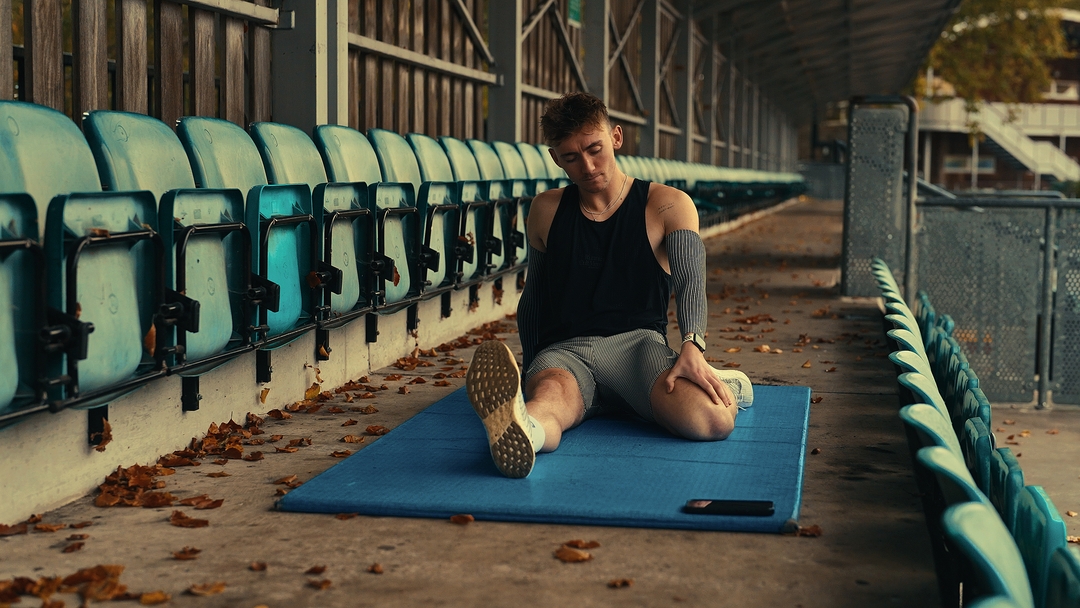
Static stretching should be done after exercise, not before. When your muscles are fatigued and warm, holding stretches for 20-30 seconds helps reset muscle length and reduce post-exercise tension.
Seated hamstring stretches, standing quad stretches, doorway pec stretches, these aren't about improving flexibility in the moment. They're about preventing the chronic tightness that accumulates when you train hard without giving muscles permission to return to their resting length.
Master Movement Before Adding Load
Form breaks down under fatigue. That's when injuries happen. Learning proper technique when you're fresh creates motor patterns your body defaults to when you're exhausted and your attention drifts.
Watch how professional athletes maintain posture during the final minutes of competition. Their bodies remember the right positions because they practiced them thousands of times without the distraction of maximum effort.
Proper Form and Load Distribution
Your spine should maintain neutral alignment during squats. Your knees should track over your toes during lunges. Keep your shoulders packed during overhead presses.
These aren't arbitrary rules; they're positions that distribute load across the structures designed to handle it. Deviation shifts stress to joints and connective tissue that fail under repeated exposure.
Gradual Progression and Load Management
Start with bodyweight movements. Add resistance only after you can perform the pattern correctly for multiple sets without form degradation. Increase load by no more than 10% per week.
This progression feels slow when you're motivated and seeing rapid initial gains. It's wise to wait six months while you're still training rather than rehabbing a preventable injury.
Apply Immediate Care That Actually Works
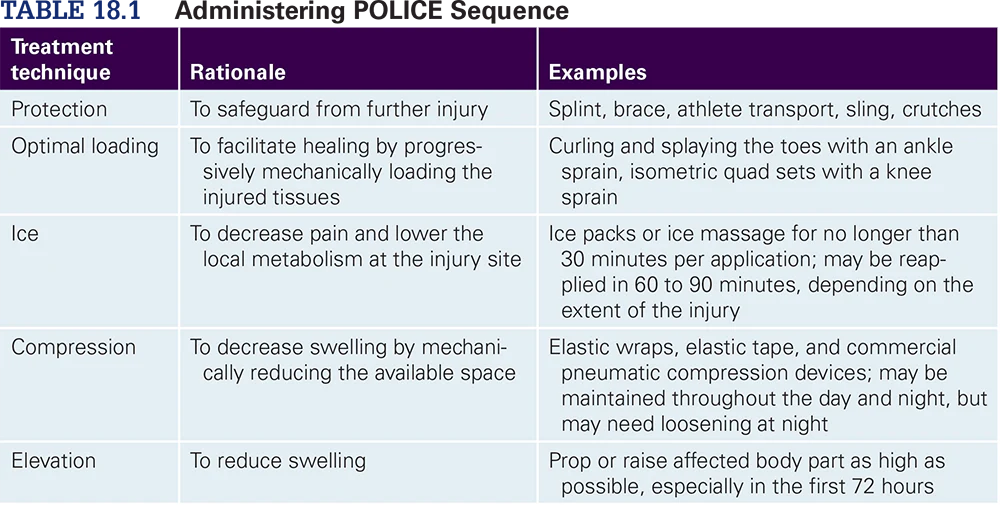
The RICE protocol, rest, ice, compression, elevation, dominated sports medicine for decades. Then, research showed that complete rest delays healing. The updated POLICE sequence replaces "rest" with "protection" and "optimal loading".
Protection means avoiding movements that stress the injured tissue. Optimal loading involves introducing controlled movement to promote healing without causing further damage.
Ice, Compression, and Elevation
Ice continues to reduce swelling and pain for 48-72 hours after acute injury. Apply it for 15-20 minutes every 2-3 hours. Compression with an elastic bandage limits fluid accumulation around the injury site. Elevation above heart level uses gravity to reduce swelling. These aren't complicated interventions. They're physics applied to damaged tissue.
Consistency in Injury Prevention
Most athletes who struggle with injuries don't fail at the dramatic moments. They fail at the boring consistency of proper warm-ups, gradual progression, and immediate care when something feels wrong.
The person who treats every training session as if it matters, who spends ten minutes preparing their body before lifting, who adds weight in small increments rather than big jumps, who applies ice and compression the same day they feel a twinge, that person stays healthy not through luck but through accumulated smart decisions.
Preventive Mobility Integration
The familiar approach treats mobility work as something you add when pain appears. Solutions like mobility app flip that model by integrating guided stretching and recovery protocols into your regular training cycle.
Custom programs target the specific movement patterns your sport demands, building resilience in vulnerable areas before breakdown occurs. The difference shows up not in dramatic injury prevention stories, but in the quiet consistency of training blocks that don't get interrupted.
Know When Self-Care Isn't Enough
Pain that doesn't improve within 48-72 hours of rest and basic care needs professional evaluation. Swelling that increases rather than decreases indicates ongoing tissue damage. Numbness, tingling, or weakness suggests nerve involvement that won't resolve on its own.
Visible deformity, inability to bear weight, or loss of normal range of motion, these aren't symptoms you push through. They're your body is telling you that the damage exceeds what home treatment can address.
Role of Sports Medicine Professionals
Sports medicine clinics employ physical therapists and athletic trainers who specialize in movement-related injuries. They can distinguish between a minor strain that may require activity modification and a significant tear that requires imaging and potentially surgery. They understand sport-specific demands and can design rehabilitation protocols that return you to your activity safely, not just pain-free.
Cost of Delaying Proper Care
The cost of waiting for professional help exceeds the cost of the visit. A Grade 1 ankle sprain, when properly treated, typically heals within 2-3 weeks. The same sprain, if ignored and allowed to heal, can become chronic instability that recurs for years.
Research from Releaf Physio shows that sprains and strains account for about 40% of all sports-related injuries, and many progress to chronic conditions because athletes delay appropriate care.
Build Prevention Into Your Weekly Routine
This week, implement three non-negotiable habits:
- First, complete a 10-minute dynamic warm-up before every training session, no exceptions, no shortcuts
- Second, add 10 minutes of static stretching after each workout, targeting the muscle groups you just used
- Third, schedule one 20-minute mobility session focused on your sport's specific movement patterns
These aren't extra credit. They're the foundation that allows everything else to work.
Equipment and Technique Focus
This month, address equipment and technique. Get your running shoes professionally fitted, or replace them if they have more than 400 miles on them.
Record yourself performing your primary lifts or sport movements, then compare your form to professional demonstrations. Identify one technical flaw and spend two weeks drilling the correction with reduced load. Add one cross-training session per week that uses completely different movement patterns than your primary sport.
Building Neuromuscular Awareness
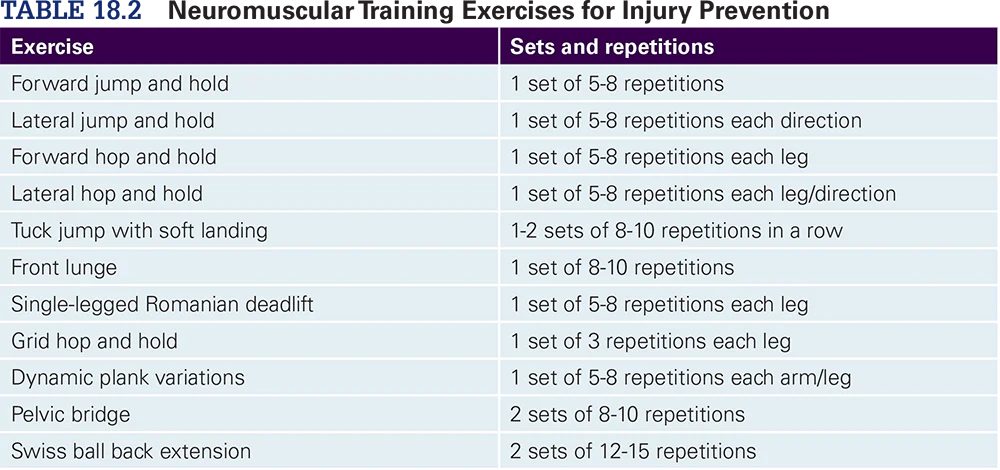
Within three months, neuromuscular training should be automatic. Your warm-ups include balance challenges. Your cool-downs incorporate proprioceptive exercises. You've developed enough body awareness to notice when fatigue is affecting your mechanics, and you have the discipline to stop before poor form causes injury.
This isn't about becoming obsessive. It's about building a body that performs reliably by addressing small vulnerabilities before they become significant problems.
Related Reading
- How To Fix Lower Back Pain From Running
- How To Prevent Stress Fractures From Running
- Knee Injury Prevention Exercises
- Compression Therapy For Athletes
- Soccer Injury Prevention Exercises
- Best Foam Roller For Runners
- Ankle Injury Prevention Exercises
Protect Your Body and Prevent Athletic Injuries with Pliability
When injury finally happens, all the protocols you've learned feel abstract. The pain is specific. The fear is immediate. The question shifts from "how do I prevent this" to "how do I make sure this doesn't happen again." That's when you realize prevention isn't a concept you understand intellectually. It's a practice you either built into your routine or didn't.
Compounding Weaknesses and Injury
Small weaknesses compound under repetition. A tight hip flexor changes your stride mechanics. Your knee compensates for the imbalance. Your IT band absorbs stress it wasn't designed to handle.
Six weeks later, you're dealing with runner's knee that could have been avoided if you'd spent ten minutes three times a week addressing that initial tightness. The injury feels sudden, but the vulnerability developed slowly as you focused on everything except the supporting structures that keep your primary movers functioning properly.
Pliability Mobility Solutions
Pliability gives you expert-designed mobility routines that strengthen supporting muscles, restore flexibility, and accelerate recovery without requiring equipment or gym access. Daily-updated programs adapt to your sport, schedule, and current limitations.
The body-scanning feature identifies restriction patterns before they become compensation patterns, showing you exactly which areas need attention based on how you actually move. Athletes find that ten minutes post-training, three to five times per week, addresses tissue quality and joint mobility that traditional programs ignore until injury forces the issue.
Start Building Resilience
Sign up today and get seven days free on iPhone, iPad, Android, or web. Start building the movement capacity and tissue resilience that let you train hard, compete confidently, and stay healthy long enough to see what your body can actually become when injury doesn't interrupt progress.
.jpg)