How Does Stretching Prevent Injury and When Does It Matter Most?
.webp)
You've probably heard that stretching reduces injury risk, but have you ever wondered exactly how that works? Whether you're an athlete pushing your limits or someone who simply wants to move through daily life without pain, understanding how stretching prevents injury can transform your approach to movement and recovery. This article breaks down the science behind stretching, explaining which techniques actually protect your muscles and joints, when to stretch for maximum benefit, and how to build flexibility that shields you from common injuries.
To help you put this knowledge into practice, Pliability offers guided stretching routines designed specifically for injury prevention and performance enhancement. The mobility app eliminates guesswork by providing personalized stretching sessions tailored to your body's unique needs, whether you're recovering from a workout, preparing for physical activity, or simply maintaining a healthy range of motion throughout your day.
Summary
- Stretching alone doesn't prevent injuries, according to research involving more than 26,000 participants, which found no significant reduction in injuries from stretching programs of any type. While better balance reduced injury risk by 35% and improved strength, stretching showed no measurable protective effect.
- Most injuries result from coordination failures, fatigue, and poor movement mechanics rather than insufficient flexibility. Hamstring strains happen during the swing phase of sprinting when the muscle fails during lengthening-to-shortening transitions, a neuromuscular timing problem that flexibility doesn't address.
- Static stretching before exercise temporarily reduces muscle strength and power, according to research, creating a hidden performance cost for athletes preparing for explosive movements. Dynamic stretching offers a different approach by repeatedly moving joints through a full range of motion, activating nervous system pathways, and increasing blood flow without the temporary weakening effect.
- Regular stretching delivers cardiovascular and recovery benefits that accumulate over time, even though single sessions produce only fleeting changes. Participants who performed static stretches five days per week for 12 weeks showed measurably better blood vessel function and blood pressure compared to control groups.
- Tight muscles create mechanical friction that drives compensatory patterns and accelerates fatigue, when most injuries occur. Restricted ankle dorsiflexion causes the knees to cave inward during landing, limited hip rotation forces excessive lower back twist during cutting movements, and inadequate shoulder mobility leads to hyperextension of the spine during overhead pressing.
Pliability's mobility app addresses the execution gap between knowing which stretches to perform and actually doing them consistently by providing guided video routines that progress systematically based on training demands, with body-scanning features that identify specific restrictions most likely to compromise movement quality.
Does Stretching Prevent Injury, or is it Mainly for Strength and Flexibility?

Stretching alone doesn't prevent injuries. That's the uncomfortable truth backed by decades of research. Stretching improves flexibility, increases range of motion, and reduces muscle tightness. These benefits matter, but they're not the same as injury prevention.
Flexibility Doesn’t Guarantee Injury Prevention
The confusion runs deep because the promise feels logical. Flexible muscles should be less prone to tears, right? Loose joints should move more safely.
It's a narrative that's been repeated in locker rooms, fitness studios, and physical education classes for generations. Yet when researchers actually measured injury rates in people who stretched versus those who didn't, the protective effect disappeared.
The Great Stretching Debate
Most fitness classes follow a ritual. You stretch before the workout. You train hard in the middle. You stretch again at the end. The structure feels so natural that questioning it seems almost heretical. But time-crunched athletes face a real dilemma. If you have only 45 minutes to train, should you spend 15 of them stretching? What would actually happen if you skipped it entirely?
Science Challenges Common Stretching Beliefs
The answer isn't what most people expect. According to Andrew R. Jagim, Ph.D., a sports medicine specialist with Mayo Clinic, you wouldn't necessarily become tight, sore, or injured. Understanding why requires looking past the familiar advice and examining what the science actually reveals.
What the Research Actually Shows
In 1998, researchers studied more than 1,000 military recruits to settle the stretching question once and for all. They divided recruits into two groups. One group stretched their calves before exercise for 12 weeks. The other stretched their shoulders instead. The hypothesis was that the calf-stretching group would have fewer calf injuries.
Repeated Study Confirms No Injury Reduction
The finding was so surprising that researchers repeated the study with more recruits and a more comprehensive protocol. This time, one group stretched every muscle in their lower limbs, while another group did no stretching. After 12 weeks, the results remained consistent, with no reduction in any type of injury.
Strength and Balance, Not Stretching, Prevent Injury
By 2014, researchers had sufficient data to conduct a comprehensive review. They evaluated 26,000 people who had collectively experienced 3,500 injuries. The findings were stark. Better balance reduced the risk of injury by 35%. Improved strength cuts injury risk by nearly 70%. Stretching, regardless of type, showed no significant injury reduction at all.
Expert Advice: Stretching Alone Isn’t Enough
Katie Knapton, a physiotherapist, puts it plainly: "Stretching alone will not prevent sports injuries and there is no evidence for this. Strength training and flexibility with graduated loading and specific training so the body can cope with the work you are planning to put it through, that's the best way to try and prevent injury. Not stretching in isolation."
The Misconception About Flexibility and Safety
The belief that flexible muscles are safe muscles contains a grain of truth, but it is wrapped in faulty logic. Yes, increasing the flexibility of a muscle-tendon unit can promote better performance. Yes, fluid, pliable muscles may be less prone to certain types of strain. But flexibility alone doesn't build the resilience needed to handle force, absorb impact, or stabilize joints under load.
Flexibility Needs Strength
Think of a rubber band that's been stretched out as more flexible than a new one, but it's also weaker and more likely to snap under tension. Muscles need both extensibility and strength to protect against injury. Range of motion without control is just another way to get hurt.
Guided Routines Shift the Focus
Most people approach mobility work hoping it will act as insurance against injury. They stretch because they fear what might happen if they don't. But this defensive mindset misses the real value. Mobility work isn't about preventing disaster. It's about building the infrastructure that allows you to train harder, recover faster, and move with the freedom that makes athletic performance feel effortless rather than fragile.
Guided Routines Shift the Focus
Mobility apps like Pliability reframe this entirely. Instead of treating stretching as injury insurance you hope never to claim, guided mobility routines become daily maintenance for the athlete you've already built. The focus shifts from fear of breakdown to optimizing movement quality, with structured progressions that combine flexibility work with the strength and control your body needs.
Static vs. Dynamic: Not All Stretching Is Created Equal
When most people picture stretching, they imagine holding a position for 30 seconds while their hamstring burns. That's static stretching, and it comes with a hidden cost. Research guidelines indicate that static stretching before exercise may temporarily reduce muscle strength and power. Your muscles become temporarily weaker after you hold a long stretch.
Static Stretching Can Reduce Performance
For athletes preparing for explosive movements such as sprinting, jumping, or heavy lifting, this temporary strength loss can undermine performance when it matters most. That's why many coaches have moved away from static stretching during warm-ups.
Dynamic Stretching Activates the Body
Dynamic stretching offers a different approach. Instead of holding positions, you move joints repeatedly through their full range of motion. Leg swings, arm circles, walking lunges, and hip rotations. These movements wake up your nervous system, increase blood flow, and prime muscle groups for faster contractions without the temporary weakening effect.
Prepares for Explosive Movements
Dynamic stretching prepares your body for the specific demands ahead. It's rehearsal, not relaxation. Your connective tissues warm up, your proprioception sharpens, and your movement patterns activate in ways that translate directly to performance.
What Stretching Actually Delivers
Strip away the injury prevention myth, and stretching still offers real benefits, just not the ones most people expect. Perform one stretch one time, and you'll experience fleeting changes in blood flow, nervous system response, and muscle length. Stop stretching, and everything returns to baseline within minutes. But when stretched consistently over weeks and months, the benefits compound.
Stretching Supports Vascular Health
Regular stretching improves blood vessel function and blood pressure. In a study published in the Journal of Physiology, participants who performed static stretches of the hips, knees, and ankles five days a week showed measurably improved vascular health after 12 weeks compared with a control group. Though this research focused on static stretching, dynamic stretching likely produces similar cardiovascular benefits.
Speeds Post-Workout Recovery
Stretching also speeds recovery after hard training. A few minutes of light movement, followed by dynamic stretching, helps clear metabolic byproducts and delivers oxygen and nutrients through increased blood flow. It's not magic, just basic physiology applied intelligently.
Preserves Long-Term Mobility
Perhaps most importantly, consistent stretching slows age-related losses in joint mobility and stride length. Tight hips and ankles don't just make it harder to reach that itchy spot on your back.
They shorten your gait, reduce your walking speed, and eventually compromise your ability to move safely through daily life. Regular mobility work preserves the movement capacity you'll need decades from now.
The Real Question Isn't Whether, But Why
There's no definitive answer to whether stretching is universally good or bad because the question itself is poorly framed. Stretching for what purpose? In the service of which goals?
If you participate in gymnastics, dance, or martial arts, exceptional flexibility is non-negotiable. If you feel chronically tight and restricted, stretching may provide genuine relief and improved well-being.
Stretching Boosts Recovery and Well-Being
Research shows it can reduce post-exercise soreness. A significant number of people report feeling better and experiencing less pain when they stretch regularly. Even if stretching doesn't prevent injury as we once believed, if it improves your sense of well-being and helps you move through your day with less discomfort, it's a worthwhile practice.
Stretching Is Not Enough
The mistake is treating stretching as a standalone solution when it's actually one component of a larger system. Mobility without strength leaves you vulnerable. Flexibility without control creates new risks. A range of motion without proper movement patterns just gives you more ways to compensate poorly.
Building Resilient Systems
The athletes who move best and last longest don't just stretch. They build mobility as part of their athletic infrastructure, just as they program strength training, cardiovascular conditioning, and skill work. They understand that injury prevention isn't about any single practice but about creating resilient systems that can handle the demands you place on them.
Related Reading
- Injury Prevention Strategies
- What is Injury Prevention
- Cold Therapy for Athletes
- Can Tennis Elbow Cause Shoulder Pain
- Basketball Injury Prevention
- How to Prevent Pickleball Injuries
- How To Stop Wrist Pain From Lifting Weights
- Most Common Tennis Injuries
- How to Prevent Knee Pain When Running
- How Can You Prevent Injury While Cycling
- Injury Prevention for Athletes
How Does Stretching Prevent Injury
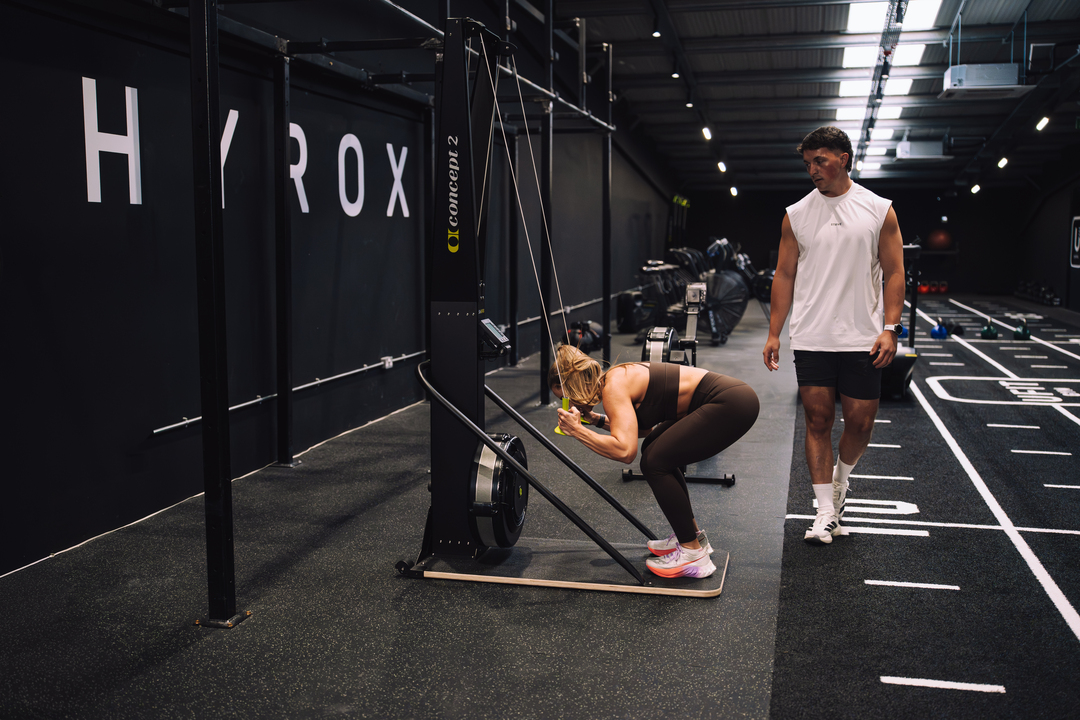
Stretching reduces injury risk by improving muscle elasticity, expanding joint range of motion, and enhancing movement efficiency. These mechanisms improve athletic performance, but they don't guarantee protection. The relationship between stretching and injury prevention works through indirect pathways, not as a direct shield against harm.
Understanding this distinction matters because most athletes approach stretching with the wrong expectations. They treat it like insurance when it functions more like infrastructure. The muscles and joints you develop through consistent mobility work don't repel injury. They create the capacity to move with precision, absorb force intelligently, and recover from the stress you deliberately impose through training.
Muscle Elasticity and Tissue Adaptation
When you stretch regularly, muscle fibers and connective tissues gradually adapt. The muscle-tendon unit becomes more compliant, meaning it can lengthen further before reaching its mechanical breaking point. This increased extensibility is important during explosive movements, where muscles rapidly switch from lengthening to shortening.
Stretching Doesn’t Prevent Injury Alone
But here's where the promise gets complicated. According to research published in the Journal of Sport and Health Science, stretching does not prevent injury as most people assume. The tissue changes are real, but they don't confer immunity to the strain. Instead, they provide a wider operating range for movement, which only helps if you also possess the strength and coordination to control that range.
Muscle Elasticity Supports, Not Guarantees, Safety
Think of muscle elasticity like a car's suspension system. Better suspension allows you to handle rougher terrain, but it doesn't prevent accidents caused by poor steering or excessive speed. The quality of your tissues matters, but so does how you use them.
Joint Range of Motion and Movement Capacity
Restricted joints force compensation. When your ankle can't dorsiflex properly, your knee travels inward during landing. When your hip lacks internal rotation, your lower back twists excessively during cutting movements. These compensations accumulate stress in areas not designed to handle it.
Stretching Expands Joint Mobility
Stretching expands the range of motion at each joint. Hips that can flex, extend, and rotate freely allow your pelvis to stay stable during single-leg activities. Ankles with full dorsiflexion let you squat deeply without your heels lifting. Shoulders with complete overhead mobility permit you to press, pull, and throw without your spine hyperextending to compensate.
Mobility Enables Safer Movement Mechanics
The benefit isn't that flexible joints are less prone to injury. The benefit is that adequate joint mobility allows you to execute movements with proper mechanics. Poor mechanics under load create conditions that lead to injuries. A better range of motion gives you access to safer movement patterns, assuming you've trained those patterns deliberately.
Movement Efficiency and Coordination
Tight muscles create friction in your movement system. Every action requires more effort, more compensation, and more neural override to accomplish basic tasks. This inefficiency taxes your nervous system and accelerates fatigue.
Fatigue, Not Flexibility, Causes Injuries
Fatigue is where most injuries actually happen. The hamstring that tears in the final minutes of a match doesn't fail because it lacks flexibility. It fails because the neuromuscular system, exhausted from compensating for restrictions elsewhere, loses the split-second coordination needed to decelerate the shin during sprinting. The timing between lengthening and shortening breaks down. The muscle can't switch fast enough. The tissue overloads.
Stretching Reduces Compensatory Friction
Stretching reduces this friction. Muscles that move fluidly through their available range require less compensatory effort from surrounding structures. The nervous system can focus on precision and power rather than constantly working around constraints. You maintain better coordination as training sessions and competitions progress.
Regular Stretching Improves Movement Quality
Most athletes who stretch regularly report feeling better during warm-ups and throughout training. That subjective experience reflects a measurable outcome. Reduced mechanical friction and improved movement quality. These factors affect performance and create conditions less conducive to breakdowns, even if they don't prevent injuries outright.
Active and Isolated Flexibility Exercises
Not all stretching produces equal results. Static holds, where you settle into a position and wait, create temporary changes that fade quickly. Active approaches, in which you move deliberately to the edge of tension and release repeatedly, elicit different adaptations.
Active Flexibility Exercises: Warm and Mobilize
Active and isolated flexibility exercises involve taking a joint and muscle to the point of tension, holding briefly (typically two seconds), then releasing. You repeat this cycle ten times. This approach promotes circulation, warms the tissue, and signals the nervous system to gradually permit more range without triggering protective reflexes.
Prepares the Body for Training Demands
Done before training, this type of mobility work prepares tissues for the demands ahead. Blood flow increases. Synovial fluid lubricates joints. The nervous system rehearses the ranges you'll need during performance.
These benefits may seem modest until you consider how many athletes skip this preparation entirely, only to find their bodies feel rigid and unresponsive when training begins.
Movement Preserves Neural Drive and Performance
The structure matters because it respects how your nervous system controls muscle length. Aggressive static stretching before explosive activity can temporarily reduce power output. Active, rhythmic movement through range preserves the neural drive you need for performance while still expanding mobility.
Improving Problem Areas
Every athlete carries weak links. Tight hip flexors from sitting. Restricted thoracic rotation from desk work. Limited ankle mobility from years in rigid footwear. These restrictions are unevenly distributed, and generic stretching routines don't address them effectively.
Targeted Flexibility Fixes Movement Limitations
Sports medicine professionals design flexibility programs by identifying specific limitations that compromise movement quality. If your squat pattern breaks down due to limited ankle dorsiflexion, you need targeted ankle mobility work. If your overhead press forces your lower back into hyperextension because your shoulders can't flex fully, you need shoulder-specific stretching.
Better Mechanics Reduce Injury Risk
This targeted approach improves overall performance by eliminating the compensations that create inefficiency and stress. Better movement quality reduces injury risk, not because you're more flexible everywhere, but because you've removed the specific restrictions forcing poor mechanics under load.
Adequate Flexibility Beats Maximum Range
The mistake many athletes make is treating flexibility as a general quality to maximize across the board. Excessive flexibility in some contexts creates instability. Runners who become too flexible before competing sometimes over-accentuate their movements, creating new problems. The goal isn't maximum range. The goal is an adequate range with the strength and control to use it safely.
Why Doesn't Stretching Help More?
The mechanism of most injuries reveals why flexibility alone provides limited protection. Hamstring strains, the most common muscle injury across sports, occur during the swing phase of sprinting, when the hamstrings decelerate the lower leg. The muscle fails during the transition from lengthening to shortening, a coordination challenge between the muscular and nervous systems.
Fatigue Causes Hamstring Strains
Fatigue disrupts this coordination, which explains why hamstring strains cluster at the end of matches rather than the beginning. The hamstring never approaches maximal stretch during the injury-causing phase. Having a more flexible hamstring doesn't address the neuromuscular timing failure that causes the strain.
Ankle Sprains Are Ligament Issues
Ankle sprains, the most common ligament injury, happen when the foot rolls during direction changes or when landing on uneven surfaces. The ligaments, not the muscles, bear the stress. Stretching has minimal impact on ligament flexibility. In fact, increased muscle tone (reduced ankle flexibility) may reduce the risk of rolling by providing greater dynamic stability.
ACL Tears Stem from Poor Technique
ACL ruptures occur when poor planting technique causes the knee to collapse inward while the foot remains planted. The entire body's weight is borne by a ligament not designed to handle that load. The injury stems from a failure in the movement pattern, not from insufficient flexibility. Better technique and neuromuscular control prevent ACL tears. Stretching the surrounding muscles doesn't address the root cause.
Coordination and Strength Prevent Injuries
These examples illustrate a pattern. The injuries that sideline athletes most frequently result from coordination failures, fatigue, and poor movement mechanics. Flexibility improves mechanics, but only when combined with strength, proper technique, and adequate conditioning.
What Actually Prevents Injuries?
Neuromuscular training addresses coordination and control factors that stretching alone cannot address. Quality pre-exercise protocols, such as FIFA 11+, prepare muscles to activate quickly when joints move into vulnerable positions. These warmups combine dynamic movement, balance challenges, and plyometric exercises that train the nervous system to respond rapidly under unstable conditions.
Neuromuscular Training Reduces Injuries
Research shows that neuromuscular training can reduce injuries by up to 50%, a protective effect well beyond what stretching alone achieves. This approach works because it targets the actual mechanisms behind most injuries, such as poor movement patterns, inadequate strength, and compromised neuromuscular coordination.
Athletes Build Complete Preparation Systems
The athletes who stay healthy longest don't just stretch. They build comprehensive preparation systems. They train movement quality deliberately. They develop strength that matches their flexibility. They practice the specific patterns and positions where injuries tend to occur, teaching their bodies to handle those demands safely.
Stretching is Only Part of the Solution
Stretching is a component of this system, not the entire solution. It increases your range of motion and reduces mechanical friction. But capacity without control is just another way to get hurt. The infrastructure that actually prevents injuries requires strength, coordination, skill, and intelligent progression, all working together.
Related Reading
- Do Muscle Tears Heal On Their Own
- Forearm Strain
- How Can Strengthening Muscles Prevent Injury
- Quad Strain Recovery Time
- Urgent Care For Pulled Muscle
- How To Heal A Calf Strain Quickly
- How To Prevent Hamstring Injuries
- How Long Does a Sprained Knee Take to Heal
- How To Strengthen Shins For Running
- Athletic Injury Recovery
10 Simple Stretches That May Help Prevent Injury
1. Before Your Workout
Dynamic stretches prepare your body for movement by rehearsing the ranges you'll need during training. Unlike static holds that temporarily reduce power output, dynamic movements increase blood flow, activate nervous system pathways, and prime muscle groups for coordinated action.
Timing Matters
You need an elevated heart rate first. Walk briskly for three to five minutes, do some light jogging, or cycle through basic bodyweight movements. Once your body temperature rises and your breathing picks up, you're ready for dynamic stretching.
2. Leg Swings
Stand beside a table or wall, placing one hand on the surface for balance. Position yourself side-on so your outside leg can swing freely. Keep your standing leg stable and swing the free leg forward and backward in a controlled arc.
The movement should feel smooth, not forced. Your leg travels through the range your hip naturally allows without jerking or momentum taking over.
Hip Swing for Controlled Mobility
This exercise warms up your hip joint while expanding its range of motion in the sagittal plane (forward and backward). The controlled swing activates hip flexors during the forward phase and glutes during the backward phase.
Perform 10 to 15 swings per leg, focusing on control rather than height. If you feel unstable, reduce the arc until your balance improves. The goal is fluid movement, not maximum range.
3. Heel Kicks
Stand with your feet together and arms relaxed at your sides. Kick one heel toward your buttock, then return your foot to the ground and immediately repeat with the opposite leg. Continue alternating in a rhythmic pattern, as if jogging in place, but emphasizing the knee flexion that brings your heel up.
Dynamic Hamstring Warm-Up
This dynamic stretch warms the hamstring muscle group at the back of your thigh. The rapid knee flexion and extension mimic the mechanics you'll use during running or explosive movements.
Your hamstrings work eccentrically (lengthening under tension) as your heel approaches your glute, then concentrically (shortening) as your foot returns to the ground. Perform 20 to 30 total repetitions (10 to 15 per leg), maintaining a steady pace that feels like a natural jog.
4. After Your Workout
Static stretches are most effective after training, when your muscles are warm and pliable. The goal here is different from pre-workout preparation.
You're addressing the specific areas that tighten during exercise, helping them return to baseline length while promoting blood flow for recovery. Hold each position for 20 to 30 seconds, breathing normally. You should feel tension, but not pain. The stretch should feel like a gentle pull, not a battle.5.
5. Hamstrings
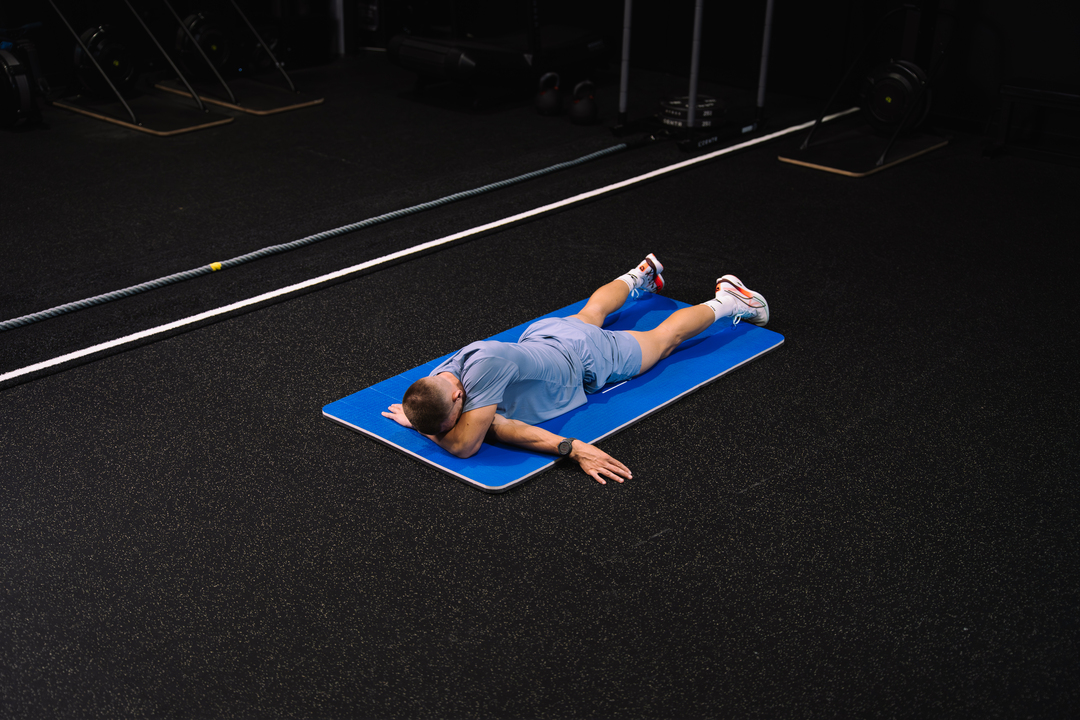
Lie on your back with both legs extended. Bring one hip to 90 degrees or slightly beyond, lifting your leg toward the ceiling. Keep a slight bend in your knee rather than forcing it completely straight.
Gently pull your leg toward your torso using your hands behind your thigh or calf. You'll feel the stretch along the back of your thigh where your hamstring muscles run from your sit bone to below your knee.
Seated Hamstring Stretch for Controlled Mobility
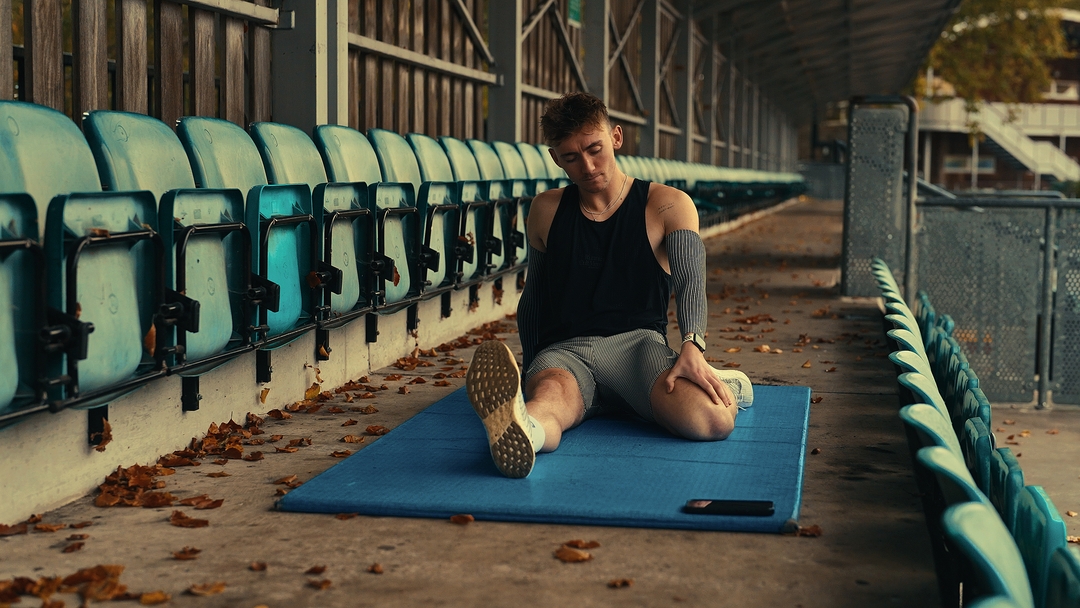
If this position feels inaccessible or creates strain in your lower back, try this modification. Sit on the floor with one leg extended. Loop a towel or resistance band around the sole of your foot and hold both ends.
Pull the towel toward you while straightening your leg as much as comfortable. This seated variation provides the same hamstring stretch with more control and less balance demand. Hold for 20 to 30 seconds per leg, repeating two to three times.
6. Quads
Stand beside a table or wall, placing your nearest hand on the surface for support. Bend your outside knee and lift your foot toward your buttock.
Reach back with your free hand and grasp your ankle or the top of your foot. Pull gently until you feel a stretch along the front of your thigh where your quadriceps muscles attach from your hip to your knee.
Quad Stretch with Focused Balance
Balance challenges often make this stretch frustrating. Fix your gaze on a single point ahead of you at eye level. This visual anchor helps your vestibular system maintain stability.
Keep your knees close together, rather than allowing the bent knee to drift forward or outward. The stretch should focus on your quads and avoid putting pressure on your knee joint. Hold for 20 to 30 seconds per leg.
7. Hip Flexors
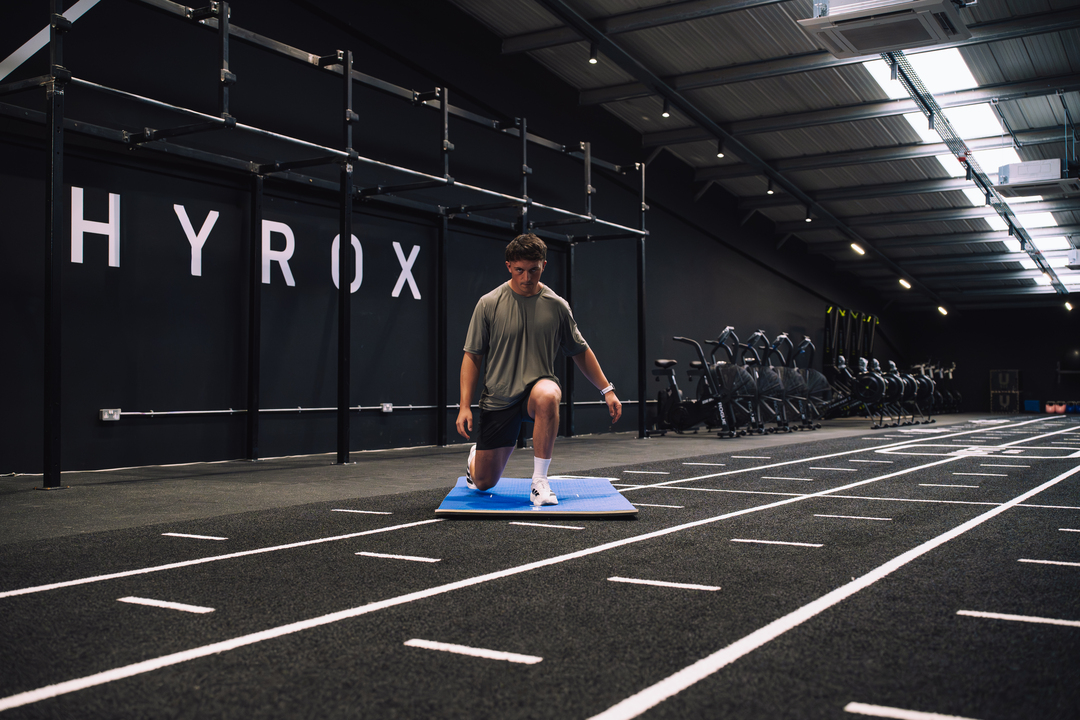
Place a mat or folded towel under your knee for cushioning. Start in a kneeling lunge, with your right foot flat on the floor in front of you and your knee bent to 90 degrees. Your left knee rests on the mat behind you.
Keep your torso upright and shift your weight forward, pressing your hips toward your front foot. You'll feel the stretch along the front of your left thigh and deep in your groin, where your hip flexor muscles connect your femur to your pelvis.
Hip Flexor Stretch with Posterior Pelvic Tilt
For a stronger stretch, tilt your pelvis backward by tucking your tailbone under, as if flattening your lower back. This posterior pelvic tilt increases the tension on your hip flexors. Hold for 20 to 30 seconds, then switch legs. Hip flexor tightness is nearly universal among people who sit for extended periods. This stretch directly addresses that restriction.
Consistency Beats Quick Results in Mobility Work
Many athletes approach mobility work hoping for immediate relief but abandon it when results feel slow. The problem isn't the practice. It's the expectation.
Tissue adaptation happens gradually, measured in weeks and months rather than single sessions. Most people stretch inconsistently, performing random movements without structure or progression. They wonder why nothing changes.
8. Calf Stretches
Step forward with your right leg, bending your knee slightly. Keep your left leg straight behind you with your heel lifted off the ground. Lean gently forward, shifting your weight onto your front leg as you lower your back heel toward the floor.
You'll feel the stretch in your left calf where your gastrocnemius and soleus muscles attach to your Achilles tendon. Use a wall or table for balance if needed.
Calf Stretch to Improve Ankle Mobility
Tight calves restrict ankle dorsiflexion, the motion that allows your shin to move forward over your foot. Limited dorsiflexion forces compensation during squats, lunges, and running.
Your heels lift prematurely, your knees cave inward, or your torso pitches forward excessively. This stretch restores ankle range to support proper movement mechanics. Hold for 20 to 30 seconds per leg.
9. Groin Lunge Stretch
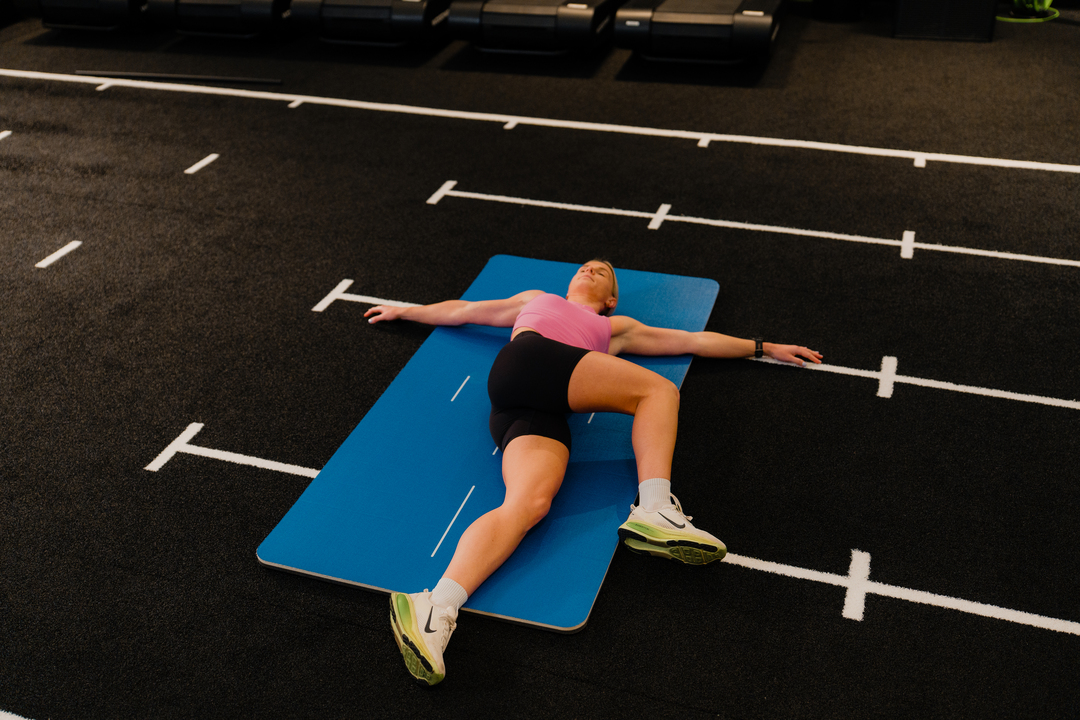
Stand with your feet wider than shoulder-width apart, toes turned out at approximately 45 degrees. Bend your left knee and shift your weight to your left to perform a side lunge.
Keep your right leg straight with your foot flat on the ground. You'll feel the stretch along the inner thigh of your right leg where your adductor muscles run from your pubic bone to your femur and tibia.
Adductor Stretch for Hip and Pelvis Stability
This stretch addresses the muscles responsible for bringing your legs together and stabilizing your pelvis during single-leg movements. Tight adductors limit hip mobility and create compensatory stress in your lower back and knees.
Use a wall or table for support if balance feels unstable. Return to the center and repeat on the opposite side. Hold each side for 20 to 30 seconds.
10. Consistency Over Intensity
The athletes who gain the most from stretching aren't the ones who push hardest into each position. They're the ones who show up regularly with modest effort and proper form. Stretching isn't a test of pain tolerance. It's a conversation with your nervous system about gradually expanding your movement boundaries.
Stretch with Patience and Awareness
Your nervous system protects you by limiting your range when it perceives a threat. Push too aggressively, and protective reflexes engage, creating more tension rather than less.
Approach each stretch with patience, breathe normally, and settle into the position rather than forcing it. The sensation should feel like a gentle pull that you can comfortably maintain for 30 seconds. If you're grimacing or holding your breath, you've gone too far.
Technique Matters More Than Duration
Proper technique matters more than duration. Thirty seconds of well-executed stretching with correct alignment produces better results than two minutes of sloppy positioning. Pay attention to the cues provided for each stretch.
Keep your standing leg stable during leg swings. Maintain your gaze on a fixed point during quad stretches. Tilt your pelvis backward to intensify hip flexor stretches. These details determine whether you're actually targeting the intended tissues or just going through motions.
Related Reading
- How To Prevent Stress Fractures From Running
- How To Fix Lower Back Pain From Running
- Care And Prevention Of Athletic Injuries
- Knee Injury Prevention Exercises
- Compression Therapy For Athletes
- Soccer Injury Prevention Exercises
- Best Foam Roller For Runners
- Ankle Injury Prevention Exercises
Support Injury Prevention With Smarter, Consistent Mobility
Protection comes from consistency, not from any single stretch. The seven movements covered earlier create value only when they become part of your regular routine and are performed with attention and proper form. Most athletes understand this intellectually but struggle to execute it. They stretch sporadically, forget which areas need attention, and wonder why mobility gains never materialize.
Proper Stretching Requires Structure
The gap between knowing what to do and actually doing it is where most injury-prevention efforts fail. You need a structure that removes guesswork and tracks progress.
Stretching done correctly, at the right frequency, with focus on your specific limitations, builds the movement infrastructure that supports long-term performance. Stretching done randomly, with poor form, or abandoned after two weeks accomplishes nothing.
Guided Routines Solve Execution Challenges
Mobility apps like Pliability solve this execution problem by delivering guided video routines designed for athletes who need results, not just instruction. Instead of wondering which stretches to perform or how long to hold them, you follow expert-designed sequences that progress systematically based on your training demands and recovery needs.
The platform includes a body-scanning feature that identifies your mobility restrictions and highlights areas most likely to compromise movement quality or increase injury risk.
Sustainable Practice Builds Lasting Mobility
This approach transforms occasional stretching into a sustainable practice. Daily-updated programs adapt to your schedule. Guided sessions ensure proper form and appropriate duration. The structure removes the friction that causes most people to quit, replacing it with clear direction that fits alongside your existing training.
Small investments (15 to 25 minutes, three to five times per week) compound into measurable improvements in range of motion, faster recovery between sessions, and the freedom to move without constant tightness limiting what you can do.
Try Pliability free for 7 days on iPhone, iPad, Android, or web. Start building the mobility infrastructure that supports the athlete you've already worked hard to become.
.jpg)