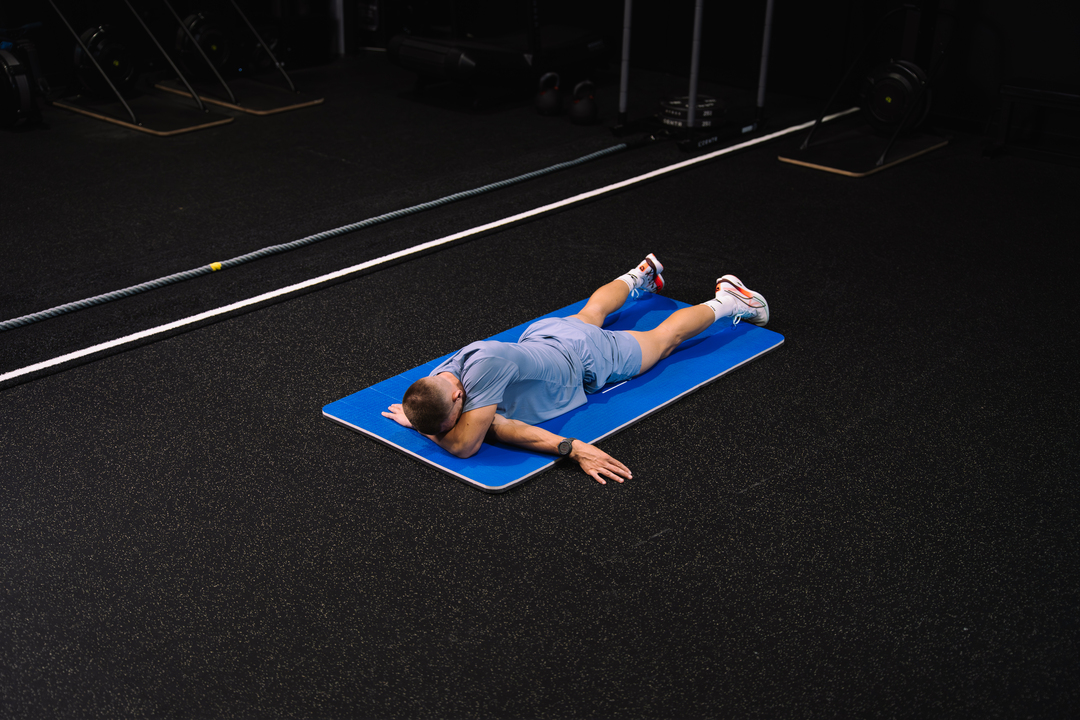
How to Prevent Hamstring Injuries and Speed up Recovery
.webp)
You've felt it before, that sudden twinge in the back of your thigh during a sprint, or the nagging tightness that won't go away no matter how much you stretch. Hamstring injuries derail more athletes, weekend warriors, and fitness enthusiasts than almost any other muscle strain, often sidelining you for weeks or even months. This article will show you how to prevent hamstring injuries through proven strategies that build strength, improve flexibility, and protect you from the common mistakes that lead to tears and pulls, so you can keep training, playing, or competing without those frustrating setbacks.
That's where a mobility app like Pliability becomes your training partner. Instead of guessing which exercises actually work or wasting time on routines that don't address your specific needs, you get guided sessions designed to keep your hamstrings resilient and responsive. The app helps you build the strength and flexibility that matter most for injury prevention, while also giving you the recovery protocols you need when those muscles feel overworked, ensuring you stay in the game rather than watching from the sidelines.
Summary
- Hamstring injuries account for 12-33% of all sports injuries across disciplines, with recurrence rates of 16-60% among athletes who experience an initial tear. The high recurrence rate suggests that most rehabilitation programs focus on returning to baseline strength rather than on building eccentric strength at long muscle lengths, where tears actually occur during sprinting.
- More than 80% of hamstring injuries during sport occur during acceleration, not top-speed running. Accelerating at just 50% of maximum speed stretches hamstrings as much as running constantly at nearly 90% max effort.
- Sudden spikes in training load cause more hamstring injuries than total training volume. Hamstring injuries cost professional soccer players an average of 17 days of missed time, with load management errors (returning from layoffs at full intensity, cramming high-speed sessions too close together) creating the exact conditions for tissue failure.
- Nordic hamstring curls reduce initial injury rates when performed twice weekly because they build eccentric strength precisely where tears occur. The exercise replicates the exact demand that causes injury (rapid lengthening under load), conditioning muscle fibers to absorb forces during the late swing phase of sprinting.
- Passive flexibility doesn't predict injury risk as reliably as active flexibility (how far you can move your leg under control while maintaining tension). The gap between passive range of motion and dynamic control under load is where most injuries happen during acceleration.
Pliability's mobility app addresses this by integrating guided routines that combine active stretching, end-range strengthening, and movement preparation into structured 10-15 minute sessions, building both flexibility and neuromuscular control in the exact ranges where hamstrings are most vulnerable during sport.
Why Hamstring Injuries are so Common
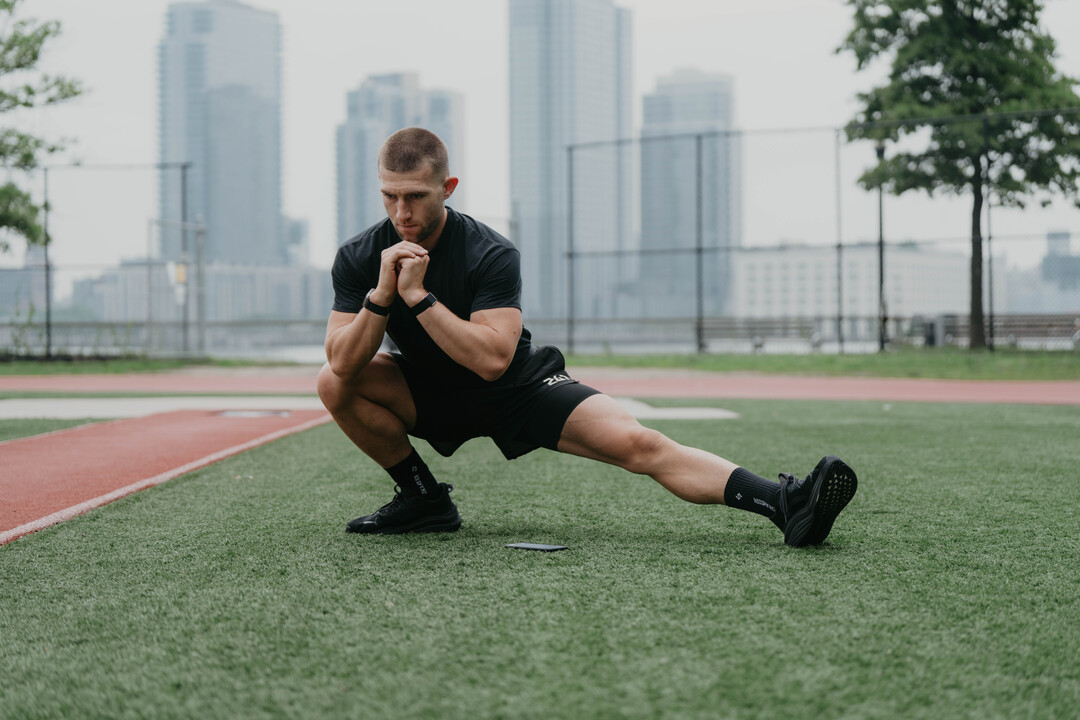
The hamstring muscles are built for power, not safety. They're a group of three muscles running down the back of your thigh (the biceps femoris, semitendinosus, and semimembranosus), and their job is to bend your knee and extend your hip. That dual responsibility puts them in a precarious position during explosive movements.
When you sprint, accelerate, or kick, these muscles have to contract forcefully while simultaneously lengthening to control your leg's swing. It's like slamming the brakes while flooring the gas pedal. Something has to give.
Hamstring Injuries Affect Every Sport
According to research published in PMC, hamstring strains represent 12-33% of all sports injuries across disciplines. That staggering range isn't due to inconsistent data. It's because hamstring injuries don't discriminate.
They show up in soccer, rugby, track, basketball, and even recreational running. The common thread is any activity that demands sudden acceleration, deceleration, or rapid changes in direction.
The Anatomy of Vulnerability
Your hamstrings aren't created equal. The biceps femoris long head, the muscle running along the outer back of your thigh, is the most frequently injured. It has shorter muscle fibers (fascicles) compared to the biceps femoris short head. Shorter fibers mean less room for stretch before the tissue reaches its breaking point.
When forces spike during the late swing phase of sprinting, that split second before your foot hits the ground, the biceps femoris long head is stretched to roughly 110% of its resting length while contracting hard to slow your leg down. High force, extreme length, rapid contraction. It's a perfect storm.
Hamstrings and Sudden Acceleration
Think of it like a rubber band. Pull it slowly, and it stretches smoothly. Yank it suddenly, and the fibers don't have time to distribute the tension evenly.
One weak spot takes the brunt, and it snaps. That's what happens during acceleration. You're not just moving fast. You're asking your hamstrings to stretch faster than they can adapt.
When Injuries Actually Happen
Most people assume speed is the enemy. But The Conversation reports that more than 80% of hamstring injuries in sport occur during sprinting, and the dangerous moment isn't when you're at top speed. It's when you're accelerating.
Sudden Acceleration Strains Hamstrings
When Xavier Coates intercepted that ball against the Brisbane Broncos and two players, Adam Reynolds and Ezra Mam, suddenly exploded into a chase, their hamstrings were stretched further and faster than if they'd been cruising at a steady, high pace.
Accelerating at just 50% of your maximum speed puts the same stretch on your hamstrings as running constantly at nearly 90% max. The sudden demand, not the absolute speed, is what breaks tissue.
Hamstring Injuries in Explosive Plays
This explains why hamstring injuries cluster at specific moments during games. The breakaway sprint. The desperate tackle. The explosive jump for a header.
These aren't gradual, predictable loads. They're violent, instantaneous demands on muscles that might not be prepared for that specific intensity in that specific moment.
The Recurrence Problem
One in three athletes who tear a hamstring will tear it again. Recurrence rates between 16% and 60% suggest that most rehabilitation programs aren't addressing the root cause. You can rest, ice, and stretch your way back to the field, but if the muscle's architecture hasn't adapted to handle eccentric loading at long lengths, you're just resetting the clock on the next injury.
The scar tissue from the initial tear creates a weak point. The surrounding muscles compensate. Movement patterns shift subtly. And when the next explosive demand arrives, the hamstring fails again, often in the same spot.
Specific Conditioning Prevents Hamstring Tears
Athletes describe this cycle with frustration. You feel strong in the gym. Your range of motion looks fine. Then one sharp acceleration and you're back on the sideline, wondering what you missed.
The answer is usually specificity. General strength doesn't translate into the specific combination of length, tension, and speed that causes injury in sport. Your hamstrings need to be conditioned for the precise scenarios where they're most vulnerable.
Why Load Spikes Matter More Than Total Volume
Absolute training volume doesn't predict hamstring injuries. You can log high mileage, lift heavy, and train consistently without issue. What increases risk is sudden spikes in load relative to what your body is accustomed to.
If you normally train at a certain intensity three days a week and then suddenly jump into a tournament with back-to-back games, or you take two weeks off and return at full intensity, your hamstrings haven't had time to adapt. The tissue's capacity hasn't kept pace with the demand you're placing on it.
Preseason Hamstring Injury Risk
This is why preseason injuries are so common. Athletes return from an off period, eager to prove their fitness, and push hard before their bodies are ready.
The hamstrings, in particular, need gradual exposure to high-speed running and eccentric loading. Without that progressive buildup, even well-conditioned athletes become vulnerable.
Progressive Hamstring Prep
Understanding this mechanism matters because it shifts how you think about prevention. It's not about avoiding intensity. It's about managing the rate at which you introduce it.
Your hamstrings can handle extreme forces if they've been progressively prepared. But throw them into the deep end without that runway, and the tissue lacks the structural resilience to withstand the load.
Related Reading
- Injury Prevention Strategies
- What is Injury Prevention
- Cold Therapy for Athletes
- Can Tennis Elbow Cause Shoulder Pain
- Basketball Injury Prevention
- How to Prevent Pickleball Injuries
- How To Stop Wrist Pain From Lifting Weights
- Most Common Tennis Injuries
- How to Prevent Knee Pain When Running
- How Can You Prevent Injury While Cycling
- Injury Prevention for Athletes
What Makes You Prone to Hamstring Injuries?

Your vulnerability to hamstring injuries isn't random. It's shaped by a combination of structural weaknesses, training habits, and your body's injury history. Some factors, like previous hamstring tears, stack the deck against you more than others. Understanding which risk factors apply to you shifts prevention from guesswork to targeted action.
Previous Injury Creates a Dangerous Cycle
If you've torn a hamstring before, you're walking a tightrope. Players with previous hamstring injuries are 2-6 times more likely to suffer recurrence, according to The Guardian's 2025 analysis of Premier League data.
That's not bad luck. It's biology. When muscle fibers tear, they heal with scar tissue. Scar tissue is stiffer and less elastic than healthy muscle. It doesn't stretch as smoothly under load, creating a weak point that fails again under similar conditions.
Rehab Must Build Hamstring Resilience
Rehabilitation often focuses on getting you back to baseline strength and range of motion. But baseline isn't enough. The muscle needs to be stronger and more resilient than before the injury, especially at the long muscle lengths where tears occur during sprinting.
Without that targeted adaptation, you're setting yourself up to return to the exact scenario that caused the injury in the first place. Athletes describe the frustration of feeling ready, passing return-to-play tests, then re-tearing within weeks. The tests measured general capacity, not sport-specific resilience under eccentric load at extreme ranges.
Muscle Imbalances Shift the Burden
Your quadriceps and hamstrings work as opposing forces. When you extend your knee, your quads contract while your hamstrings lengthen to control the motion. If your quads are significantly stronger than your hamstrings, that imbalance creates uneven force distribution.
The hamstrings have to work harder to stabilize and decelerate your leg during explosive movements. Over time, that extra demand accumulates, pushing the tissue closer to its breaking point.
Quad-to-Hamstring Imbalance Risks Injury
This isn't about having weak hamstrings in isolation. It's about the ratio. A quad-to-hamstring strength ratio above 3:1 is a red flag. Your hamstrings are being overpowered every time you sprint, jump, or change direction.
Addressing this requires eccentric hamstring strengthening (exercises that lengthen the muscle under tension, like Nordic curls) rather than generic leg curls that don't replicate sprinting's demands.
Flexibility Limitations: Compress Your Margin for Error
Limited hamstring flexibility reduces the range through which your muscle can safely lengthen. When you sprint, your hamstring stretches to roughly 110% of its resting length during the late swing phase.
If your baseline flexibility is poor, you're operating closer to that tissue's absolute limit every time you accelerate. There's less buffer between normal movement and structural failure.
Cold Muscles Increase Hamstring Injury Risk
Cold, stiff tissues amplify this risk. When muscles are cold, they have higher viscous resistance. Stretching or loading them at end ranges creates localized strain that warm tissue would distribute more evenly.
Athletes with a history of strains often describe feeling tight and restricted before re-injury. That tightness isn't just discomfort. Reduced tissue perfusion and baseline stiffness shrink the safe operating range.
Dynamic Stretching Builds Sport-Ready Hamstrings
Most flexibility programs focus on passive stretching, holding positions for 30 to 60 seconds. That improves the resting range of motion but doesn't prepare the muscle for dynamic, high-speed lengthening under load. Controlled active range-of-motion work (moving through your full range while maintaining tension) and end-range strengthening build neuromuscular control that passive stretching alone can't provide.
Solutions like Pliability integrate guided mobility routines that target these specific limitations, building flexibility and strength in the ranges where hamstrings are most vulnerable, without requiring equipment or guesswork about which movements matter most.
Fatigue Erodes Your Body's Protective Mechanisms
Tired muscles don't absorb force as efficiently. As you fatigue, your hamstrings lose their ability to eccentrically contract with precision. Your nervous system compensates by recruiting surrounding muscles, altering movement patterns in subtle but meaningful ways.
Your stride shortens. Your foot strikes differently. The hamstring's load increases because other stabilizers aren't firing as effectively.
Fatigue Increases Hamstring Injury Risk
This is why hamstring injuries cluster toward the end of games or training sessions. The tissue's capacity hasn't changed, but the demand has increased because fatigue has degraded the support system.
Excessive warm-ups or prolonged static stretching before maximal efforts can induce this same fatigue state prematurely. You feel loose, but your force production capacity is compromised. When you accelerate hard, the hamstring takes on the load it would normally share with fresher surrounding muscles.
Age Reduces Tissue Resilience
Older athletes face a different set of challenges. Muscle flexibility and strength naturally decline with age. Tendons become stiffer. The muscle's ability to repair microdamage slows.
This doesn't mean older athletes can't train intensely, but it does mean recovery windows lengthen and the margin for error narrows. A training spike that a 22-year-old absorbs without issue might overwhelm a 35-year-old's hamstrings.
Managing Hamstrings in Older Athletes
Athletes in their 30s and beyond often express heightened concern about their risk of recurrence. That vigilance is warranted.
Slightly longer, low-intensity warm-ups and slower progression into end ranges give aging tissue time to adapt. The goal isn't to avoid intensity. It's to introduce it at a rate that matches your body's current adaptive capacity.
Poor Neuromuscular Control Leaves You Exposed
Your nervous system controls how muscles activate and coordinate during movement. Poor neuromuscular control means your hamstrings don't fire efficiently at end ranges. You might have the strength and flexibility on paper, but your body doesn't trust those positions.
Protective co-contraction kicks in (opposing muscles tense simultaneously), creating stiffness and reducing smooth, controlled movement. That tension increases local strain instead of distributing forces evenly.
End-Range Training Improves Hamstring Control
This shows up as hesitation or instability when you load your hamstrings at long lengths. You feel uncertain, like your body is fighting the movement. Improving neuromuscular control requires exposing your nervous system to those end ranges repeatedly under controlled conditions.
Your brain needs to learn that these positions are safe, so it stops guarding against them. End-range strengthening and progressive loading teach your nervous system to stay calm and coordinated when your hamstring is stretched and under tension.
Related Reading
- Do Muscle Tears Heal On Their Own
- Forearm Strain
- How Can Strengthening Muscles Prevent Injury
- Quad Strain Recovery Time
- Urgent Care For Pulled Muscle
- How To Heal A Calf Strain Quickly
- How Long Does a Sprained Knee Take to Heal
- How Does Stretching Prevent Injury
- How Long Should Swelling Last After an Injury
- How To Strengthen Shins For Running
- Athletic Injury Recovery
How to Prevent Hamstring Injuries
.jpg)
Prevention isn't about avoiding intensity. It's about preparing your hamstrings to handle the specific demands that cause injury, such as rapid lengthening under load, eccentric contractions at extreme ranges, and sudden acceleration from rest. The most effective prevention strategies target these exact scenarios through progressive exposure, not generic conditioning.
Eccentric Strengthening Builds Resilience Where it Matters
Your hamstrings fail during eccentric contractions when the muscle lengthens while generating force. Think of lowering yourself slowly from a pull-up versus dropping suddenly. The controlled descent requires more from the muscle than the lift itself.
Nordic hamstring curls replicate this exact demand. You kneel, anchor your ankles, and slowly lower your torso toward the ground while your hamstrings fight to control the descent. The muscle stretches under maximum tension, building strength precisely where tears occur during sprinting.
Nordic Curls Reduce Hamstring Injury Risk
Research from EFORT Open Reviews shows that despite structured prevention programs, hamstring injuries still carry a 10-30% recurrence rate. That persistent risk reflects how difficult it is to condition tissue for the explosive, unpredictable loads of competition.
But Nordic curls consistently reduce initial injury rates when performed twice weekly. Start with a partial range if you can't control the full descent. Use a resistance band for assistance. The goal is progressive overload at long muscle lengths, not immediate mastery.
Romanian Deadlifts Strengthen Hamstrings Safely
Romanian deadlifts (RDLs) complement this by loading the hamstrings through their full range while maintaining hip hinge mechanics. Hold dumbbells or a barbell, hinge at the hips with a slight knee bend, and lower the weight while keeping your back flat. The hamstrings stretch as you descend, then contract concentrically to return to standing.
This teaches your body to coordinate hamstring activation with hip extension, the exact pattern used during acceleration. Two to three sets of 10-12 reps, twice weekly, builds foundational strength that transfers directly to sprinting mechanics.
Dynamic Warm-ups Prepare Tissue for Explosive Demands
Static stretching before high-intensity work reduces force production. Your muscles become more compliant, which sounds beneficial until you need to generate maximal power. Dynamic warm-ups solve this by taking your hamstrings through a full range of motion under control, without the prolonged holds that compromise strength.
Leg swings (forward, backward, lateral) activate the muscles while gradually increasing the range of motion. High knees and butt kicks elevate heart rate and rehearse the knee flexion and hip extension patterns you'll use during activity.
Progressive Warm-Ups Protect Hamstrings
The warm-up should progress from general to specific. Start with five minutes of light movement (jogging, skipping, easy cycling) to raise tissue temperature and blood flow. Then move into dynamic stretches targeting the hamstrings, hip flexors, and glutes.
Finish with progressive acceleration drills, like short sprints at 50%, 70%, then 85% effort. This primes your nervous system for high-speed running without inducing fatigue. Ten to fifteen minutes total is sufficient. You should feel warm and loose, not tired.
Foam Rolling Primes Hamstrings for Activity
Foam rolling before dynamic work reduces localized muscle tightness and improves range of motion without the strength-sapping effects of static stretching. Spend 60-90 seconds on each hamstring, moving slowly over tender spots. The goal is tissue preparation, not deep myofascial release. Save aggressive foam rolling for post-training recovery sessions.
Flexibility Work Must Target Active Range Under Load
Passive flexibility (how far someone else can move your leg) doesn't predict injury risk as reliably as active flexibility (how far you can move your leg under control while maintaining tension). Lying hamstring stretches with a resistance band improve passive range, but they don't teach your nervous system to stabilize and control that range during movement.
Single-leg Romanian deadlifts address this gap. Balancing on one leg while hinging forward stretches your hamstring while stabilizing your pelvis and controlling your descent. It's flexibility training that doubles as strength and balance work.
Active Mobility Builds Sport-Ready Hamstrings
Most flexibility programs focus on static holds after training. That's useful for long-term range gains, but it doesn't prepare your hamstrings for dynamic, loaded stretching during sprinting. Solutions like Pliability integrate guided mobility routines that combine active stretching, end-range strengthening, and movement preparation into structured sessions you can follow from your phone.
No equipment, no guesswork about which stretches matter most for hamstring health. The routines target the specific ranges and movement patterns where hamstrings are vulnerable, building both flexibility and neuromuscular control in 10-15 minute sessions.
Daily Stretching for Hamstring Maintenance
Stretch daily, but respect the difference between maintenance flexibility and performance preparation. Post-training static stretches (seated hamstring stretch, lying hamstring stretch with band) can be held for 30-60 seconds to improve baseline range over the course of weeks. Pre-training stretches should be dynamic and brief, priming tissue without fatiguing it.
Cross-Training Prevents Compensation Patterns
Training only the hamstrings in isolation leaves you exposed. Weak glutes force your hamstrings to compensate during hip extension. Tight hip flexors alter pelvic position, changing hamstring length-tension relationships.
Inadequate core stability shifts load distribution during deceleration. Addressing these supporting systems reduces the burden on your hamstrings during explosive movements.
Glute and Core Strength Protect Hamstrings
Glute bridges and single-leg variations strengthen the posterior chain as a unit. Lie on your back, feet flat, and lift your hips until your body forms a straight line from shoulders to knees. Progress to single-leg bridges once you can perform 15-20 reps with control.
Planks and anti-rotation exercises (Pallof press, dead bugs) build core stability that prevents compensatory hamstring tightness. Two to three core sessions weekly, 15-20 minutes each, is sufficient.
Low-Impact Training Supports Hamstring Recovery
Low-impact cross-training (swimming, cycling) maintains cardiovascular fitness while giving hamstrings a break from high-impact loading. This is particularly valuable during heavy training blocks or after minor strains. The aerobic work continues, but the tissue gets recovery time from eccentric loading and ground reaction forces.
Progressive Loading Prevents Overload Injuries
Sudden spikes in training volume or intensity overwhelm tissue adaptation capacity. Your hamstrings can handle high loads if they've been progressively prepared, but throwing them into intense work after a layoff or rest period creates the exact conditions for injury.
Kitman Labs' research found that hamstring injuries cost professional soccer players an average of 17 days of missed time, with 12% of all professional soccer injuries affecting the hamstrings. That prevalence reflects how sensitive these muscles are to errors in load management.
Gradual Volume and Sprint Progression
Increase weekly mileage or training volume by no more than 10% per week. If you take time off, return at 50-60% of your previous volume and rebuild gradually over three to four weeks. High-speed running requires even more caution.
Introduce sprint work with short distances (30-40 meters) at submaximal effort, then progressively increase distance and intensity over multiple sessions. Your hamstrings need repeated exposure to high-speed eccentric loading to adapt structurally.
Monitor Hamstring Soreness to Prevent Injury
Monitor soreness and stiffness as early warning signals. Persistent tightness or discomfort during warm-ups suggests your tissue hasn't fully recovered from previous sessions.
Adjust intensity or volume before pushing through into injury. Pain during acceleration or deceleration is a red flag. Stop and assess rather than hoping it resolves mid-session.
Recovery Practices Maintain Tissue Quality
Hamstrings recover more slowly than many muscle groups because of their dual role in hip extension and knee flexion. They're active during most lower-body movements, which limits true rest even on off days. Prioritizing recovery between high-intensity sessions prevents the accumulation of microdamage that eventually leads to structural failure.
Sleep, Nutrition, and Hydration Protect Hamstrings
Sleep quality directly impacts muscle repair. Aim for seven to nine hours nightly, particularly during heavy training blocks. Protein intake (1.6-2.2 grams per kilogram of body weight daily) provides the amino acids necessary for tissue repair.
Hydration affects muscle elasticity and force transmission. Dehydration increases tissue stiffness, reducing your hamstrings' ability to absorb and distribute loads smoothly.
Active Recovery and Symptom Management
Active recovery sessions (light jogging, easy cycling, yoga) promote blood flow without imposing significant mechanical stress. These sessions feel restorative rather than depleting.
Compression therapy and ice baths reduce inflammation after particularly demanding training, though their impact on long-term adaptation is debated. Use them for symptom management and perceived recovery, not as substitutes for adequate rest and nutrition.
Designing a Hamstring-Safe Training Routine
.jpg)
A hamstring-safe training routine doesn't mean backing off intensity. It means distributing high-speed running, eccentric loading, and explosive work across your week so your tissue has time to adapt between sessions.
The athletes who stay healthy aren't necessarily the ones training less. They're the ones who understand that two hard sprint sessions 48 hours apart don't allow full neuromuscular recovery, while the same sessions separated by 72 hours do.
Track Eccentric Loads to Prevent Hamstring Tears
Track your high-intensity exposures weekly. Count sprint sessions, plyometric work, and any activity involving rapid acceleration or deceleration as eccentric hamstring load. If you're stacking these back-to-back without adequate recovery, you're compressing adaptation windows.
Your hamstrings need 48-72 hours between maximal eccentric sessions to repair microdamage and build structural resilience. When you repeatedly violate that window, small tears accumulate faster than your body can repair them.
Return-to-Play Requires Gradual Hamstring Exposure
Athletes returning from layoffs make this mistake constantly. You feel rested, eager to prove your fitness, and ready to jump into high-volume sprint work because your cardiovascular system can handle it. But your hamstrings haven't been exposed to those forces in weeks. The cardiovascular readiness creates false confidence.
Start at 50-60% of your previous sprint volume and rebuild over three to four weeks. That patience feels excessive until you compare it to the 17 days of missed time reported by Kitman Labs' research on professional soccer injuries, which found that hamstrings account for a significant portion of time-loss injuries in high-level sport.
Build Your Week Around Recovery, Not Just Workload
Structure matters more than total volume. A training week with three moderate sessions spaced evenly creates less injury risk than two brutal sessions crammed together, followed by complete rest. Your hamstrings respond better to consistent, manageable stimulus than sporadic overload.
Plan high-intensity days (sprints, plyometrics, heavy eccentric work) with at least one full recovery day between them. Use those recovery days for low-impact cross-training, mobility work, or complete rest.
Plan Training Around Recovery Capacity
Most athletes plan their week around what they want to accomplish, then try to recover afterward. Flip that. Design your week around the recovery you realistically can get, then fit training into those windows.
If you have back-to-back games or competitions, accept that high-speed running volume during practice needs to decrease. You can't add sprint work on top of game demands without exceeding tissue capacity.
Use Stiffness and Soreness as Early Warning Signals
Monitor morning stiffness and soreness in real time. Persistent hamstring tightness that doesn't resolve after your warm-up suggests incomplete recovery.
Adjust that day's intensity downward or shift to non-eccentric work (cycling, swimming, upper body strength). Pushing through early warning signals doesn't build toughness. It accelerates the path to structural failure.
Integrate Mobility Work as Preparation, Not Afterthought
Mobility isn't what you do after training when you have time. It's what prepares your hamstrings to handle the ranges and loads you're about to demand from them.
Most athletes treat stretching as optional recovery work, something to squeeze in if the session didn't run long. That approach leaves your hamstrings perpetually operating near their end range without the neuromuscular control to stabilize those positions under load.
Prioritize Pre-Training Mobility for Hamstrings
Schedule mobility work 3-5 times weekly, separate from your main training sessions when possible. Morning mobility primes your nervous system and reduces baseline stiffness before the day's demands.
Post-training mobility addresses specific tightness from that session's load. Both matter, but if you're choosing one, prioritize pre-training preparation. Ten minutes of targeted hamstring, hip, and glute mobility before high-speed running reduces injury risk more effectively than 30 minutes of passive stretching afterward.
Progress Gradually, Even When You Feel Ready
The gap between feeling ready and being structurally ready is the main cause of hamstring injuries. Your cardiovascular system, motivation, and even your strength can all signal readiness before your hamstrings have adapted to handle explosive eccentric loading.
This is why athletes tear hamstrings during preseason after feeling strong in the gym all off-season. Gym strength doesn't replicate the speed and range demands of sprinting.
Progressive Sprint Volume Protects Hamstrings
Increase weekly sprint volume by no more than 10-15% per week. If you ran 400 meters of high-speed work this week, next week's ceiling is 440-460 meters. That constraint feels artificially slow when you're capable of more, but it respects tissue adaptation timelines.
Tendon and fascial structures adapt more slowly than muscle. You can build strength in weeks, but structural resilience in connective tissue takes months of consistent, progressive loading.
Gradual Return Prevents Hamstring Re-Injury
When returning from any hamstring injury, regardless of severity, extend that progression timeline. Even minor strains leave scar tissue that alters force distribution. Your first sprint session back should be 30-40 meters at 60-70% effort, focusing on mechanics rather than speed.
Add 10 meters and 5-10% effort every session until you're back at full intensity. That might take 6-8 sessions. Compare that to the recurrence rates when athletes rush back, and the patience becomes non-negotiable.
Use Strength Work to Extend Your Margin for Error
Eccentric hamstring strength creates a buffer between normal training loads and tissue failure. Nordic curls, single-leg RDLs, and eccentric-focused hamstring curls should appear in your program twice weekly, year-round.
These aren't exercises you add during rehab and drop when you feel healthy. They're ongoing investments in structural capacity that compound over months.
Start Slow with Nordic Hamstring Curls
Start conservatively if you're new to eccentric work. Partial-range Nordics with band assistance, 2 sets of 6 reps, twice weekly. Progress by reducing assistance or increasing range, not by adding volume quickly. The goal is controlled lengthening under tension, not maximal reps.
When you can perform 3 sets of 10 full-range Nordics with control, your hamstrings have significantly higher eccentric strength than when you started. That strength directly translates into injury resilience during the late swing phase of sprinting.
Glute and Core Strength Support Hamstrings
Pair hamstring work with glute and core strengthening. Weak glutes force hamstrings to compensate during hip extension. Inadequate core stability shifts load distribution during deceleration.
Single-leg glute bridges, deadlifts, and anti-rotation core work (Pallof press, dead bugs) reduce the burden on your hamstrings by ensuring surrounding muscles contribute appropriately. Two strength sessions weekly, 20-30 minutes each, targeting the posterior chain and core, keep these systems balanced.
Monitor Fatigue as Aggressively as You Monitor Performance
Fatigue degrades movement quality before you consciously feel tired. Your stride shortens. Foot strike changes. Hamstring activation timing shifts slightly.
These micro-adjustments accumulate into altered loading patterns that increase strain on already-fatigued tissue. Late-game hamstring injuries aren't bad luck. They're the predictable result of fatigued muscles losing their ability to absorb and distribute force efficiently.
Daily Fatigue Tracking Prevents Hamstring Strains
Track subjective fatigue daily using a simple 1-10 scale. Rate your overall energy, muscle soreness, and readiness to train each morning.
When scores drop below your baseline for two consecutive days, reduce that day's training intensity or volume. Objective markers (resting heart rate, heart rate variability) add precision when you track them, but subjective awareness catches most warning signals before they become injuries.
Limit Session Duration to Reduce Hamstring Fatigue
Limit session duration during high-intensity weeks. A 90-minute practice with 20 minutes of high-speed running creates more fatigue than a 60-minute session with the same sprint volume.
The extra 30 minutes of moderate-intensity work doesn't feel hard, but it delays recovery. When training density increases, trim the low-value volume that extends sessions without adding meaningful stimulus.
Prevent Hamstring Injuries and Move Better with Pliability
Prevention works when it becomes part of your routine, not something you remember after the tightness starts. Hamstring injuries are common, but most are preventable when you address flexibility, strength, and neuromuscular control consistently. The difference between athletes who stay healthy and those who cycle through strains isn't luck. Its structure.
Hamstring strains are common, but many injuries can be prevented with the right mobility, strength, and recovery routines. Pliability gives you guided programs specifically designed to:
- Improve hamstring flexibility and strength
- Reduce strain and muscle imbalances that lead to injury
- Enhance the overall range of motion for safer workouts and daily movement
Pliability: Personalized Hamstring Strength and Recovery
With Pliability, you get a customized body-scanning feature, daily-updated mobility routines, and high-quality exercise videos tailored for performance and recovery.
Sign up today to get 7 days free and start strengthening your hamstrings while protecting your muscles, so you can stay active, prevent injuries, and move with confidence.
Related Reading
- How To Prevent Stress Fractures From Running
- How To Fix Lower Back Pain From Running
- Care And Prevention Of Athletic Injuries
- Knee Injury Prevention Exercises
- Compression Therapy For Athletes
- Soccer Injury Prevention Exercises
- Best Foam Roller For Runners
- Ankle Injury Prevention Exercises
.jpg)