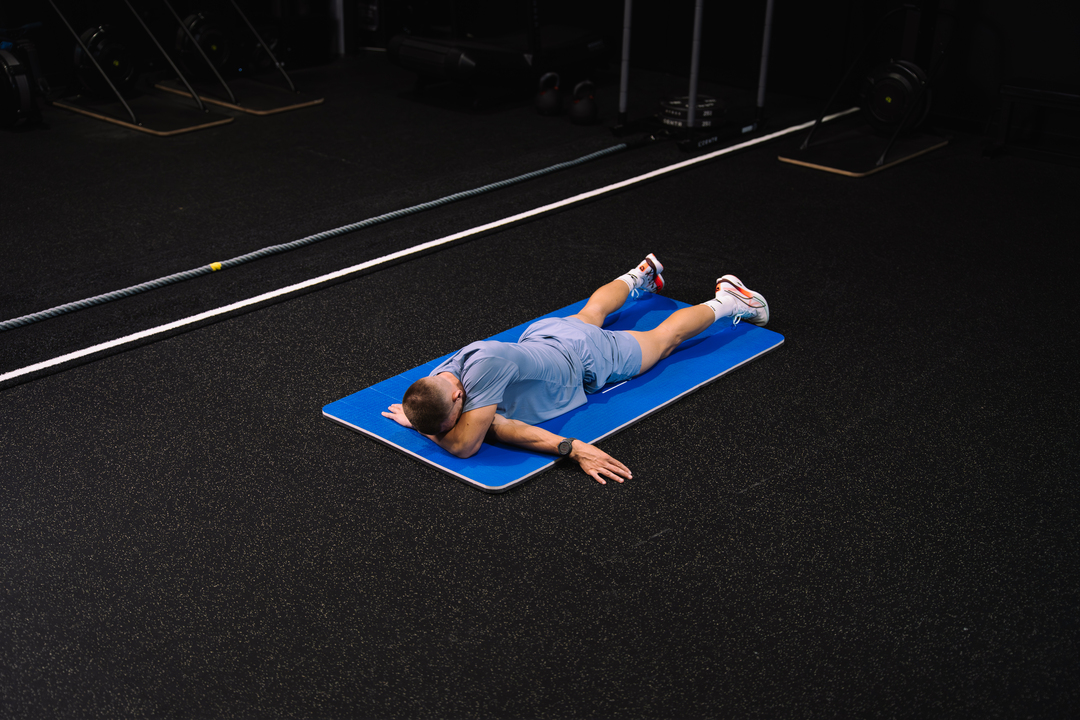
How to Prevent Stress Fractures With Smarter Training and Recovery
.webp)
You've been logging miles, building endurance, and maybe even eyeing that next race when a nagging pain in your shin or foot stops you cold. Stress fractures derail more runners than almost any other injury, turning weeks of progress into months of forced rest. Learning how to prevent stress fractures from running isn't just about avoiding pain; it's about training smarter so you can keep doing what you love without the setbacks that come from overuse and inadequate recovery.
That's where building a foundation of proper movement and recovery becomes essential. Pliability's mobility app provides targeted routines that strengthen vulnerable areas, improve your running mechanics, and help your body adapt to training loads more effectively. Instead of guessing what your body needs, you receive specific guidance that keeps your bones, muscles, and connective tissue resilient enough to handle the demands you place on them.
Summary
- Stress fractures account for up to 20% of all sports-related injuries, affecting recreational runners and weekend warriors as frequently as elite athletes. The injury develops through silent microdamage accumulation that occurs long before pain appears, making early detection nearly impossible.
- A previous history of stress fracture dramatically increases your risk of future bone stress injuries, according to research published in the British Journal of Sports Medicine. Once a bone breaks, it becomes a permanent vulnerability unless you address the underlying movement patterns and training habits that caused the initial injury.
- Athletes experiencing low energy availability face a 2- to 4-fold higher risk of stress fractures than those fueling adequately for their training demands. Chronic underfueling disrupts hormones, directly impairing bone formation and downregulating nightly repair processes that fix microdamage before it accumulates.
- Research tracking younger athletes shows that those sleeping fewer than eight hours per night face significantly higher stress fracture risk compared to peers getting adequate rest. Bone remodeling accelerates during deep sleep stages, and cutting sleep to 5 or 6 hours literally shortens the biological window your bones have to complete their nightly maintenance cycle.
- Athletes following a gradual training progression with an acute to chronic workload ratio below 1.5 experienced a 30 to 50% reduction in injuries according to research in the International Journal of Innovative Technologies in Social Science. Sudden jumps in training volume or intensity create the most predictable path to bone breakdown because the cardiovascular system adapts within days, while bones require weeks to months.
Pliability's mobility app addresses this by providing structured routines that target the specific movement limitations and compensation patterns that concentrate stress on vulnerable bones, helping distribute impact forces more evenly across your body rather than funneling them into the same overloaded sites.
Why Stress Fractures Sneak Up on Runners (Even When Training Feels “Fine”)

Stress fractures develop through a progression that's nearly impossible to detect early. Your bones accumulate microdamage silently, long before you feel anything wrong. By the time sharp pain forces you to stop, the damage has already progressed beyond the reversible stress reaction stage into an actual crack that requires weeks or months off. Did you know that stress fractures account for up to 20% of all sports-related injuries? That's not just elite athletes pushing extreme mileage. That's recreational runners, weekend warriors, and people following sensible training plans who suddenly find themselves sidelined.
What a Stress Fracture Actually Is
A stress fracture is a small crack in a bone caused by repeated loading, not by a single traumatic event such as a fall. Think of it like bending a paperclip back and forth. The first few bends feel fine. The metal shows no visible damage. Microscopic changes are occurring within the structure. Keep bending, and eventually it snaps.
How Bone Stress Builds Strength or Injury
Your bones work the same way. Every footstrike creates microscopic damage. Under normal circumstances, your body repairs this damage during recovery, and your bones actually become stronger through the process. The right amount of stress drives improvement. But when the rate of damage exceeds the rate of repair, those tiny cracks accumulate.
From Stress Reaction to Fracture
The injury begins as a stress reaction, characterized by swelling and inflammation around the bone. At this stage, the bone structure is still intact. If you catch it here and rest, you might be back to running in a few weeks. Miss this window, and the microdamage progresses into an actual fracture. That's when you're looking at several months of complete rest while the bone heals.
Where Runners Develop Stress Fractures
The bones that bear the most repetitive load get hit hardest. Research shows runners typically develop stress fractures in three primary areas:
- The tibia (shin bone)
- The femoral neck (where your thigh bone meets your hip)
- The metatarsals (bones in your feet)
These sites absorb tens of thousands of impacts during a typical training week.
Why Fracture Location Matters
The location matters because it determines both severity and recovery time. A metatarsal stress fracture in your foot might heal in six to eight weeks with a walking boot. A femoral neck stress fracture is far more serious, sometimes requiring surgery and months of non-weight-bearing recovery. The stakes aren't equal across all bone stress injuries.
The Two Primary Causes
Training load that exceeds your current tolerance causes most stress fractures. Like most running injuries, the problem isn't the activity itself but the mismatch between what you're asking your body to do and what it's currently adapted to handle. According to research on bone stress injuries, exceeding your bones' training tolerance is the primary driver of injury.
Why Training Tolerance Changes
The challenge is that tolerance isn't a fixed number. It varies based on dozens of factors, including your training history, sleep quality, stress levels, running surface, footwear condition, and, especially, nutrition. That 35 miles per week that felt comfortable last month might suddenly become excessive if other factors change.
How Under-Fueling Raises Injury Risk
Under-fueling dramatically lowers your training tolerance. RED-S (Relative Energy Deficiency in Sport) describes the physical, mental, and social consequences when athletes don't consume enough calories relative to their energy expenditure. According to a consensus statement from the International Olympic Committee, athletes experiencing RED-S face tremendously elevated risk of bone stress injury. Not eating enough doesn't directly cause the fracture, but it makes your bones far more vulnerable to the training load you're putting on them.
When Adaptation Breaks Down
When you're not fueling adequately, the mileage your body previously handled becomes suddenly excessive. Your bones lose their capacity to repair microdamage at the rate they once could. The training hasn't changed, but your body's ability to adapt to it has collapsed.
Why Pain Appears so Late
The most dangerous aspect of stress fractures is the delayed pain response. You can accumulate significant microdamage while feeling completely fine during your runs. One runner described feeling great on Monday, running nicely, then experiencing severe soreness on Tuesday. That disconnect between when damage occurs and when you feel it creates a false sense of security.
Early Warning Signs of Stress Reactions
By the time sharp, localized pain forces you to stop, you've likely been running on a developing stress reaction for days or weeks. The bone was sending signals, but they were subtle. A dull ache that disappeared after warming up, slight tenderness when pressed on the area, and discomfort that improved the next day. These early warnings are easy to dismiss as normal training soreness.
Why “Silent” Accumulation is Dangerous
Silent accumulation means runners often continue training during the critical window when rest could prevent progression to a full fracture. You're not ignoring obvious pain. You're responding to what your body seems to be telling you, that everything is manageable. Until suddenly it isn't.
The Real Consequences
Long layoffs destroy training momentum and competitive seasons. When you're forced to take several months completely off, you don't just lose fitness. You lose the specific adaptations you spent months building, like neuromuscular patterns, metabolic efficiency, and connective tissue resilience. Coming back means essentially starting over, but now with the psychological weight of knowing your body broke down once already.
The Frustrating Cycle of Setbacks
The injury creates a frustrating cycle. You rest, you strengthen, you follow every protocol. You feel good, so you attempt to return to training. Then the pain returns, resetting your progress to zero. After trying everything and still experiencing setbacks, the helplessness becomes as debilitating as the physical injury itself.
Why Muscle Protocols Don’t Fix Bones
Recovery protocols that work for muscle or tendon injuries don't translate directly to bone stress injuries. Strengthening your glutes and hips helps, but it doesn't accelerate bone healing. Gradual return plans make sense in theory, but knowing exactly how much load is safe remains maddeningly unclear. The difficulty in determining your bone's current tolerance creates constant anxiety about whether today's run will trigger another setback.
Proactive Mobility to Reduce Stress
Building resilience before microdamage accumulates requires a different approach. Pliability's mobility app provides targeted routines to address movement limitations and compensation patterns that increase bone-loading stress. Consistent mobility work (15-25 minutes, 3-5 times per week) helps distribute impact forces more evenly across your body, reducing stress on vulnerable areas. Instead of reacting to pain that appears too late, you're proactively building the movement quality that keeps bone stress within recoverable limits.
Related Reading
- Injury Prevention Strategies
- What is Injury Prevention
- Cold Therapy for Athletes
- Can Tennis Elbow Cause Shoulder Pain
- Basketball Injury Prevention
- How to Prevent Pickleball Injuries
- How To Stop Wrist Pain From Lifting Weights
- Most Common Tennis Injuries
- How to Prevent Knee Pain When Running
- How Can You Prevent Injury While Cycling
- Injury Prevention for Athletes
Habits and Risk Factors That Put Runners at Risk for Stress Fractures

The habits that increase stress fracture risk aren't dramatic mistakes. They're incremental decisions that seem reasonable in isolation but compound into bone breakdown when layered together. A 10% weekly mileage increase, a switch to harder training surfaces, skipping a few recovery meals because you're busy. Each choice alone feels manageable. Over weeks, combined, they push your bones beyond their repair capacity while you feel fine during runs.
The Mileage Spike Trap
Sudden jumps in training volume or intensity create the most predictable path to bone stress injury. You finish a training block feeling strong, so you add an extra tempo run or extend your long run by three miles. Your cardiovascular system adapts quickly to these changes. Your bones don't. They need weeks to months to strengthen in response to new loading patterns, but the damage accumulates immediately.
Proven Risk Factors for Stress Fractures
According to Wright AA and colleagues in the British Journal of Sports Medicine, previous history of stress fracture and female sex are the only two risk factors strongly supported by the data. That narrow evidence base reveals an important point. Most conventional wisdom about stress fractures rests on theory rather than proof. What we do know is that once you've fractured, your risk of doing it again increases substantially. A broken bone becomes a permanent vulnerability unless you address the underlying patterns that caused the initial injury.
How the 10% Rule Can Fail
The 10% rule (never increase weekly mileage by more than 10%) sounds conservative until you realize how quickly those increments stack up. Going from 30 to 33 miles feels trivial. But if you're also running those miles faster, on harder surfaces, or while under-recovered from other life stress, that 10% becomes the final load that tips your bones into breakdown.
Surface and Impact Accumulation
Concrete and asphalt don't absorb shock. Your bones do. Training exclusively on hard surfaces means every footstrike transfers maximum force directly into your skeletal system. The impact doesn't disappear. It gets absorbed by whatever structure is least prepared to handle it, usually your tibia, metatarsals, or femoral neck.
Surface Matters More Than You Think
Runners often dismiss surface as a minor variable compared to mileage or pace. But the cumulative difference between 40 miles on concrete versus 40 miles on trails or grass is enormous. Hard surfaces don't just increase peak impact forces. They eliminate the subtle variations in foot placement and loading that softer, uneven terrain naturally creates. That repetitive, identical stress pattern is exactly what drives microdamage accumulation.
Muscle Weakness and Compensation Patterns
Weak hips, calves, and core muscles force your bones to absorb loads that should be distributed across multiple structures. When your glute medius can't stabilize your pelvis during single-leg stance, your femur twists slightly with each step. That rotational stress adds up over thousands of footstrikes. When your calves fatigue early in a run, your shins take over the work they weren't designed to handle.
Why Exercises Alone May Not Fix Pain
The exhausting loop many runners describe (feeling good one day, sharp pain the next, rest for weeks, return cautiously, pain returns within days) often stems from this compensation cascade. You've tried every shin splint exercise. You've done clamshells, leg raises, ankle circles, and towel scrunches. You're rolling your arches and scraping your fascia. Yet the pain persists because the exercises aren't being loaded progressively enough to actually strengthen the structures under running-specific demands.
Progressive Overload is Key for Running Strength
Doing many exercises doesn't equal doing them with adequate resistance to drive adaptation. Bodyweight calf raises can feel challenging at first, but your calves must handle forces exceeding three times your body weight during running. Without progressive overload (adding weight, increasing reps to near failure, or incorporating single-leg variations), you're at best maintaining current strength, not building the capacity to handle increased training loads.
Structured Mobility Prevents Microdamage
Most mobility program runners fail because they're either too generic (random YouTube videos with no progression logic) or too reactive (only addressing areas that already hurt). Platforms like Pliability approach this differently by providing structured routines that target the specific mobility limitations and compensation patterns that concentrate stress on vulnerable bones. Consistent work (15 to 25 minutes, three to five times per week) builds movement quality that distributes impact forces evenly rather than funneling them into the same overloaded sites. Instead of reacting to pain signals that arrive too late, you're building resilient movement patterns before microdamage begins.
Nutrition Deficits That Weaken Bone
Under-fueling doesn't just slow your runs. It fundamentally changes your bones' ability to repair daily microdamage. When you're not consuming enough calories relative to your training demands, your body prioritizes immediate survival over long-term bone maintenance. Bone remodeling gets downregulated. The microdamage that should be repaired overnight accumulates instead.
RED-S and Bone Health in Runners
Female runners face a particularly high risk when menstrual cycles become irregular or stop entirely due to low energy availability. The hormonal changes associated with RED-S directly impair bone formation. But this isn't just a female issue. Male runners who chronically under-eat also experience hormonal disruptions that compromise bone health, though the warning signs are less obvious without menstrual cycle changes to flag the problem.
The Hidden Cost of Energy Deficiency
The challenge is that energy deficiency feels productive in the short term. You're lighter, which may initially improve race times. You're disciplined, which feels like control. But your bones are silently weakening. By the time pain forces you to stop, you've been training on compromised bone density for months.
Sleep Debt and Incomplete Recovery
Bone remodeling happens primarily during sleep. When you're consistently getting six hours instead of eight, you're cutting short the biological processes that repair microdamage. This isn't about feeling tired during runs. It's about literally not giving your bones enough time to complete their nightly maintenance cycle.
Recovery is an Active Process
Recovery isn't passive rest. It's an active biological process that requires adequate time, nutrition, and hormonal signaling. Training stress breaks things down. Recovery builds them back stronger. When recovery is chronically insufficient (poor sleep, high life stress, back-to-back hard training days without easy buffer runs), the balance tips toward breakdown.
Why Symptom-Focused Fixes Fail
The frustration of trying everything and making no progress often stems from addressing symptoms (doing more exercises, resting longer) without fixing the underlying recovery deficit. Your bones can't strengthen if they never get the biological resources and time they need to complete the adaptation process.
Related Reading
- Do Muscle Tears Heal On Their Own
- Forearm Strain
- How Can Strengthening Muscles Prevent Injury
- Quad Strain Recovery Time
- Urgent Care For Pulled Muscle
- How To Heal A Calf Strain Quickly
- How To Prevent Hamstring Injuries
- How Long Does a Sprained Knee Take to Heal
- How Does Stretching Prevent Injury
- How To Strengthen Shins For Running
- Athletic Injury Recovery
How to Prevent Stress Fractures With Smarter Training and Recovery
.jpg)
Preventing stress fractures requires building bone resilience before microdamage accumulates, not just reacting once pain appears. The strategies that work address the specific mechanisms that cause breakdown, such as excessive loading relative to current tolerance, inadequate recovery between stress exposures, and nutritional deficits that impair bone remodeling. Simple changes in how you structure training, fuel your body, and prepare your movement system can dramatically reduce your risk.
Build Strength That Protects Bones
Muscle and bone function as an integrated system. Strong muscles absorb impact forces that would otherwise concentrate in your skeletal structure. When your glutes, quads, and calves can handle the eccentric loading of each footstrike, your tibia and femur experience less direct stress. According to research published in the International Journal of Innovative Technologies in Social Science, athletes following a gradual training progression (maintaining an acute-to-chronic workload ratio below 1.5) experienced a 30-50% reduction in injuries.
Progressive Strength Builds Bone Capacity
That protection requires actual strength development, not just range-of-motion exercises. Bodyweight exercises maintain current capacity. Progressive resistance training builds new capacity. Add weight to your squats and lunges. Progress to single-leg variations that challenge stability under load. Increase reps until the final few feel genuinely difficult. Your bones adapt to the demands you place on them, but only when those demands progressively increase.
Strength Training Supports Running Durability
Runners often separate strength training from running, treating them as competing priorities. Strength training directly supports your running durability. Two to three sessions per week of compound movements (squats, deadlifts, step-ups, calf raises with added weight) create the muscular foundation that distributes impact forces evenly rather than funneling them into the same vulnerable sites.
Add Plyometric Loading Strategically
Hopping and jumping exercises create brief, high-magnitude forces that stimulate bone formation differently than steady-state running. Plyometrics trains your bones to handle sudden loads, improving their structural resilience. Start with low-intensity variations, such as double-leg hops in place, small box jumps, skipping. Progress gradually to single-leg hops and higher boxes as your tolerance builds.
Controlled Exposure Drives Adaptation
The key is controlled exposure. Two 10- to 15-minute sessions per week provide sufficient stimulus to drive adaptation without overwhelming your current capacity. Land softly, focusing on absorbing force through your entire kinetic chain rather than letting your joints take the impact. These brief, focused sessions complement your running volume rather than replacing it.
Plyometrics Strengthen Bones Safely
Many runners avoid plyometrics because they feel risky after experiencing bone stress injuries. But controlled jumping actually prepares your skeleton for the unpredictable forces you'll encounter during races and hard workouts. The lateral movements, directional changes, and varied loading patterns build a more robust skeletal structure than running alone ever could.
Prioritize Sleep as Recovery Infrastructure
Bone remodeling accelerates during deep sleep stages. When you consistently get seven to eight hours, you're giving your body adequate time to complete the nightly repair cycle that fixes microdamage before it accumulates. Cutting sleep to 5 or 6 hours doesn't just make you tired. It shortens the biological window during which your bones can strengthen.
Sleep Deficit Raises Stress Fracture Risk
Research tracking younger athletes shows that those sleeping fewer than eight hours per night face significantly higher stress fracture risk compared to peers getting adequate rest. The difference isn't marginal. Sleep debt creates a recovery deficit that compounds over weeks, gradually lowering your training tolerance until loads you previously handled become excessive.
Treat Sleep Like Training
Treat sleep with the same discipline you apply to your training plan. Consistent bed and wake times, even on weekends, help regulate the hormonal cycles that drive bone formation. Dark, cool rooms and minimal screen exposure before bed improve sleep quality. When training volume increases, sleep needs increase proportionally. Your bones can't adapt to harder training if they never get the recovery time required to complete that adaptation.
Fuel Adequately for Your Training Demands
Athletes with low energy availability face a 2- to 4-fold higher risk of stress fractures than those with adequate energy availability. That elevated risk stems from hormonal disruptions that directly impair bone formation. When your body doesn't receive enough calories relative to your energy expenditure, it downregulates non-essential processes. Bone remodeling gets sacrificed to preserve immediate survival functions.
The Hidden Risk of Under-Fueling
The challenge is that underfueling often feels productive initially. You're lighter, which might temporarily improve pace. You feel disciplined and in control. But your bones are weakening silently. By the time pain forces you to stop, you've been training on compromised bone density for months.
Fuel Properly to Protect Bones
Adequate fueling means eating enough to support your resting metabolic needs and your training energy expenditure, plus a buffer for recovery. Spread your intake throughout the day, particularly around training sessions. Protein supports muscle repair, but carbohydrates provide the energy substrate that prevents your body from breaking down tissue for fuel. Calcium (1200 to 1500 mg daily) and vitamin D (maintaining blood levels at or above 30 ng/mL) provide the raw materials for bone formation.
Track Intake to Avoid Energy Deficits
Track your intake for a week if you're uncertain whether you're eating enough. Many runners consume 500 to 800 fewer calories than they need, creating a chronic energy deficit that undermines other injury-prevention strategies.
Progress Training Volume Gradually
Sudden jumps in weekly mileage, workout intensity, or running frequency create the most predictable path to bone breakdown. Your cardiovascular system adapts to new demands within days. Your bones need weeks to months. That mismatch means you can feel aerobically ready to handle increased training while your skeletal system is still vulnerable.
Use the 10% Rule Wisely
The familiar 10% rule provides a starting framework, but it's not absolute. If you're adding mileage, keep intensity steady. If you're increasing workout difficulty, maintain your weekly volume. Change one variable at a time, giving your body at least two to three weeks to adapt before introducing the next progression.
Adapt Gradually to Surface Changes
Pay particular attention to surface changes. Switching from trails to roads, or from a treadmill to outdoor running, alters impact forces even if mileage stays constant. Your bones need time to adapt to new loading patterns. Introduce surface transitions gradually, mixing old and new environments for several weeks before fully committing to the change.
Develop Movement Quality That Distributes Stress
Compensation patterns concentrate force on specific bones rather than distributing load across your entire kinetic chain. When your ankle mobility is limited, your foot strikes with less shock absorption, transferring more impact directly to your tibia. When your hip flexors are tight, your stride shortens and your cadence increases, changing the magnitude and frequency of bone loading.
Proactive Mobility Prevents Injury
Most runners address mobility reactively, stretching only the areas that already hurt. But by the time you feel tightness or pain, compensation patterns have already been altering your movement for weeks. Proactive mobility work identifies and addresses restrictions before they create injury-producing stress concentrations.
Choose Appropriate Footwear For Your Structure
Shoes influence how impact forces are transferred through your skeletal system. Worn-out cushioning, inappropriate arch support, or midsoles that don't match your foot structure alter loading patterns in ways that concentrate stress on specific bones. The shoe that worked perfectly for 400 miles loses its protective qualities as materials compress and degrade.
Choose Shoes for Your Foot Type
Footwear needs vary based on individual anatomy. Flat feet often require stronger arch support to prevent excessive pronation, which can twist the tibia with each step. High arches need more cushioning to absorb shock that rigid foot structures can't dissipate naturally. The shoe that feels great on your training partner might create stress concentrations in your unique skeletal structure.
Replace and Transition Shoes Gradually
Replace shoes every 300 to 500 miles, depending on your weight, running surface, and strike pattern. Track mileage in a training log or use apps that monitor shoe wear. When transitioning to a new shoe model or brand, alternate between old and new pairs for two to three weeks. This gives your bones time to adapt to the slightly different loading patterns the new shoe creates.
Incorporate Low-Impact Cross-Training
Swimming, cycling, and rowing provide cardiovascular stimulus without the repetitive bone loading that running creates. These activities maintain aerobic fitness while giving your skeletal system recovery time between running sessions. One to two cross-training sessions per week can maintain or even improve your running fitness while reducing cumulative bone stress.
Choose Low-Impact Cross-Training
The key is choosing truly low-impact alternatives. Elliptical machines still create significant bone loading despite feeling easier than running. Pool running maintains running-specific movement patterns without impact forces. Cycling builds leg strength and aerobic capacity while your bones recover from the week's running stress.
Use Cross-Training to Manage Load
Cross-training becomes particularly valuable during training volume increases. When you're building from 30 to 40 miles per week, replacing one run with a cycling or swimming session allows you to increase total training stimulus while controlling bone loading stress. Your aerobic system continues to adapt while your bones receive additional recovery time.
Recognize Early Warning Signals
Dull aches that disappear after warming up, slight tenderness when pressing on a specific bone, or discomfort that feels better the next day are all early signs of stress reaction. These subtle warnings appear before sharp, localized pain forces you to stop. Catching bone stress at this stage means a few weeks of modified training rather than months of complete rest.
Spotting Bone Stress vs. Muscle Soreness
The challenge is distinguishing normal training soreness from early stress reactions. Muscle soreness is diffuse, improves with movement, and resolves within 48 hours. Bone stress causes pinpoint tenderness in a specific area, worsens with continued loading, and persists for multiple days. When pain localizes to a small area you can cover with two fingers, and pressing directly on that spot recreates the discomfort, you're likely dealing with bone stress rather than muscle fatigue.
Act Early to Prevent Fractures
Take these early signals seriously. Reduce your running volume by 30 to 50% for one to two weeks. Add an extra rest day. Replace a hard workout with easy miles. These small modifications often prevent progression to a full fracture, allowing you to maintain training momentum rather than facing a complete shutdown.
Related Reading
- How To Fix Lower Back Pain From Running
- Care And Prevention Of Athletic Injuries
- Knee Injury Prevention Exercises
- Compression Therapy For Athletes
- Soccer Injury Prevention Exercises
- Best Foam Roller For Runners
- Ankle Injury Prevention Exercises
Protect Your Bones and Prevent Running Injuries with Pliability
Stress fractures don't announce themselves with obvious warnings. Tiny micro-injuries accumulate silently while you feel fine during runs, and weak muscles or restricted mobility make bones more vulnerable to repetitive loading patterns that concentrate stress on the same sites. Staying flexible, strong, and properly recovered isn't optional maintenance. It's the infrastructure that keeps your bones within their tolerance limits.
Mobility and Recovery for Runners
Pliability provides runners with a comprehensive mobility and recovery toolkit designed to strengthen supporting muscles, improve range of motion, and reduce repetitive stress patterns that lead to bone breakdown. With personalized programs, daily-updated routines, and a unique body-scanning feature, you can focus on building training capacity without increasing your fracture risk. The app provides expert-led video sessions (15 to 25 minutes, three to five times per week) that systematically address movement restrictions and compensation patterns that most runners don't realize they have until pain forces them to stop.
Try Pliability Free for 7 Days
Sign up today and get seven days free on iPhone, iPad, Android, or the web. Start protecting your body and improving your running performance from your very first session. Try Pliability free and keep your bones and muscles strong for every run.
.jpg)