How to Strengthen Shins for Running and Prevent Injury
.webp)
Every runner knows that sinking feeling when shin pain forces them to cut a run short or take weeks off training. Shin splints and anterior tibialis strain derail countless runners each year, turning what should be an energizing routine into a frustrating cycle of pain and recovery. Understanding how to strengthen shins for running isn't just about adding another exercise to your routine; it's about building resilient legs that can handle the repetitive impact of miles logged week after week, allowing you to stay consistent with training without pain or interruptions.
That's where a structured approach makes all the difference. Pliability's mobility app provides targeted exercises designed to build stronger shins and prevent running injuries before they start. Instead of guessing which exercises work or scrolling through conflicting online advice, you get a clear path forward with guided routines that strengthen the muscles, tendons, and connective tissue around your shins, keeping you on the road and out of the recovery zone.
Summary
- Running creates ground reaction forces between two and three times your body weight with every foot strike, and the tibialis anterior muscle must control that impact by decelerating your foot smoothly after toe-off. When this muscle is weak, your foot slaps down instead of landing with control, creating shock waves that travel up your leg and force other muscles to compensate.
- Bones and connective tissue adapt more slowly than cardiovascular fitness, which creates a dangerous gap when runners increase training loads. You can build aerobic capacity in weeks, but bone remodeling takes months. When runners increase weekly mileage by more than 10% or suddenly add speed work without a strength base, they ask their shins to handle forces the tissue hasn't had time to accommodate.
- Overpronation changes how force travels through your lower leg by causing excessive inward foot roll after heel strike, which rotates your tibia internally to compensate. That rotation pulls on the muscles and fascia attached to the bone, creating tension that exceeds the tissue's capacity to withstand repeated strain.
- Eccentric strengthening specifically targets the tissue stress patterns that lead to shin pain, according to a 2022 Cureus review. The eccentric phase of exercises, where you slowly control the lowering movement over three to five seconds, trains your tibialis anterior to control foot descent during running.
- Hip and gluteal weakness can cause shin problems because weak posterior chain muscles allow your pelvis to drop during single-leg stance. That pelvic drop rotates your femur inward, which rotates your tibia, which changes your foot strike pattern and shifts forces onto tissues that aren't designed to handle them.
Pliability's mobility app offers guided routines that combine shin-strengthening with complementary mobility work for your calves, ankles, and hips, building the complete movement foundation runners need to stay healthy through training cycles.
Table of Contents
- Why Shin Strength Matters for Runners
- Common Causes of Weak Shins and Shin Pain
- Step-by-Step Exercises to Strengthen Shins for Running
- Strengthen Your Shins and Boost Running Performance
Why Shin Strength Matters for Runners

Your shins do more than just connect your knee to your ankle. The tibialis anterior and surrounding stabilizers control how your foot lands, absorbs impact, and pushes off with every stride. When these muscles function properly, they act as shock absorbers that protect your bones, joints, and connective tissue from the repetitive stress of running. When they're weak or imbalanced, that stress gets transferred directly to structures that weren't designed to handle it alone.
Shin Splints in Runners
According to MD Ortho Specialists, up to 20% of runners experience shin splints annually. That number tells only part of the story. Behind each case sits a cascade of compensations, such as altered stride mechanics, overworked calves, stressed knee joints, and training plans derailed by pain that could have been prevented.
The Real Job of Your Shin Muscles
The tibialis anterior runs down the front of your lower leg and is responsible for dorsiflexion (lifting your toes toward your shin) and for controlling how your foot strikes the ground after each stride. This eccentric loading, the controlled lengthening under tension, happens thousands of times during a single run. When this muscle is strong, it decelerates your foot smoothly. When it's weak, your foot slaps down, sending shock waves up through your tibia with nowhere else to go.
Foot Stabilizers in Running
The posterior tibialis, peroneals, and other stabilizers work in concert to control pronation and maintain your arch throughout the gait cycle. These muscles don't just move your foot. They stabilize it against rotational forces, prevent excessive collapse, and ensure your ankle stays aligned as you transition from heel strike to toe-off. Weakness here doesn't announce itself with obvious symptoms at first. Instead, you might notice your legs feel heavy late in runs, or that soreness lingers longer than it should.
What Happens When Shin Strength Falls Behind
Most runners don't realize their shins are weak until pain forces them to address it. The muscles fatigue earlier in runs, shifting load to bones and connective tissue that aren't equipped to handle sustained stress. The periosteum, that nerve-rich lining wrapped around your tibia, becomes irritated as muscles and tendons pull harder than they should. What starts as a dull ache after running progresses to sharp pain during runs, then to tenderness you can't ignore even when walking.
When Bone Stress Outpaces Repair
Medial Tibial Stress Syndrome develops when the demand placed on these structures exceeds their capacity for repair. Your body tries to adapt, laying down new bone tissue to handle the stress, but if you keep running without addressing the underlying weakness, microdamage accumulates faster than healing occurs. Those tiny cracks that don't show up on early X-rays? They're your body waving a red flag you can't afford to ignore.
Pressure Without Release
Compartment syndrome presents differently but stems from similar imbalances. The anterior compartment swells during activity, but the fascia surrounding it doesn't expand. Pressure builds, compressing nerves and blood vessels, creating that tight, burning sensation that eases with rest but returns the moment you start running again. It's frustrating because rest provides temporary relief without resolving the issue. The next run brings the same cycle.
How Strong Shins Change Your Running
Strengthening your shin muscles doesn't just prevent injury. It improves how efficiently you run. When your tibialis anterior controls foot placement with precision, you waste less energy on unnecessary motion. Your stride becomes cleaner. Ground contact time decreases. The spring in your step comes from muscles doing their job, not from compensatory patterns that will eventually break down.
Strong Stabilizers, Better Form
Strong stabilizers help keep your ankle aligned throughout the gait cycle, reducing rotational stress on your knee and hip. Your arch maintains its structure under load rather than collapsing inward, keeping your kinetic chain aligned from foot to hip. This matters more as mileage increases. The runner who can maintain form at mile 20 of a marathon often has stronger stabilizers than the one whose mechanics deteriorate after mile 10.
Protecting Joints for the Long Run
Long-term joint health depends on muscles absorbing the forces of running. Cartilage doesn't regenerate well. Once you've worn through it, your options narrow significantly. Building resilient shin muscles now means your knees, ankles, and hips face less cumulative stress over the years of running. You're not just training for next month's race. You're building a body that can keep running for decades.
Building Resilience Through Targeted Work
The familiar approach treats shin problems reactively. Pain appears, you rest, the pain subsides, you resume running, and the cycle repeats. This pattern keeps you in a loop where you're always managing symptoms instead of building capacity. As training volume increases or race season approaches, that approach breaks down. Rest periods are shorter because you can't afford downtime, but the underlying weakness persists.
Targeted Routines for Runners
Platforms like Pliability offer guided routines designed for runners to strengthen vulnerable areas before problems develop. Targeted exercises for tibialis work, calf balance, and ankle mobility address the specific demands of running on your lower legs. The difference between random shin exercises and a structured progression matters more than most runners realize. Consistency builds adaptation, and expert-designed sequences ensure you load tissues appropriately as they strengthen.
Related Reading
- Injury Prevention Strategies
- What is Injury Prevention
- Cold Therapy for Athletes
- Can Tennis Elbow Cause Shoulder Pain
- Basketball Injury Prevention
- How to Prevent Pickleball Injuries
- How To Stop Wrist Pain From Lifting Weights
- Most Common Tennis Injuries
- How to Prevent Knee Pain When Running
- How Can You Prevent Injury While Cycling
- Injury Prevention for Athletes
Common Causes of Weak Shins and Shin Pain
Shin pain doesn't appear randomly. It builds from specific mechanical stresses, training errors, and structural imbalances that accumulate until tissue capacity can't keep up with demand. According to the Australian Journal of General Practice, up to 35% of injuries among runners involve the lower leg, with shin pain among the most persistent complaints in the sport. Understanding what creates that vulnerability matters because strengthening without addressing root causes just builds muscle on top of dysfunction.
Overuse and Training Errors
The American Academy of Pediatrics recommends a 10% weekly increase in exercise frequency, duration, or intensity, yet most runners exceed this threshold without hesitation. You add an extra mile here, pick up the pace there, throw in hill repeats because you feel strong that day. Each decision seems reasonable in isolation. Cumulatively, they create repetitive stress that outpaces your body's repair mechanisms.
Recovery Prevents Shin Damage
Your shin muscles and bones need time to rebuild between training sessions. Microtrauma occurs naturally during running. That's how adaptation works. But when you stack hard efforts without adequate recovery, damage accumulates faster than healing occurs. The tibialis anterior fatigues earlier in runs, shifting load to the periosteum and bone tissue. What begins as muscle soreness transitions into inflammation along the tibia, then progresses to pain you can't ignore.
Warm-Up Before You Run
Skipping warm-ups compounds this problem. Cold muscles lack the elasticity and blood flow needed to handle sudden stress. You start your run at a pace before tissues are ready, forcing them to absorb impact they're not prepared for. The first mile feels harder than it should, but you push through because that's what runners do. Meanwhile, your shins are taking hits they'll remind you about later.
Biomechanical Inefficiencies
Overpronation places excessive rotational stress on your tibia with every foot strike. Your foot rolls inward beyond its natural range, and the shin bone compensates by twisting slightly to maintain alignment. This happens thousands of times per run. The muscles along your shin work overtime trying to control that motion, fatiguing faster than they should. Eventually, they can't keep up, and the stress transfers directly to bone and connective tissue.
Flat Arches, Hidden Strain
Flat arches create similar problems through different mechanics. Without proper arch support, your foot collapses inward during the stance phase, altering how forces are distributed through your lower leg. Your posterior tibialis and other stabilizers strain to prevent excessive pronation, becoming overworked and inflamed. The kinetic chain above your ankle compensates, creating alignment issues that ripple up through your knee and hip.
Small Imbalances, Big Impact
Gait abnormalities you've carried for years suddenly matter when training volume increases. That slight asymmetry in your stride, the way one foot lands differently than the other, the tendency to lean forward more than optimal. These patterns existed before, but low mileage masked their impact. Add consistent training load, and inefficiencies that were manageable at 15 miles per week become problematic at 35 miles per week.
Footwear and Running Surfaces
Worn-out shoes lose their cushioning properties long before they look ready for retirement. The midsole compresses, stability features degrade, and shock absorption diminishes. You're essentially running on harder surfaces than you realize because your shoes can't do their job anymore. More impact transfers directly to your shins with every stride, and that cumulative stress adds up faster than most runners expect.
Hard Surfaces, Higher Stress
Running on concrete or asphalt magnifies these forces. Hard surfaces don't absorb shock as well as softer terrain. Your body becomes the primary shock absorber, and your shins bear the brunt of that role. Mix in uneven surfaces or consistent downhill running, and you've created conditions where shin muscles fatigue rapidly while bones face repetitive impact they're not conditioned to handle.
Support Fails, Muscles Compensate
Shoes lacking proper arch support or rearfoot control allow excessive foot motion throughout the gait cycle. Your stabilizers work harder to compensate for what the footwear should manage. This matters most during longer runs when fatigue sets in, and form deteriorates. The support you needed at mile one becomes critical at mile ten, but if your shoes don't provide it, your muscles pay the price.
Muscle Imbalances and Weakness
Tight calves restrict ankle dorsiflexion, forcing your tibialis anterior to work harder just to achieve the normal range of motion. Every time you lift your foot, you're fighting against that tightness. The muscle fatigues prematurely, and once it's exhausted, your foot slaps down instead of lowering in a controlled manner. That's when bones start taking impact, they weren't designed to handle alone.
Imbalance Leads to Shin Strain
Weak calves create the opposite problem but a similar outcome. When your gastrocnemius and soleus can't generate adequate force for push-off, surrounding muscles compensate. Your shin muscles pick up slack; they're not built to carry long-term. The imbalance grows with each run, resulting in one muscle group consistently overworked while another remains underdeveloped.
Weak Hips, Shin Pain
Core and hip weakness might seem unrelated to shin pain, but instability above your ankle affects everything below it. Poor hip control allows excessive internal rotation of your femur during the stance phase. Your tibia rotates to compensate, placing torsional stress on shin muscles and bones. You feel it in your shins, but the root cause sits higher in the kinetic chain.
Anatomical and Structural Factors
Previous lower limb injuries alter how you move, often in ways you don't consciously notice. That ankle sprain from two years ago changed your gait pattern slightly. You favored the injured side during recovery, and some of those compensations stuck around. Now one leg handles more impact than the other, or your foot placement shifted just enough to stress your shins differently. The injury healed, but the movement pattern didn't fully reset.
Uneven Legs, Overworked Shins
Leg length discrepancies create uneven force distribution with every stride. One leg works harder than the other to maintain level hips and forward momentum. The longer leg typically faces more stress, but both sides develop compensatory patterns that can lead to shin problems. Small differences measured in millimeters compound over thousands of foot strikes.
Bone Strength Matters
Bone density variations matter more than most runners realize. Genetics, nutrition history, and training background all influence the robustness of your tibia. Some runners build bone density quickly in response to training stress. Others need more time and careful progression. Push too hard before your bones have adapted, and stress reactions become likely.
Running Form and Technique
Overstriding forces your foot to land well ahead of your center of mass, creating a braking effect with each step. Your shin muscles work harder to control that impact as your foot slaps down from heel strike. The tibialis anterior lengthens rapidly under load, absorbing shock that it's not optimally positioned to handle. Repeat this pattern for miles, and you've created conditions perfect for shin splints.
Step Rate Affects Shin Load
Cadence below the optimal range results in longer ground contact time and higher impact forces per stride. Your foot stays on the ground longer, giving gravity more time to compress tissues. Higher cadence distributes the same total force across more steps, reducing peak load on any single stride. Most runners naturally select cadences that feel comfortable but aren't necessarily what their shins need.
Lean from Hips, Not Ankles
Forward lean from the ankles versus the hips changes how forces travel through your lower legs. Leaning from the ankles shifts more work to your shin muscles throughout the gait cycle. They're constantly engaged, trying to control your center of mass, never getting the brief respite that proper form provides. Over time, this constant tension leads to fatigue and inflammation.
Structured Routines Beat Pain
The familiar pattern treats these causes reactively. Pain develops; you temporarily modify training, symptoms ease, you resume normal patterns, and the cycle repeats. That approach keeps you managing consequences instead of building resilience. Platforms like Pliability provide structured progressions that address multiple contributing factors simultaneously through guided routines targeting shin strength, ankle mobility, and movement quality. Consistency in targeted work builds capacity to prevent problems rather than just treating them after they appear.
Related Reading
- Do Muscle Tears Heal On Their Own
- Forearm Strain
- How Can Strengthening Muscles Prevent Injury
- Quad Strain Recovery Time
- Urgent Care For Pulled Muscle
- How To Heal A Calf Strain Quickly
- How To Prevent Hamstring Injuries
- How Long Does a Sprained Knee Take to Heal
- How Does Stretching Prevent Injury
- Athletic Injury Recovery
Step-by-Step Exercises to Strengthen Shins for Running
1. Ankle Dorsiflexion Stretch
Dorsiflexion is the movement that lifts your foot toward your shin while your heel stays grounded. Poor dorsiflexion forces you to strike the ground with your toes first, sending shockwaves directly into your tibias with every step. This stretch improves the mobility of your shin bones and surrounding muscles, allowing your ankle to flex properly through your running stride.
How to Perform
Stand about two feet from a wall. Move one foot forward and place the ball of your foot against the wall with your heel on the ground. Gently push your knee forward until you feel a stretch in your calf muscles. Hold for 10 seconds and release. Repeat two more times on each leg, gradually increasing duration as your flexibility improves. Start with three sets of 10-second holds. After two weeks, extend to 15-second holds. By week four, aim for 20-second holds with three sets per leg. The progression should feel challenging but never painful.
2. Calf Wall Stretch
A tight Achilles tendon restricts your ankle's range of motion, forcing your foot to overpronate (roll inward excessively) during landing. This inward collapse places uneven stress on your shins. The calf wall stretch, also called the gastrocnemius stretch, lengthens your Achilles and calf muscles, restoring proper ankle mechanics.
How to Perform
Stand three feet from a wall with your hands pressed against it. Step forward with one foot, planting it firmly. Lean forward with your leading knee until you feel a pull in the back of your opposite leg. Keep your back leg straight and your heel down. Hold for 30 seconds, then switch legs. Repeat two more times on each side. Begin with three sets of 30-second holds. After one week, increase to 45-second holds. By week three, work toward 60-second holds while maintaining proper form. The stretch should feel like a gentle pull, not a sharp pain.
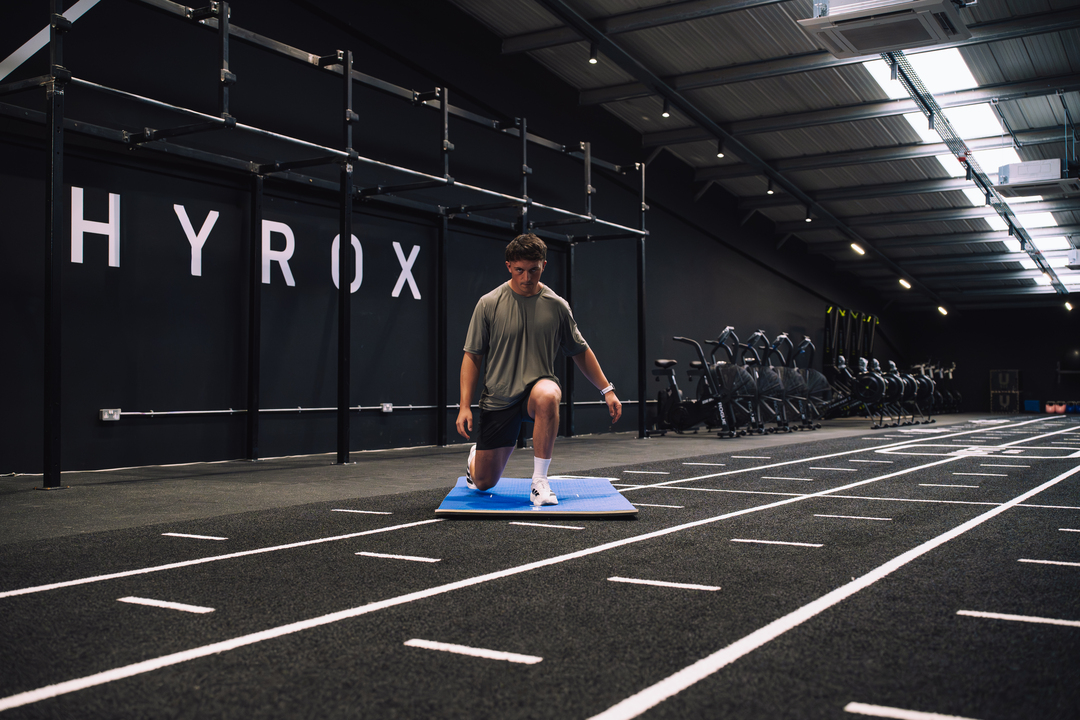
3. Kneeling Shin Stretch
The muscles along the front of your shins (tibialis anterior) absorb tremendous force during the landing phase of running. When these muscles are tight, they can't lengthen properly to absorb impact, transferring stress directly to your shinbones. This stretch releases tension by using your body weight to gently lengthen the tibialis anterior.
How to Perform
Kneel on a mat with your knees and feet together, tops of your feet flat against the floor. Keep your back straight and core tight as you slowly sit back onto your heels. Hold for 15 to 30 seconds. Repeat three times. Start with 15-second holds for the first week. Progress to 20-second holds in week two, then 30-second holds by week three. To increase intensity, place your hands behind you as you lean back, or lift one knee while keeping the other foot pressed down.
4. Assisted Seated Wall Stretch
When your calves are chronically tight, your ankle loses its ability to move through a full range of motion. This decreased mobility causes your foot to overpronate, placing excess stress on your shins. The assisted seated wall stretch uses external resistance (a towel, rope, or band) to pull your foot into full flexion, stretching the calf muscle more effectively than passive stretching alone.
How to Perform
Sit on the floor with your knees straight. Loop a rope or towel around the ball of your foot and gently pull until your foot is fully flexed toward your shin. Hold for 30 seconds, then release. Repeat on the opposite foot. Complete two more sets on each foot. Begin with three sets of 30-second holds. After one week, increase to 45 seconds. By week three, aim for 60-second holds with consistent tension throughout. The stretch should create a deep pull in your calf without causing cramping.
5. Toe Walking
Weak calves fail to absorb the impact forces that would otherwise transfer to your tibias. Toe walking strengthens your calf muscles while improving balance and proprioception (your body's awareness of its position in space). If you have weak calves, start with simple heel raises, holding for 10 seconds while touching a wall for stability.
How to Perform
Rise onto your toes with your heels off the floor and your toes pointed straight ahead. Walk 25 steps. Next, point your toes inward and walk another 25 steps. Finish by pointing your toes outward for 25 more steps. Repeat two more times. Start with three sets of 25 steps in each direction. After one week, increase to 30 steps. By week three, aim for 40 steps per direction. Progress to walking without wall support once your balance improves.
6. Single-Leg Bridges
Hip, pelvis, and knee misalignment create a cascade of biomechanical problems that culminate in your shins absorbing excessive force. Single-leg bridges strengthen your hamstrings, hip flexors, and glutes simultaneously, keeping your entire kinetic chain aligned and stable. This alignment prevents overpronation and distributes impact stress more evenly across your lower leg.
How to Perform
Lie flat on your back with arms by your sides. Bend your knees and plant your feet on the floor. Press your heels and shoulders into the ground, lifting your hips toward the ceiling. Raise one leg straight into the air while keeping your hips high and level. Hold for 10 seconds, then switch legs. Repeat two more times on each leg. Begin with three sets of 10-second holds. After one week, increase to 15 seconds. By week three, work toward 20-second holds while maintaining perfect hip alignment. If you experience lower back discomfort, reduce the hold time and focus on keeping your core engaged.
7. Toe Curls
Flat feet lack the structural support to distribute stress evenly across the foot, resulting in pressure concentrated on the shins. Toe curls strengthen your foot arches and flexor muscles, creating a natural shock-absorption system that protects your lower legs. You can do this exercise standing or sitting, making it easy to practice throughout the day.
How to Perform
Place a hand towel on the floor in front of you. Step one foot onto the towel, lining your heel up with the end. Scrunch your toes to pull the towel toward you. Repeat 10 times on each foot. Start with three sets of 10 repetitions per foot. After one week, increase to 15 repetitions. By week three, aim for 20 repetitions. To increase difficulty, place a light weight (like a book) on the towel.
8. Calf Raises
Strong calf muscles act as shock absorbers, redirecting impact forces away from your tibias and into muscle tissue that's designed to handle load. Calf raises also improve ankle stability and balance, reducing your risk of rolling an ankle on uneven terrain.
How to Perform
Stand on a step with the balls of your feet, heels hanging freely. Push through the balls of your feet to lift both heels into the air. Squeeze your calves at the top and hold for five seconds. Slowly lower your heels to parallel with the step (or slightly below for a deeper stretch). Repeat 10 times on each leg. Begin with three sets of 10 repetitions. After one week, increase to 12 repetitions. By week three, work toward 15 repetitions. Progress to single-leg calf raises once you can complete three sets of 15 with good form.
9. Heel Walking
The tibialis anterior muscle along your shin performs the critical task of lifting your toes during the swing phase of running. When this muscle is weak, your toes drag or strike the ground prematurely, creating excessive shin stress. Heel walking directly strengthens the tibialis anterior while also engaging your calves and quadriceps.
How to Perform
Stand straight with feet planted squarely. Lift your toes as high as possible so you're standing on your heels. Walk 25 steps, then lower your heels and pause. Repeat 10 to 20 times. Start with three sets of 25 steps. After one week, increase to 30 steps. By week three, aim for 40 steps per set. If balance is challenging, practice indoors while holding a wall for support.
10. Toe Raises
While heel walking strengthens the tibialis anterior through dynamic movement, toe raises build the same muscle through isometric holds. This combination of dynamic and static strengthening creates comprehensive resilience in the front of your lower leg, helping it absorb impact stress more evenly.
How to Perform
Stand with your back against a wall and feet 6 to 8 inches in front of you. Keep your heels on the floor and raise the front of your foot toward the ceiling. Hold for 10 seconds, then lower your foot until it almost touches the floor. Repeat three to five times. Begin with three sets of 10-second holds. After one week, increase to 15 seconds. By week three, work toward 20-second holds. Maintain consistent tension throughout each hold.
11. Foot Step Holds
Running requires seamless coordination between your quadriceps, hamstrings, calves, Achilles tendons, and foot arches. Footstep holds trains these structures to work together through a controlled, slow-motion walking pattern that builds strength and motor control simultaneously.
How to Perform
Stand with feet shoulder-width apart. Step forward with one leg, letting your heel touch the floor without lowering the ball of your foot. Hold for 10 seconds, then step back to the starting position. Switch feet and repeat. Complete two more sets on each leg. Start with three sets of 10-second holds per leg. After one week, increase to 15 seconds. By week three, aim for 20-second holds. This exercise challenges balance, so practice near a wall initially.
12. Hip Hikes
Pelvic instability creates a domino effect, such as your hips tilt, your knees collapse inward, your ankles overpronate, and your shins absorb forces they weren't designed to handle. Hip hikes strengthen the muscles around your hips and lower back, stabilizing your pelvis and preventing the biomechanical cascade that leads to shin splints.
How to Perform
Stand on a step with one foot, facing sideways, allowing your other foot to hang freely. Keep your standing leg straight and tilt the hip of your hanging leg toward your ribcage. Hold for 10 seconds, then slowly lower the hip back to the starting position. Complete three sets of 10 repetitions, then turn and repeat with the other leg. Begin with three sets of 10 repetitions per side. After one week, increase to 12 repetitions. By week three, work toward 15 repetitions per side.
13. Side-Lying Abduction
Your hip abductor muscles on the outer hip and buttocks control how your pelvis tilts during the single-leg stance phase of running. Weak abductors allow your pelvis to drop, forcing your knee to collapse inward and your shin to absorb excessive rotational stress. Side-lying abductions isolate and strengthen these critical stabilizers.
How to Perform
Lie on your side with legs straight and hips stacked. Slowly lift your top leg toward the ceiling, keeping it straight and your hips aligned. Hold for three seconds, then slowly lower to the starting position. Repeat 10 times, then turn and repeat with the other leg. Start with three sets of 10 repetitions per side. After one week, increase to 12 repetitions. By week three, aim for 15 repetitions. To increase difficulty, add an ankle weight or resistance band.
14. Clamshells
Clamshells target the same hip abductors as side-lying abductions but with bent knees, which shifts emphasis to your gluteus medius and deeper hip rotators. This variation further stabilizes your pelvis, preventing inward knee collapse that can overload your shins.
How to Perform
Lie on your side with hips stacked. Prop your head up with your lower hand. Bend your knees and stack them slightly below your hips. Keep your feet together and lift your top knee toward the ceiling without rolling your hips back. Hold for three seconds, then slowly lower. Repeat 10 times, then switch sides. Begin with three sets of 10 repetitions per side. After one week, increase to 12 repetitions. By week three, work toward 15 repetitions. Add a resistance band around your thighs to increase intensity.
15. Ankle Inversions With Resistance Bands
This exercise targets the exact location where shin splint pain typically appears. The muscles and tendons along your inner shin (tibialis posterior) control inversion, the movement that tilts the sole of your foot inward. Loading these structures with resistance trains them to tolerate the forces they encounter during running.
How to Perform
Sit on the floor with one leg extended. Loop a resistance band around the ball of your foot and hold the other end in your hand. Pull the band to create tension, then slowly tilt your foot sole inward against the resistance. Hold for three seconds, then return to the starting position. Repeat 10 times per foot. Start with three sets of 10 repetitions per foot. After one week, increase to 12 repetitions. By week three, aim for 15 repetitions. Use a light resistance band initially, progressing to medium resistance as strength improves.
16. Standing Soleus Raises
Research shows the soleus muscle handles more load than any other muscle during the running stride. When your soleus is strong, it absorbs force that would otherwise transfer to your shinbone. Standing soleus raises specifically targets the deep calf muscle by keeping your knee bent, shifting emphasis away from the gastrocnemius (the larger, more superficial calf muscle).
How to Perform
Stand with feet hip-width apart, knees slightly bent. Rise onto the balls of your feet while maintaining the knee bend. Hold for three seconds at the top, then slowly lower. Repeat 10 times. Begin with three sets of 10 repetitions. After one week, increase to 12 repetitions. By week three, work toward 15 repetitions. Progress to single-leg soleus raises once you master the bilateral version.
17. Monster Walk
Hip and thigh weakness creates instability that radiates down to your shins. Monster walks use a resistance band to strengthen your hip abductors, glutes, and outer thighs simultaneously, building the lateral stability that keeps your knees and ankles aligned during running.
How to Perform
Stand with your feet shoulder-width apart, then place a resistance band around your thighs. Maintain tension on the band as you step forward with your left foot, then your right. Step left with your left foot, then your right. Step backward with your left foot, then your right. Step right with your right foot, then your left (you've walked in a square). Repeat in the opposite direction. Start with three sets of one complete square, each in a different direction. After one week, increase to two squares per direction. By week three, aim for three squares per direction. Use a light resistance band initially.
18. Single Leg Bent Knee Deadlifts
This exercise builds posterior chain strength (glutes, hamstrings, lower back) while challenging your balance and proprioception. The single-leg stance requires your hip stabilizers to work harder, improving pelvic control and reducing compensatory stress on your shins.
How to Perform
Stand on one leg with the knee slightly bent. Slowly hinge forward at the hips, reaching toward the shin of your standing leg with the opposite arm. Keep your chest and chin up, allowing knee movement. Return to standing. Repeat 10 times, then switch legs. Begin with three sets of 10 repetitions per leg. After one week, increase to 12 repetitions. By week three, work toward 15 repetitions. Focus on controlled movement rather than touching your shin.
19. Single-Leg Glute Bridge
This variation of the standard glute bridge increases the load on your glutes and hamstrings while demanding greater hip stability. The unilateral (one-sided) nature of the exercise exposes and corrects left-right imbalances that contribute to asymmetrical running mechanics and shin stress.
How to Perform
Lie faceup with arms at your sides, knees bent, and feet flat. Extend your right leg straight, keeping your knees aligned. Squeeze your glutes, engage your left hamstring, and drive your left foot into the floor to lift your hips. Lower your hips back down. Repeat 10 times, then switch sides. Start with three sets of 10 repetitions per side. After one week, increase to 12 repetitions. By week three, aim for 15 repetitions. Keep your hips level throughout the movement.
20. Point and Flex
This simple yet effective exercise improves ankle mobility and strengthens the tibialis anterior through controlled dorsiflexion (flexion) and plantarflexion (pointing). The single-leg stance adds a balance challenge that engages your hip stabilizers.
How to Perform
Stand with your hands on your hips and shift your weight to your left leg. Lift your right leg straight out a few inches off the floor. Flex your right toes toward your shin, then point your toes away from your shin. That's one repetition. Repeat 10 times, then switch sides. Begin with three sets of 10 repetitions per leg. After one week, increase to 15 repetitions. By week three, work toward 20 repetitions. Focus on the full range of motion in both directions.
Warm-Up and Recovery Routines
Before diving into strengthening work, spend five minutes preparing your lower legs. Walk for two minutes at an easy pace, then perform 10 ankle circles in each direction per foot. Follow with 10 gentle calf raises and 10 toe raises to activate the muscles you're about to train. This brief warm-up increases blood flow and reduces the risk of injury.
Post-Workout Recovery
After your strengthening session, dedicate five minutes to recovery. Perform the ankle dorsiflexion stretch, calf wall stretch, and kneeling shin stretch (one set each, 30-second holds). Finish by foam rolling your calves for two minutes, applying moderate pressure and pausing on tender spots. This recovery routine prevents excessive soreness and maintains the flexibility gains you've built.
Frequency and Progression Strategy
Perform these exercises three to four times per week on non-consecutive days. Your muscles need 48 hours to recover and adapt between sessions. Start with the basic progressions outlined for each exercise (typically three sets of 10 repetitions or 10-second holds). After one week of consistent practice, increase either repetitions, hold duration, or sets by 20 percent. Every two weeks, reassess your form and capacity, progressing only when you can complete all sets with perfect technique.
Progress Safely
The most common mistake runners make is progressing too quickly, adding repetitions or resistance before their tissues have adapted. A better approach is master the movement pattern first, then gradually increase volume over weeks, not days. If you experience sharp pain during any exercise, stop immediately and reduce the intensity by 50 percent in your next session. Dull muscle fatigue is normal and expected. Sharp, localized pain is not.
Track Your Progress
Track your progress in a simple notebook or phone app. Record the date, exercises performed, sets, repetitions, and any notes about form or difficulty. This log reveals patterns over time and prevents you from stalling at the same progression level for weeks. Most runners see noticeable improvements in shin resilience within four to six weeks of consistent practice.
Related Reading
- How To Prevent Stress Fractures From Running
- How To Fix Lower Back Pain From Running
- Care And Prevention Of Athletic Injuries
- Knee Injury Prevention Exercises
- Compression Therapy For Athletes
- Soccer Injury Prevention Exercises
- Best Foam Roller For Runners
- Ankle Injury Prevention Exercises
Strengthen Your Shins and Boost Running Performance
The runners who stay healthy aren't the ones with perfect biomechanics from birth. They understand that consistency trumps intensity and that building resilient shins means training the entire system that supports them. Apps like Pliability guide you through personalized routines that address your specific weaknesses rather than prescribing generic protocols. The platform's expert-led video sessions ensure you perform each movement with proper form, targeting the exact muscle groups that protect your tibias from overuse, while fitting seamlessly into your existing training schedule.
.jpg)