Top 20 Knee Injury Prevention Exercises for Long-Term Health
.webp)
Your knees carry you through every workout, every staircase, every morning run. Yet most of us don't think about knee health until pain shows up or an injury sidelines us from the activities we love. This article cuts through the noise to show you injury prevention strategies and exactly which knee injury prevention exercises actually work, helping you build stronger, more resilient joints that can handle whatever you throw at them while keeping you active and pain-free for years to come.
That's where Pliability's mobility app becomes your training partner. The app guides you through targeted movements to strengthen the muscles around your knees, improve your range of motion, and address weak spots that can lead to injury before they become problems. Instead of guessing which exercises matter most, you get a clear path to building knees that can keep up with your goals.
Summary
- Most knee injuries don't announce themselves with a single traumatic event. They build quietly through repetitive stress from movement patterns your body can't sustain. According to QC Kinetix, 25% of U.S. adults over 45 report regular knee discomfort, and most of that pain didn't start with a torn ligament. It accumulated rep by rep, run by run, through imbalances in hip mobility, glute activation, and ankle range of motion that shifted load onto the knee joint in ways that felt normal until something finally gave
- Strength alone doesn't protect your knees if your movement mechanics are broken. You can have powerful quads and still destroy your joints if your glutes don't fire before your quads during a squat, or if tight hip flexors tilt your pelvis and force your knees to compensate. The knee is in the middle, relying entirely on the muscles around it to control how force is transmitted through your leg.
- Knee strengthening is most effective when performed three to four times per week, for 20 to 30 minutes per session. Consistency beats intensity every time. Sporadic, aggressive training followed by long gaps teaches your joints nothing except how to compensate for instability when you suddenly demand performance. According to research published in Musculoskeletal Care, structured prevention programs that include strengthening and neuromuscular training reduce injury risk when performed consistently throughout athletic participation, not just crammed into preseason.
- Most athletes only address knee health when pain forces the issue, but that approach is always one step behind the injury. Pain signals that damage has already accumulated beyond what your body can quietly manage. By the time your knee aches after a workout, the underlying weakness or imbalance has been building for weeks or months.
- The exercises that protect your knees target the stabilizing muscles around the joint, not the knee itself. Glute bridges, clamshells, lateral band walks, single-leg deadlifts, and step-ups strengthen the glutes, hamstrings, hip abductors, and calves, helping your joints absorb the forces you apply.
Pliability's mobility app guides you through targeted routines that strengthen stabilizing muscles, improve range of motion, and retrain movement patterns before pain forces you to stop.
Why Knee Injuries Happen (Even When You Feel Strong)
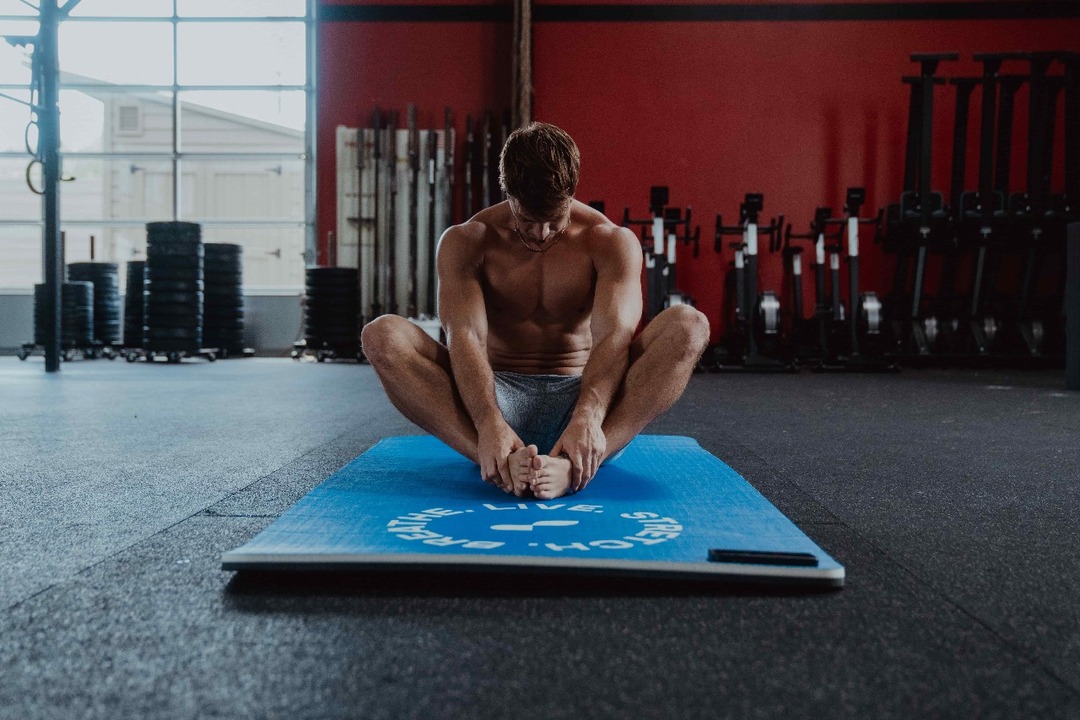
Strength alone doesn't protect your knees. You can squat heavy, run fast, and feel capable, yet still be setting yourself up for injury. The problem isn't weakness in the obvious places.
It's the gaps you don't notice:
- Tight hips that force your knees inward during a lunge
- Glutes that don't fire properly when you land from a jump
- Ankles that lack the mobility to absorb impact.
These imbalances don't announce themselves. They accumulate quietly, shifting load onto the knee joint in ways that feel normal until something finally gives.
The Hidden Build-Up of Knee Pain
According to QC Kinetix, 25% of U.S. adults aged 45 and older report regular knee discomfort. That's millions of people who didn't wake up one day with a torn ligament. They built toward it, rep by rep, run by run, through movement patterns their bodies couldn't sustain. The pain that shows up after a workout or a pickup game isn't the beginning of the problem. It's the signal that damage has been accumulating for weeks, maybe months.
How Injuries Build Without You Knowing
You're running, feeling strong, hitting your pace. Your right ankle is slightly stiff from an old sprain you barely remember. To compensate, your foot rolls outward just a fraction with each stride.
That small shift forces your knee to twist inward to maintain balance. Your hip flexors, tight from prolonged sitting, pull your pelvis forward. Now your quad is doing extra work to stabilize a joint that's being tugged in three directions at once. You feel fine. Your knee doesn't.
This is How Most Knee Injuries Develop
Not from a single bad movement, but from repetitive stress that your body tries to manage until it can't anymore. One person's pattern started with a slip on ice during a military ruck march. The initial hip injury seemed manageable.
Physical therapy helped. But favoring the injured side to let it heal meant the other hip took on more load. That hip eventually tore, too. Both knees then began to deteriorate due to the altered mechanics. What began as one accident became a cascade of joint failures, each one the result of the body compensating for weakness elsewhere.
The Weak Links That Shift the Load
The knee is the largest joint in your body, and it's caught in the middle. It relies entirely on the muscles around it to control how force moves through your leg. When those muscles aren't strong enough, coordinated enough, or mobile enough, the knee absorbs stress it wasn't designed to handle.
Your quadriceps extend the knee, but if your hamstrings are weak or your glutes aren't activating properly, the quadriceps must overwork. Your calves help absorb shock when you land, but if your ankles are stiff, that impact is transmitted directly to the knee. Hip adductors and abductors control side-to-side stability. When they're undertrained, your knee collapses inward during squats or cuts, a movement pattern that directly stresses the ACL and meniscus.
The Invisible Road to Injury
These aren't dramatic failures. They're small mechanical breakdowns that happen thousands of times before you feel anything wrong.
- A tight IT band pulls your kneecap off track.
- Limited ankle dorsiflexion forces your knee forward past your toes during a squat, loading the joint instead of the muscle.
- Weak glutes let your femur rotate inward, grinding cartilage with every step.
The pain doesn't match the timeline. By the time your knee hurts, the underlying issue has been building for far longer than you realize.
The Types of Damage That Accumulate
Knee injuries aren't one thing. Damage to the cartilage that lines the joint develops gradually from repetitive friction. Ligaments, like the ACL or MCL, can suffer partial tears that don't sideline you immediately but weaken the structure over time.
The meniscus, the cartilage cushion between your shinbone and thighbone, can fray from chronic stress before it finally tears during a movement that feels routine. Irritation around the kneecap, known as patellofemoral pain syndrome, builds from thousands of misaligned repetitions.
Less Common But Still Real
fractures from accumulated stress, not just accidents. Dislocations occur when the supporting muscles cannot hold the joint in place. MidAmerica Orthopaedics reports that 25 million Americans suffer from chronic knee pain, much of it rooted in wear and tear that started long before the diagnosis.
Why Your Knees Break Under Pressure
Sports and exercise cause sudden injuries through twists, stops, and collisions. But the reason those moments break you comes down to whether your body was prepared to handle the load.
Falls and accidents matter, but so does the cumulative strain from activity that your knees weren't conditioned to absorb. Arthritis develops not just from age but from years of poor mechanics, which grind down cartilage that never had a chance to recover.
Why Movement Mechanics Matter More Than Strength
You can have strong quads and still move in ways that destroy your knees. Strength without coordination is like horsepower without steering.
- If your glutes don't fire before your quads during a squat, your knee drifts forward and inward, loading the joint instead of the muscle.
- If your hamstrings are tight, they pull your pelvis out of alignment, changing the angle at which force is transmitted to your knee.
- If your hip flexors are tight from sitting, they tilt your pelvis forward, forcing your lower back and knees to compensate for a problem that started at your hips.
The body is a system. When one part can't do its job, another part picks up the slack until it breaks. Fixing a knee problem after surgery doesn't resolve the issue if the movement pattern that caused it remains.
That's why recovery can feel like a cycle:
- Physical therapy
- Pain management
- Surgery
Then the same problem in a different joint. The knee wasn't the root cause. It was the place where poor mechanics finally showed up as pain.
Building a Resilient Body Through Movement
Pliability's mobility app addresses this by guiding you through targeted movements that strengthen stabilizing muscles, improve range of motion, and retrain the movement patterns that lead to injury. Instead of waiting for pain to tell you something's wrong, you build a body that moves the way it's supposed to, with joints that can handle the load you're asking them to carry.
But knowing your knees are at risk is only half the equation.
Related Reading
- Injury Prevention Strategies
- What is Injury Prevention
- Cold Therapy for Athletes
- Can Tennis Elbow Cause Shoulder Pain
- Basketball Injury Prevention
- How to Prevent Pickleball Injuries
- How To Stop Wrist Pain From Lifting Weights
- Most Common Tennis Injuries
- How to Prevent Knee Pain When Running
- How Can You Prevent Injury While Cycling
- Injury Prevention for Athletes
20 Effective Knee Injury Prevention Exercises
.jpeg)
1. Straight Leg Raises
Strengthens the quadriceps without bending the knee, making it accessible to beginners or anyone rebuilding baseline strength.
Muscles Involved
- Quadriceps
- Hip flexors
How to Do It
- Lie on your back with one leg bent and your foot flat on the floor.
- Keep the other leg straight.
- Tighten the thigh muscles on the straight leg until your kneecap pulls upward slightly.
- Slowly raise that leg to the height of your opposite knee.
- Hold for 3 to 5 seconds at the top, then lower with control.
- Do 2 to 3 sets of 10 to 15 reps per leg.
What Not to Do
- Don't arch your lower back off the floor.
- Keep your core engaged throughout the movement.
- Don't swing the leg up using momentum.
2. Glute Bridges
Strengthens the glutes and hamstrings, which support hip stability and reduce the load your knees have to manage during walking, running, and jumping.
Muscles Involved
- Glutes
- Hamstrings
- Lower back stabilizers
How to Do It
- Lie on your back, knees bent, feet hip-width apart and flat on the floor.
- Push through your heels and lift your hips until your body forms a straight line from shoulders to knees.
- Squeeze your glutes at the top and hold for 3 seconds.
- Lower your hips back down without letting them touch the floor between reps.
- Perform 2 to 3 sets of 12 to 15 reps.
What Not to Do
- Don't hyperextend your lower back at the top. The movement should come from your hips, not your spine. Don't let your knees fall inward or outward.
3. Step-Ups
Mimics functional movements like stair climbing and trains the quads, hamstrings, and glutes to work together under load.
Muscles Involved
- Quadriceps
- Glutes
- Hamstrings
How to Do It
- Stand in front of a sturdy bench or step.
- Place one foot fully on the surface.
- Press through the heel of that foot to lift your body up onto the step.
- Step down with the opposite leg, maintaining control.
- Repeat 10 to 12 reps on each leg for 2 to 3 sets.
What Not to Do
- Don't lean forward or push off with the trailing leg.
- The working leg should do the lifting.
- Keep your torso upright and your knee tracking over your toes, not collapsing inward.
4. Wall Sits
Builds quadriceps endurance and trains the knee joint to stabilize under sustained tension.
Muscles Involved
- Quadriceps
- Glutes
- Calves
How to Do It
- Stand with your back flat against a wall, feet shoulder-width apart.
- Slide down until your thighs are parallel to the ground, as if sitting in an invisible chair.
- Your knees should be directly above your ankles.
- Hold this position for 20 to 60 seconds.
- Repeat 2 to 3 times.
What Not to Do
- Don't let your knees drift forward past your toes.
- Don't hold your breath.
- Breathe steadily throughout the hold.
5. Clamshells
Strengthens the hip abductors and glute medius, which control lateral knee stability and prevent the knee from collapsing inward during movement.
Muscles Involved
- Glute medius
- Hip abductors
How to Do It
- Lie on your side with your knees bent at 90 degrees and your feet together.
- Keep your feet touching and lift your top knee as high as you can without rotating your torso or pelvis.
- Lower slowly and repeat.
- Do 12 to 15 reps per side for 2 to 3 sets.
What Not to Do
- Don't roll your hips backward to lift your knee higher.
- The movement should be isolated to the hip.
- Add a resistance band above your knees once bodyweight feels easy.
6. Lateral Band Walks
Activates the glutes and hip stabilizers, which protect the knee during side-to-side movements and direction changes.
Muscles Involved
- Glute medius
- Hip abductors
- Tensor fasciae latae
How to Do It
- Place a resistance band around your thighs or just above your ankles.
- Bend your knees slightly into an athletic stance.
- Step sideways, keeping tension on the band, for 10 to 15 steps in one direction.
- Reverse and step back.
What Not to Do
- Don't let your knees cave inward as you step.
- Keep your feet parallel and maintain constant tension on the band.
7. Bodyweight Squats
Strengthens the entire lower body and trains the movement pattern underlying most athletic activities.
Muscles Involved
- Quadriceps
- Glutes
- Hamstrings
- Calves
- Core
How to Do It
- Stand with feet shoulder-width apart.
- Lower into a squat by bending your knees and pushing your hips back.
- Keep your chest up and your weight in your heels.
- Your knees should track in line with your toes.
- Return to standing by driving through your heels.
- Do 10 to 15 reps for 2 to 3 sets.
What Not to Do
- Don't let your knees collapse inward.
- Don't round your lower back.
- If you can't squat to parallel without your heels lifting, work on ankle mobility separately.
8. Calf Raises
Strengthens the calves, which absorb shock and stabilize the ankle and knee during walking, running, and jumping.
Muscles Involved
- Gastrocnemius
- Soleus
How to Do It
- Stand on a flat surface with feet hip-width apart.
- Raise your heels slowly until you're on your toes.
- Hold briefly at the top, then lower with control.
- Do 15 to 20 reps for 2 to 3 sets.
What Not to Do
- Don't bounce at the bottom.
- Control the movement in both directions.
- Try single-leg calf raises once the bilateral version feels easy.
9. Hamstring Curls (Stability Ball or Resistance Band)
Targets the hamstrings, which balance the strength of the quadriceps and protect the knee from hyperextension.
Muscles Involved
- Hamstrings
- Glutes
How to do it (stability ball):
- Lie on your back with your heels on a stability ball.
- Lift your hips off the ground.
- Roll the ball toward you by bending your knees, then extend your legs to roll it back out.
- Keep your hips elevated throughout.
- Perform 10 to 12 reps for 2 to 3 sets.
What Not to Do
- Don't let your hips sag.
- The movement should be smooth and controlled, not jerky.
10. Single-Leg Deadlifts
Enhances balance, posterior chain strength, and knee joint control by training stability under load.
Muscles Involved
- Hamstrings
- Glutes
- Lower back
- Core
How to Do It
- Stand on one leg, holding a lightweight in the opposite hand.
- Hinge at the hips, lowering the weight as your free leg extends behind you.
- Keep your back flat and your standing knee slightly bent.
- Return to an upright by driving through your heel.
- Do 8 to 10 reps per leg for 2 to 3 sets.
What Not to Do
- Don't rush the movement.
- This is about control, not speed.
- Don't round your back or let your hips rotate open.
11. Wall Squats
Strengthens the lower body while keeping pressure off the knee joints, making it ideal for building endurance without aggravating existing sensitivity.
Muscles Involved
- Quadriceps
- Glutes
- Calves
How to Do It
- Stand with your back flat against a wall, feet shoulder-width apart.
- Slide down until your knees are bent at a 90-degree angle, as if sitting in an invisible chair.
- Hold for at least 10 seconds, then slide back up.
- Try for 10 reps.
What Not to Do
- Don't let your knees extend past your toes.
- Keep your back pressed against the wall throughout the hold.
12. Side-Lying Leg Lifts
Targets the hip abductors, which maintain knee alignment and stability during side-to-side movements.
Muscles Involved
- Hip abductors
- Glute medius
How to Do It
- Lie on one side with your legs stacked.
- Keep the top leg straight and lift it slowly to about a 45-degree angle.
- Hold briefly, then lower with control.
- Do 10 to 15 reps per side.
What Not to Do
- Don't rotate your hips or use momentum to swing your leg up.
- Add ankle weights once bodyweight feels easy.
13. Standing Hamstring Stretch
Flexible hamstrings reduce strain on your knees during physical activity by allowing proper hip-hinge mechanics.
How to Do It
- Place one heel on a low stool or bench.
- Keep your leg straight and your toes pointing up.
- Gently lean forward from the hips, not your lower back, until you feel a stretch in the back of your thigh.
- Hold for 20 to 30 seconds, then repeat on the other leg.
What Not to Do
- Don't round your lower back.
- The stretch should come from your hip, not your spine.
- Don't bounce.
14. Quadriceps Stretch
Increases flexibility in your quads and reduces the likelihood of overuse injuries from repetitive knee extension.
Muscles Involved
- Quadriceps
- Hip flexors
How to Do It
- Stand on one foot, holding onto something for balance.
- Bend your opposite knee and bring your heel toward your glutes.
- Grab your ankle and gently pull to deepen the stretch.
- Keep your knees close together and push your hips slightly forward.
- Hold for 20 to 30 seconds per leg.
What Not to Do
- Don't arch your lower back.
- Keep your core engaged and your pelvis neutral.
15. Lunges
Works the same muscles as squats while improving balance and training unilateral strength to prevent knee injury.
Muscles Involved
- Quadriceps
- Glutes
- Hamstrings
- Calves
How to Do It
- Stand with one foot forward and the other back.
- Bend both knees and lower your body until your front knee is in line with your ankle.
- Push back up to the starting position using your front leg and glutes.
- Switch legs.
- Repeat 20 times (10 times per leg).
What Not to Do
- Don't let your front knee drift past your toes.
- Don't let your back knee slam into the ground.
- Control the descent and the rise.
16. Resistance Band Lunges
Provides resistance for lunges, isolates the working muscle, and increases strength in the stabilizers that protect the knee.
Muscles Involved
- Quadriceps
- Glutes
- Hamstrings
How to Do It
- Position a resistance band under your right foot.
- Stand with your right leg forward and left leg back.
- Keep tension on the band and lower into a lunge until both knees are at 90 degrees.
- Return to the start.
- Repeat 16 reps on each side.
What Not to Do
- Don't lose tension on the band at the top.
- Keep constant resistance throughout the movement.
17. Leg Extensions
Isolates the quadriceps to build strength without requiring full knee flexion.
Muscles Involved
- Quadriceps
How to Do It
- Sit in a chair or on a bench with your back straight.
- Tighten your thigh muscles.
- Slowly straighten and raise one leg as high as is comfortable.
- Squeeze the thigh muscles and hold for 5 seconds.
- Lower your foot back to the floor.
- Do 3 sets of 10 for each leg.
What Not to Do
- Don't swing the leg.
- Don't use forceful movements to attempt to raise the leg higher.
- As this becomes easier, add a 5-pound ankle weight and gradually increase to 10 pounds.
18. Single-Leg Dip
Trains the quadriceps, hamstrings, and glutes while challenging balance and knee joint control.
Muscles Involved
- Quadriceps
- Hamstrings
- Glutes
How to Do It
- Stand next to a chair and place one hand on the back of the chair for balance.
- Lift your right leg about 12 inches off the ground.
- All weight should be on the left leg.
- Slowly bend down a few inches, pushing your weight onto the heel of the supporting leg.
- Hold for 3 to 5 seconds, then slowly straighten up.
- Repeat and switch sides.
What Not to Do
- Don't lean backward when lifting the leg.
- Keep your back and upper body straight.
- Don't allow the knee to move forward over the toes in the supporting leg.
19. Toe Touches
Stretches the hamstrings to reduce knee strain during physical activity.
Muscles Involved
- Hamstrings
- Lower back
How to Do It
- Stand with your feet close together.
- Slowly bend over at the hips and extend your arms downward.
- Keep your legs straight, but don't lock your knees.
- Reach your fingers to your toes and hold for 30 seconds.
- If you can't reach your toes, get your fingers as close as possible without causing pain.
What Not to Do
- Don't use a bouncing motion.
- Hold your body still throughout the stretch.
20. Bonus: Mobility and Flexibility Drills
Complement strengthening by improving mobility in the hips, ankles, and knees, reducing strain on the joint during movement.
- Quad Stretch: Pull one foot toward your glutes while standing, hold for 20 to 30 seconds.
- Hamstring Stretch: Sit with one leg extended, reach toward your toes.
- Hip Flexor Stretch: In a lunge position, shift forward until you feel a stretch in the front of the hip.
- Foam Rolling: Target the quads, IT bands, and calves for myofascial release.
Stop Knee Pain Before It Starts
Pliability's mobility app guides you through targeted routines that strengthen stabilizing muscles, improve range of motion, and retrain movement patterns before pain forces you to stop. Instead of waiting for your knees to tell you something's wrong, you build a body that moves the way it's supposed to, with joints that can handle the load you're asking them to carry. The exercises are designed to fit your schedule and adapt to your goals, making consistent prevention accessible without equipment or guesswork.
Strengthening the muscles around your knee is only part of the equation. The other part is knowing how often to do it without overtraining or undertraining.
Related Reading
- Do Muscle Tears Heal On Their Own
- Forearm Strain
- How Can Strengthening Muscles Prevent Injury
- Quad Strain Recovery Time
- Urgent Care For Pulled Muscle
- How To Heal A Calf Strain Quickly
- How To Prevent Hamstring Injuries
- How Long Does a Sprained Knee Take to Heal
- How Does Stretching Prevent Injury
- How To Strengthen Shins For Running
- Athletic Injury Recovery
How Often Should You Do Knee Strength Exercises?
-min.jpg)
Knee strengthening is most effective when performed three to four times per week, with each session lasting 20 to 30 minutes. The goal isn't to exhaust yourself. It's to build a rhythm your body can adapt to without breaking down.
Consistency beats intensity every time. Sporadic, aggressive training sessions followed by long gaps teach your joints nothing except how to compensate for instability when you suddenly ask them to perform.
Moving Beyond Reactive Knee Care
The mistake most athletes make is treating knee work like an emergency response. Pain flares up, so they do a few exercises for a week, feel better, then stop. The joint quiets down, the routine disappears, and three months later the same pain returns.
This cycle isn't bad luck. It's the predictable result of reactive training. Your knees don't store strength like a battery. They adapt to the demands you place on them regularly. Stop the demand, and the adaptation fades.
Why Frequency Matters More Than Volume
Your body responds to patterns, not heroics. A 45-minute session once a week feels productive, but it's not enough stimulus to create lasting change.
The muscles that stabilize your knee, particularly the glutes, hip abductors, and hamstrings, need frequent activation to maintain their coordination and endurance. Training them sporadically means you're constantly rebuilding baseline strength instead of progressing beyond it.
Finding the Sweet Spot for Recovery and Results
Three to four sessions per week give your body time to recover between workouts while keeping the stimulus frequent enough to drive adaptation. This frequency also allows you to distribute the work across different movement patterns. One session might focus on single-leg stability and balance.
Another might emphasize posterior chain strength through bridges and deadlifts. A third could target lateral stability with band walks and clamshells. Spreading the work across multiple sessions prevents overuse of any single muscle group while ensuring comprehensive joint support.
When to Fit Knee Work Into Your Schedule
Knee strengthening doesn't require a separate block of time if your schedule is already full. The exercises fit naturally into warm-ups, cooldowns, or standalone recovery sessions. Before a run or practice, spend 10 minutes activating your glutes and hip stabilizers with clamshells, lateral band walks, and single-leg balance drills. This primes the muscles that protect your knee during dynamic movement.
If you prefer standalone sessions, schedule them on days when you're not engaged in high-impact activities. Recovery days are ideal for focused knee work because your joints aren't already fatigued from running, jumping, or cutting. The exercises become part of your recovery process rather than an additional stressor.
The Problem With Waiting for Pain
Most athletes only think about their knees when something hurts. That's too late. Pain is the signal that damage has already accumulated beyond what your body can quietly manage. By the time your knee aches after a workout, the underlying weakness or imbalance has been building for weeks, maybe months. Waiting for pain to dictate your training means you're always one step behind the injury.
Stay Strong Instead of Getting Strong
Preventive work only works when it's proactive. That means building knee strength before the season starts, not after the first game. It means maintaining the routine during the season, even when you feel fine.
According to Musculoskeletal Care, structured prevention programs that include strengthening and neuromuscular training reduce injury risk when performed consistently throughout athletic participation. The research doesn't support cramming knee work into preseason and hoping it lasts. It supports ongoing, regular practice.
Common Mistakes That Undermine Progress
Doing too much too quickly is one of the fastest ways to sabotage knee health. You can't rebuild joint stability in a week. Overloading your knees with high volume or intensity before the supporting muscles are ready just shifts stress onto the joint itself.
- Start with bodyweight exercises and focus on control, not exhaustion.
- Add resistance or complexity only after you can perform the movement with perfect form for multiple sets.
Another mistake is inconsistency disguised as effort. Training hard for two weeks, skipping a month, then restarting doesn't build resilience. It teaches your body to anticipate unpredictable demands, which increases the risk of injury when you suddenly ramp up activity.
The athletes who stay healthy aren't the ones who train the hardest in short bursts. They're the ones who show up regularly, even when the work feels boring or unnecessary.
Building Knee Strength Into Your Routine
The hardest part isn't the exercises. It's committing to the rhythm. For busy athletes juggling work, family, or school, carving out three 20-minute sessions per week can feel impossible. But it's easier than managing a knee injury that sidelines you for months. The choice isn't between convenience and effort. It's between small, consistent investments now or large, disruptive consequences later.
Teams that integrate mobility and strengthening into their regular training see fewer injuries, not because they have more time, but because they make it non-negotiable. Warm-ups include activation drills. Cooldowns include strength work. Recovery days include mobility sessions. The work becomes part of the routine, not an optional add-on.
Building Resilient Knees Without the Friction
Most athletes already know strengthening matters, but knowing doesn't change behavior. What changes behavior is removing the barriers. No equipment means you can train anywhere. Short sessions make them fit into existing routines. Clear progressions mean you don't waste time guessing what to do next. The friction isn't the work itself. It's the uncertainty around how to structure it.
Even with a consistent routine, the question remains: can you build knee strength without a gym?
Related Reading
- How To Fix Lower Back Pain From Running
- How To Prevent Stress Fractures From Running
- Care And Prevention Of Athletic Injuries
- Compression Therapy For Athletes
- Soccer Injury Prevention Exercises
- Best Foam Roller For Runners
- Ankle Injury Prevention Exercises
Keep Your Knees Healthy With Smarter Mobility Training
Strong knees don't come from strength alone. They come from consistent mobility, balance, and recovery. You can squat heavy and run fast, but if your hips are tight, your ankles lack range, and your stabilizers don't fire properly, you're still vulnerable. Strength creates capacity. Mobility ensures you can use it without breaking down.
Stop Chasing Pain and Start Moving Better
Pliability helps you move better with daily, guided mobility sessions designed for athletes and active people who want to prevent pain before it starts. Targeted routines, performance-focused yoga, and a unique body-scanning feature identify mobility limitations so you can address them before they lead to injury. The app makes it easier to support joint health, improve range of motion, and stay resilient over time without needing a gym or having to guess what to do next.
Try Pliability free for 7 days on iOS, Android, or the web. Make mobility part of your knee injury prevention routine, not something you add after the damage is done.
.jpg)