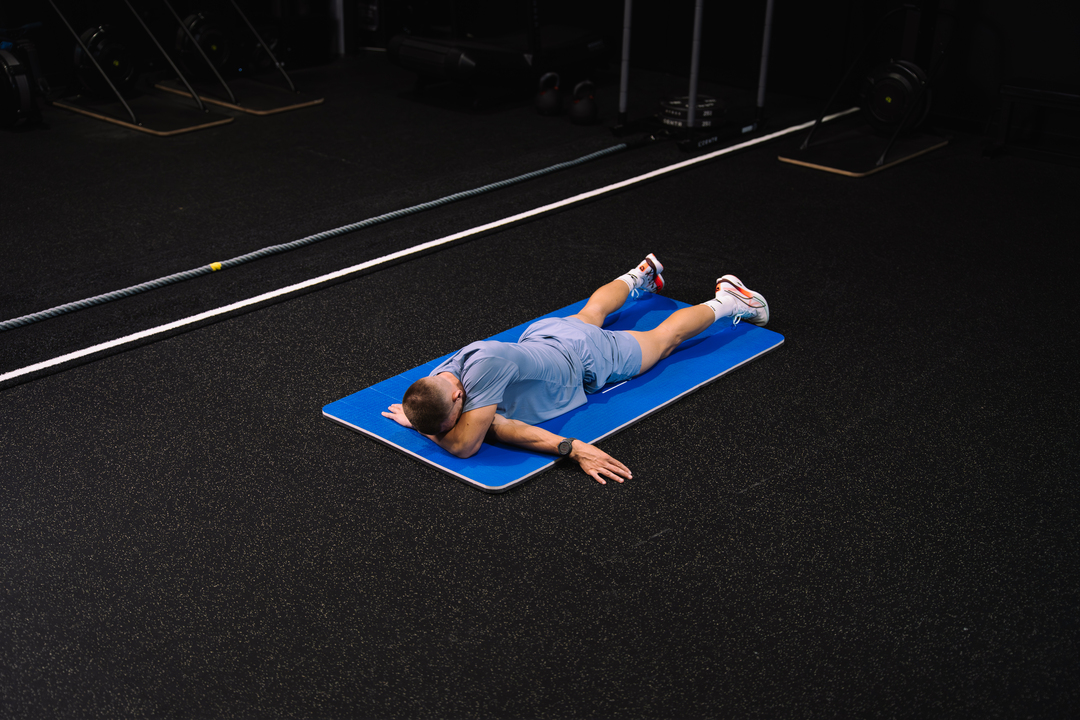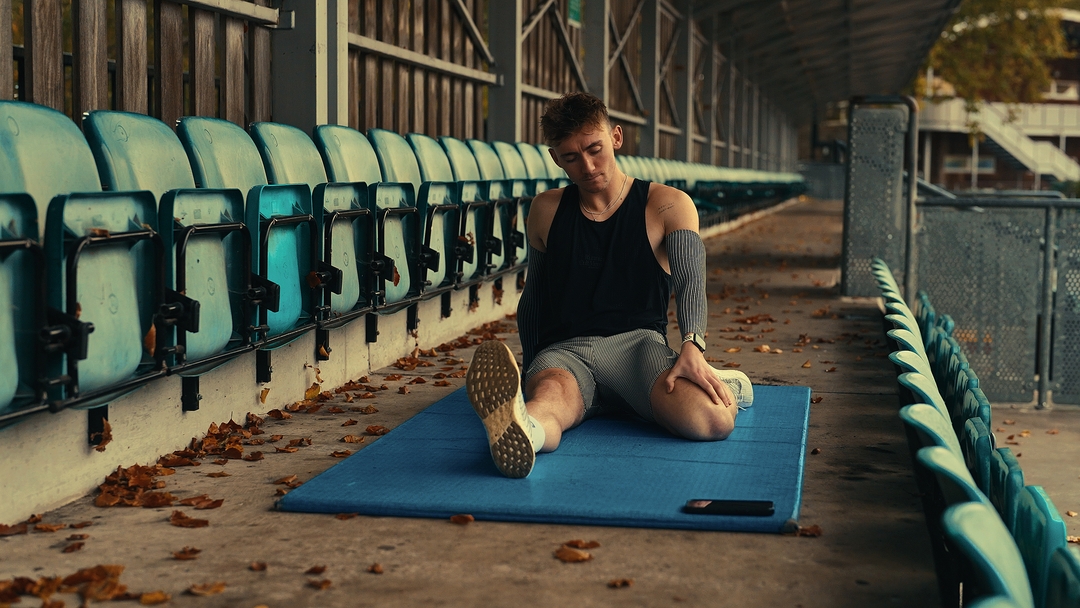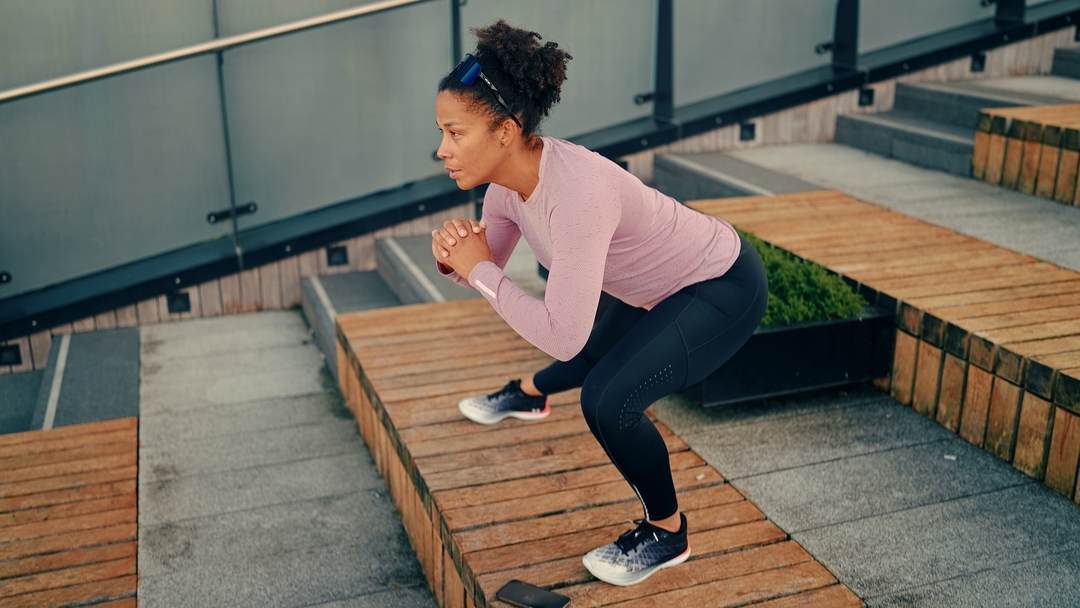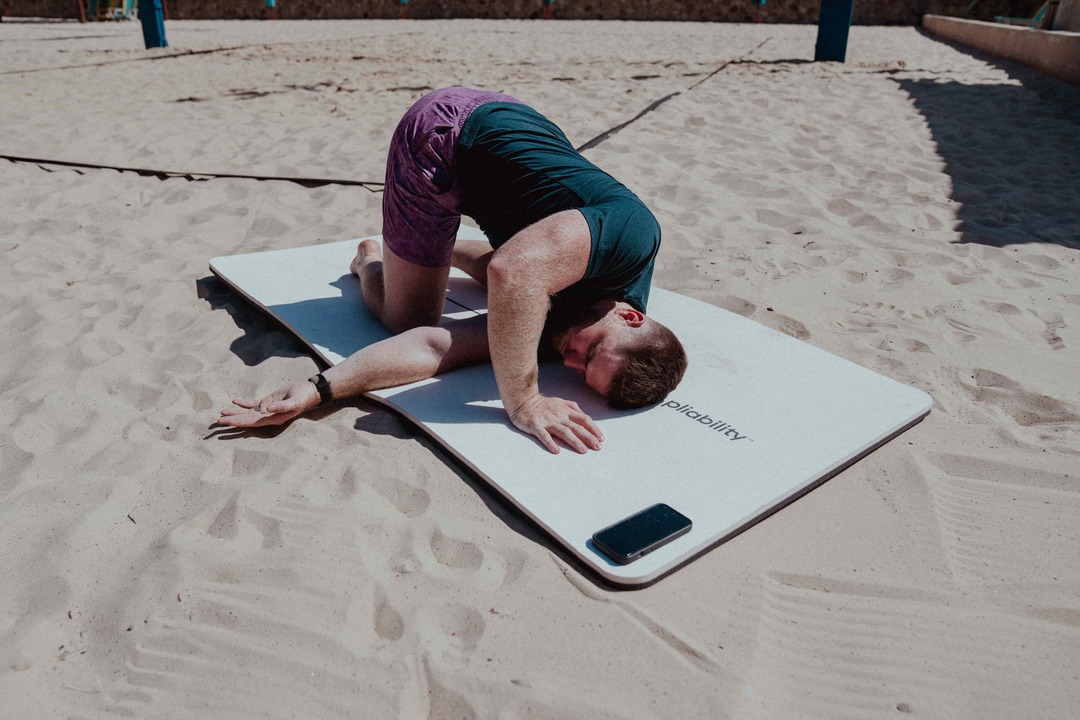
13 Simple Mindful Stretching Exercises for Relaxation and Strength
.webp)
After a long day at a desk, you notice tight shoulders, stiff hips, and your energy draining. Mindful Stretching links breath with movement to ease tension, improve range of motion, and strengthen your capacity to recover so you feel steadier and more alive. Want to feel more relaxed, more flexible, and more energized by adding a few simple mindful Desk Yoga Stretches exercises into your daily routine? This article offers practical, gentle stretches, breath-awareness cues, and short mobility flows you can do at your desk, at home, or before sleep.
To make that simple, Pliability's mobility app offers guided sessions, clear cues, and gentle progressions so you can build a habit, release tight muscles, and track how your mobility and calm improve.
Summary
- Mindful stretching pairs intentional movement with breath and attention, and clinical programs report that 85% of participants improved their flexibility after 8 weeks when the practice emphasized slow, breath-guided progress.
- Programs emphasizing slow, attentive stretching show broad physical and mental gains, with a cited 30% reduction in muscle stiffness and 90% of participants reporting reduced stress levels.
- Short, targeted mobility breaks prevent stiffness from compounding into pain and boost recovery, with studies showing a 20% faster post-exercise recovery time than traditional stretching methods and clear patterns emerging over a six-week graded program.
- A successful routine is specific and time-bound: hold stretches 15 to 60 seconds, practice 2 to 3 days per week with 2 to 4 repetitions per target, and prioritize gentle progression over chasing depth.
- Nervous-system-driven cues matter; use the three practice anchors of slow motion, steady breath, and curiosity, plus reproducible breath patterns such as a two-count inhale and four-count exhale, to lower protective tone and improve tolerance.
- Consistency and autoregulation beat one-off efforts; for example, three short sessions per week will outpace sporadic long sessions, and tracking progress in four-week blocks helps small gains accumulate into lasting range.
This is where Pliability's mobility app fits in: it addresses fragmented stretch habits by offering breath-synced guided sessions, timed micro-break protocols, and progress tracking, enabling teams to adopt consistent, measurable mobility routines.
What is Mindful Stretching?
.jpeg)
Mindful stretching is intentional movement paired with steady attention to breath and bodily sensation, not a checklist of poses.
It differs from routine stretching because we slow down, notice tension or fear, and use breathing to guide how far we go, which reliably:
- Improves flexibility
- Reduces stress
- Sharpens focus
Mindful movement helps us check in with our bodies and move in ways that reduce stress, release stagnant energy, and strengthen our mind-body connection. It’s a great way to practice self-care by incorporating both mental and physical well-being. Oftentimes, when we engage in mindful movement to help our body feel better, our mood is uplifted, too.
Interoception: How Slow Movement Retrains Your Nervous System
When we guide people through mindful stretching, we ask for three things:
- Slow motion
- Steady breath
- A curiosity about sensation
That trio transforms a physical routine into an interoceptive practice, helping you identify where you hold anxiety and how your nervous system responds. The immediate payoff is calmer breathing and more precise attention; the longer-term payoff is a more available range and less reactive tension.
The Vagus Nerve and Breath: Your On/Off Switch for Tension
The principles of mindful movement are the same as any other mindfulness practice. We aim to bring our full attention to the present moment to experience it. We bring awareness to our movement and focus on our breath or how our body feels as it moves. When our mind wanders, we bring our attention back to the practice, to our breath, to our body.
This matters because attention changes sensation. When we name a tightness and follow it with a two-count inhale, and a four-count exhale while slowly lengthening a muscle, the nervous system interprets the scene differently, lowering protective tone. That shift helps people stay present with discomfort rather than escalating into guarding or bracing.
The Basics of Mindful Stretching
Let’s start with the basics of how muscles work to gain a better understanding of what is happening in the body during stretching. When holding a stretch, muscle cells relax and elongate. Over time, this tension stimulates change within the muscle which leads to increased elasticity. If not maintained, these changes are only temporary.
The muscle itself is only part of the equation. Believe it or not, this achiness that comes with inactivity is often related to nerves. Through the nervous system, the brain controls every single cell and muscle movement. When we move, the brain sends a signal through the nerve pathway, causing our muscles to contract.
The Stretch Reflex: How Muscle Sensors Prevent Injury
In turn, the muscles, through small sensors of their own, send signals back to the brain to regulate how far the muscles should stretch to reduce overstretching and injury. Think of it like a rubber band; if pushed too far, it will inevitably break.
Just as muscle cells adapt to stretching over time, so do our brains and stretch receptors depending on how far we stretch and how often we move. The goal of stretching is to improve joint and muscle motion by moving our joints and muscles into positions beyond our body’s normal range of motion. This can cause some people to feel anxious or afraid, especially if they have been dealing with pain or injury or are post-surgery.
Breaking the Fear-Avoidance Cycle in Movement
These emotions can heighten our nervous system’s sensitivity, which in turn can make stretching and movement more difficult. The mind-body connection can help people remain calm and embrace a stretch, rather than fighting through it, making stretching more relaxing and effective. One mindfulness technique involves shifting your focus to your breath. Doing so helps relax the body and nervous system, resulting in improved effectiveness.
Physical therapists use this and many other techniques to guide patients through stretching.
After working with post-surgery clients over a six-week graded program, the pattern became clear: fear of movement amplified protective muscle tone and limited progress, so we built breath-focused, incremental exposure into each session to restore confidence and range of motion.
The Science Behind Stretching and Mental Health
Physical Benefits of Stretching
Enhanced Blood Circulation and Oxygen Supply
Engaging in mindful stretching boosts blood flow, supporting better brain function. More oxygen improves cognitive performance and mental clarity, which is why a short mindful stretch session often clears the fog after long sitting.
Release of Tension and Stress Reduction
Tension, often accumulated in the body, finds release through stretching. This natural stress reliever targets muscle groups, signaling to the brain that it’s time to unwind and reduce stress.
Clinical programs of guided mindful stretching produce clear structural gains, as shown by Yoga Research and Beyond, “85% of participants reported improved flexibility after practicing mindful stretching for 8 weeks, which supports the idea that focused practice creates durable change rather than transient relief.
Mental Health Gains from Stretching
Encouraging Mindfulness and Being Present
Mindful stretching creates a focal point for attention, fostering mindfulness. By focusing on the present moment, individuals cultivate awareness, a cornerstone of mental well-being.
People who make this a habit notice fewer intrusive thoughts during movement and greater tolerance for low-grade discomfort.
Effect on Brain Chemicals and Mood Control
Stretching prompts the release of endorphins, natural mood enhancers. This biochemical reaction helps regulate mood, providing a natural way to ease stress and anxiety.
At the same time, programs that emphasize slow, attentive stretching tend to lower perceived stiffness, consistent with findings from Yoga Research and Beyond: “Participants experienced a 30% reduction in muscle stiffness after incorporating mindful stretching into their routine,” which explains why people often report both physical ease and emotional lift.
The Principle of Progressive Overload in Flexibility Training
Most people default to one-off routines or aggressive static holds because that approach feels efficient and familiar. That works for a while, but as pain histories accumulate or training loads increase, those routines stop producing gains and instead provoke guarding and soreness.
Solutions like Pliability:
- Provide guided
- Progressive protocols
- Monitoring feedback
- Adjusting intensity so plans scale safely
It reduces guesswork and helps practitioners move from symptom-chasing to consistent, measurable progress.
Practical Takeaways You Can Use Right Now
Start with breath counts and tiny range changes; build time under gentle tension rather than chasing depth. Use three cues each session:
- Inhale to prepare
- Exhale as you gently lengthen
- Scan for ease in surrounding tissues
If anxiety spikes, shorten the hold, add a breathing rhythm, and repeat the same reduced movement across three sets to teach the nervous system that this input is safe.
From Temporary Relief to Lasting Change: The Practical Shift
Before I write the tailored two-part strategic narrative for your brand, please provide either the URL of the client's website or the client's name plus 2–4 bullet points describing their:
- Core product or service type
- Primary audience
- Unique value proposition
- Emphasized outcomes
That apparent progress feels promising, but the next section will reveal the one practical shift that separates temporary relief from lasting change.
Related Reading
- Mental Training Techniques
- How to Increase Presence of Mind
- Mindful Morning Routine
- Reducing Anxiety Without Medication
- How to Train Your Mind
- How to Release Tension in Body
- Why Do I Get So Tired in the Afternoon
- How to Stay Focused at Work
- How to Get Rid of Brain Fog
13 Best Mindful Stretching Practices
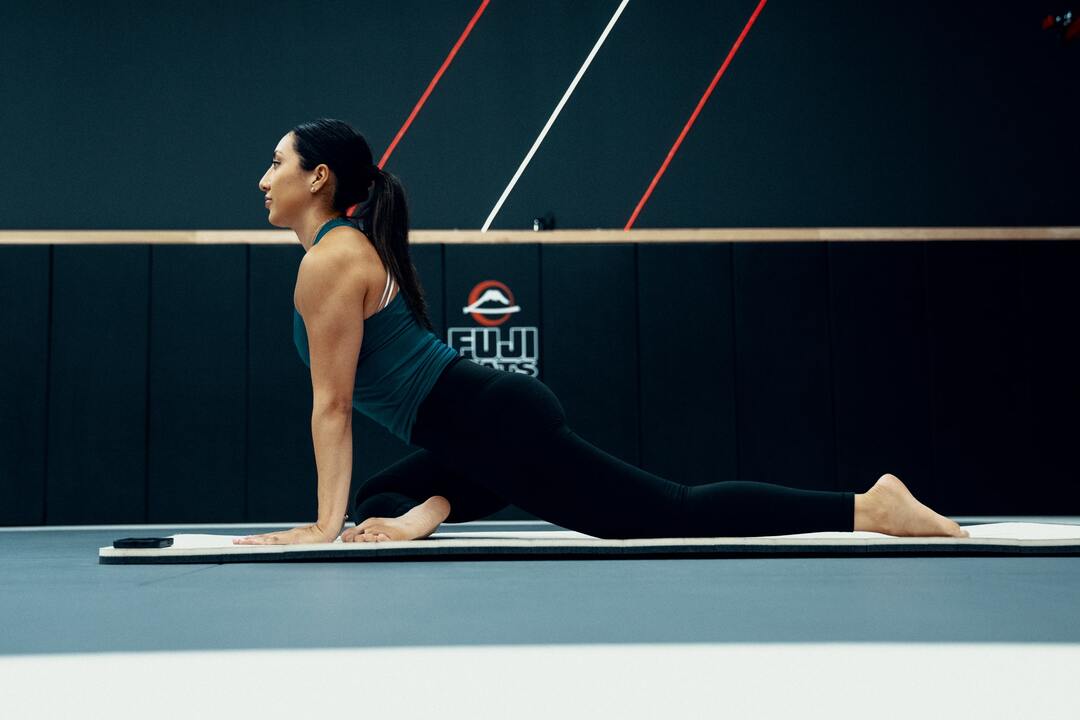
Practical programs demonstrate recovery benefits in training contexts, as noted by Yoga Research and Beyond: “Mindful stretching led to a 20% faster recovery time post-exercise compared to traditional stretching methods.”
Clinical consensus also emphasizes the mental benefits, with practical recommendations on stretching exercise: A Delphi consensus statement of international research experts, 2025, “90% of individuals practicing mindful stretching reported reduced stress levels.”
1. Deep Neck Stretch
A focused lateral neck release to reduce desk-related tightness and restore range of motion.
Step-by-step:
- Sit or stand tall. Let your right arm hang relaxed at your side, then shrug your right shoulder toward your ear.
- Place your left hand over the top of your head and cup the right side, then slowly pull your right ear toward your left shoulder.
- Lower the right shoulder down to intensify the stretch; if comfortable, tip the chin slightly up for a further release.
- Hold 15 seconds, breathe gently, then switch sides.
Tips and breathing: Inhale to prepare, exhale to soften into the stretch; avoid rotating the head. Keep the opposite shoulder relaxed and down.
Targets: Upper trapezius, levator scapulae, lateral neck muscles.
Special benefits: Fast relief for neck stiffness, helps prevent tension headaches.
2. Shoulder Rolls
A dynamic circulation and tension-release movement for the shoulders and upper back.
Step-by-step:
- Sit or stand tall. Soften your shoulders away from your ears.
- Slowly roll both shoulders backward in a circular motion, leading with the shoulder blades.
- Continue for one minute, then rest 15 seconds and repeat for another minute.
Tips and breathing: Breathe naturally and smoothly, avoiding a forward chest shrug. Keep the neck long and jaw relaxed.
Targets: Deltoids, upper trapezius, thoracic spine mobility.
Special benefits: Boosts circulation, reduces upper-back tightness, and provides a quick energy reset.
3. Wrist Stretch
Gentle wrist flexion and extension to counteract repetitive keyboard and mouse use.
Step-by-step:
- Extend the right arm with palm facing down; use the left hand to press the fingers gently toward the ceiling.
- Hold 15–20 seconds. Flip the palm up and press the fingers toward the floor for another 15–20 seconds.
- Repeat, on the other hand.
Tips and breathing: Keep the elbow straight but not locked. Breathe calmly through each hold and avoid forcing into pain.
Targets: Wrist extensors and flexors, forearm muscles.
Special benefits: Reduces risk of wrist strain, improves hand mobility for typing and mouse work.
4. Seated Full Back Stretch
A progressive, seated rounding and forward fold that stretches the entire posterior chain of the torso.
Step-by-step:
- Sit with your legs wide enough to support your torso. Interlace your fingers behind your head and gently bring your chin to your chest.
- Round the upper back, draw elbows toward your knees, hold for 3–4 breaths.
- Then hinge forward through the lower back, bringing elbows toward the floor as far as comfortable, hold 20–30 seconds.
- Release, breathe, repeat 3–5 times at a gentle depth.
Tips and breathing: Exhale as you lengthen forward; avoid collapsing the lower ribs. Move with the breath and stop if sharp pain appears.
Targets: Cervical, thoracic, and lumbar paraspinals, rhomboids.
Special benefits: Restores spinal mobility and eases cumulative stiffness from sitting.
5. Standing Leg Stretch
A hip and calf opener to interrupt prolonged sitting and restore lower-limb circulation.
Step-by-step:
- Stand with one leg slightly in front of the other. Bend the back knee and press weight into it.
- Tilt the hips forward to feel the stretch in the front of the back leg and calf. Hold 20–30 seconds.
- Switch sides.
Tips and breathing: Keep the torso upright and square; avoid locking the knees. Exhale to settle deeper without jerking.
Targets: Hip flexors, quadriceps, calves.
Special benefits: Reduces hip tightness, eases lower-back strain caused by anterior pelvic tilt.
6. Cat/Cow
A slow, rhythmic spinal articulation that encourages mobility and breath-synchronized movement.
Step-by-step:
- Begin on hands and knees with wrists under shoulders and knees under hips.
- Inhale: drop the belly, lift the chest and tailbone (cow).
- Exhale: round the spine, tuck the chin and tailbone (cat).
- Repeat 6–10 cycles, moving smoothly with the breath.
Tips and breathing: Match movement to the inhale and exhale; avoid forcing range—use only comfortable range.
Targets: Full spine mobility, abdominal and back extensors.
Special benefits: Improves spinal circulation and relieves tension from static postures.
7. Deep Lunge
A loaded hip opener that targets the anterior hip and psoas, areas that lock from sitting.
Step-by-step:
- From all fours, step the right foot forward between the hands and slide the left knee back.
- Square the hips and place hands on the front knee. Sink into the hips for five full breaths.
- Switch sides.
Tips and breathing: Exhale to deepen the sink. Keep the front knee tracking over the ankle and avoid collapsing the lower back.
Targets: Hip flexors, quadriceps, groin.
Special benefits: Restores hip extension needed for pain-free standing and walking.
8. Seated Neck Stretch
A gentle, seated lateral neck release that’s safe for short breaks.
Step-by-step:
- Sit tall, cross your legs if comfortable. Reach the right hand over the head and rest it on the left ear.
- Drop the right ear toward the right shoulder, hold for five breaths.
- Return to the center slowly and repeat on the other side.
Tips and breathing: Keep the opposite shoulder down and chest open. Move slowly when returning to the center to avoid dizziness.
Targets: Lateral neck muscles and upper trapezius.
Special benefits: Quick tension relief, supports better posture at the screen.
9. Dynamic Bridge
A hip-extension series that opens the chest and strengthens the posterior chain while using breath to anchor the movement.
Step-by-step:
- Lie on your back, knees bent, feet hip-width. Arms rest by your sides with palms down.
- Inhale, press into the feet, lift the hips toward the ceiling until knees, hips, and chest form a straight line.
- Interlock fingers under your body, shimmying your shoulder blades together to open the chest. Hold for eight deep breaths, then lower.
Tips and breathing: Exhale as you lift into the bridge; keep knees aligned over ankles. Avoid clamping the neck.
Targets: Glutes, hamstrings, thoracic extension, and chest.
Special benefits: Counteracts anterior slouching and improves posterior chain activation.
10. Knee to Chest into Twist
A combined lower-back release and gentle spinal rotation performed supine.
Step-by-step:
- Lie on your back and draw the right knee into your chest, hands clasped around the shin; hold three breaths.
- Release and guide the knee across the body to the left for a gentle twist, and turn your head to the right. Hold three breaths.
- Return to the center and repeat on the other side.
Tips and breathing: Keep the non-moving leg long and relaxed. Move with the exhale into the twist.
Targets: Lower back, glutes, lumbar rotation.
Special benefits: Eases lower-back tension, improves spinal mobility after sitting.
11. Neck Release Stretch
A short, controlled neck tilt to let go of shoulder and neck guarding.
Step-by-step:
- Sit upright with a long spine. Tilt the head toward the right shoulder until you feel a comfortable stretch on the left side.
- Hold about 10 seconds, then switch sides.
Tips and breathing: Keep the shoulders down and breathe slowly. Avoid jerky or rapid motions.
Targets: Sternocleidomastoid, upper trapezius.
Special benefits: Fast release for tech neck and screen-induced tension.
12. Seated Forward Bend
A hamstring-focused forward fold done from a seated position, calming the nervous system while lengthening the back of the legs.
Step-by-step:
- Sit with legs extended. Inhale to lengthen the spine.
- Exhale, hinge forward from the hips, and reach toward your toes without rounding the lower back.
- Hold for about 15 seconds, breathe evenly.
Tips and breathing: Keep a slight bend in the knees if the hamstrings are tight. Use the exhale to guide deeper without forcing.
Targets: Hamstrings, calves, lower back.
Special benefits: Calms the mind and reduces posterior chain tension.
13. Simple Yoga Breathing
A portable breath practice you can use while holding stretches to magnify relaxation and interoception.
Step-by-step:
- Sit or lie down comfortably, hands resting below the navel.
- Breathe naturally through the nose for a few cycles, noticing the hand rise and fall.
- Count silently as you breathe, then gradually lengthen each exhale to be twice as long as the inhale while humming softly on the out-breath.
Tips and breathing: Use this breathing while holding any stretch to lower protective muscle tone; keep the hum gentle.
Targets: Nervous system regulation, diaphragm, pelvic floor coordination.
Special benefits: Reduces stress during holds, improves tolerance for mild discomfort and increases clarity.
The Power of Micro-Breaks: Building Consistency into the Workday
Most people handle workplace mobility by cobbling together stretches between emails because it is familiar and requires no planning, and that works until stiffness becomes chronic and productivity slips. As meetings stack and deadlines compress, those scattered breaks fragment into habit-free days, leaving tension to accumulate and minor aches to become persistent problems.
Platforms like Pliability:
- Centralize short
- Guided micro-break protocols with timed breath cues
- Progress tracking
Teams replace fragmented attempts with consistent, measurable mobility habits that reduce time lost to stiffness and irritation.
Autoregulation: Why Short Repetitions Beat Long Holds for Deep Tension
A brief technical cue: when tension feels pinned or asymmetrical, reduce the hold time and repeat multiple short sets rather than forcing a single long hold, because repetition with steady breath retrains the nervous system faster than depth without control.
You’ll notice something surprising when you start applying these routines consistently; it will change how you treat every hour of your day.
Related Reading
- How to Beat Afternoon Slump
- How to Improve Working Memory
- Yoga for Focus
- Neuromotor Exercise
- Brain Gym Exercises
- Mind Body Exercise
- Stress Relieving Stretches
- Exercises for Brain Fog
- Mental Focus Exercises
- Morning Brain Exercises
Tips for Successful Mindful Stretching
.jpeg)
A reliable mindful-stretching practice is practical and repeatable:
- Set a calm space
- Use steady breath to guide gentle progression
- Pace holds and repetitions
Hence, the nervous system adapts without strain. Follow a full-body plan that targets every major group, honor the 15- to 60-second hold windows, repeat thoughtfully, and build consistency through simple scheduling and feedback.
What Should A Successful Stretch Program Include?
- Involve all the major groups from head to toe: neck, shoulders, chest, trunk, lower back, hips, legs, and ankles. Keep this comprehensive checklist front of mind because, as Northwestern Medicine states, “With more than 600 muscles in the body, there are a lot of muscles to stretch.”
- Design the plan for 2 to 3 days per week, with additional short micro-breaks on busy days.
- Time allotment: hold each stretch a minimum of 15 to 30 seconds; for optimal results, aim for 60 seconds total per target (for example, 3 x 15 seconds or 2 x 30 seconds).
- Complete 2 to 4 repetitions per stretch, using controlled returns between holds so tissues reconfirm the new length.
How Do I Set Up A Calm Environment That Actually Helps Focus?
Choose one small, consistent corner rather than hunting for perfect conditions.
- Light a low lamp or pick natural light; remove noisy visual clutter
- Set your phone to Do Not Disturb and place it face down
- Use a single sensory anchor, such as a slow instrumental track or a hum you breathe with, and keep the mat, strap, or block within reach so you never break flow to reach for gear.
Think of the space as a workplace for attention, not performance; small, repeatable cues matter more than elaborate rituals.
Which Breathing Cues Work Best During Holds?
Anchor each movement to a breathing pattern you can reproduce:
- Inhale to prepare
- Exhale as you ease into the stretch
- Maintain slow, even breaths
For longer holds, use a two-count inhale and a four-count exhale to bias relaxation. If the mind ratchets anxious thoughts, shorten the hold and re-establish the breath pattern for three straight repetitions before increasing time. Breathe through the area of tightness, imagining the exhale softening the tissue, and you will reduce protective tone faster than grinding deeper without breath.
How Should I Pace Stretches So I Make Steady Gains Without Risking Strain?
Start every session with joint mobility using small circles to lubricate ranges, then move to longer tissue holds. For joint circles, follow a simple cadence. After you complete a set of rotations in one direction, reverse the direction to balance proprioceptive input, following the practical cue from Northwestern Medicine: “After 30 circles, reverse directions.”
Progress by adding either time under tension or micro-range increases, never both at once. If pain spikes or a stretch suddenly feels sharp, back off immediately and shorten the hold. Think of progress as incremental reprogramming, not one big leap.
How Can I Keep My Attention Anchored Through A Session?
Use three focus points:
- Breath rhythm
- Local sensation
- A nonjudgmental label for quality of feeling, such as “softening” or “holding.”
Scan each target area for secondary tension, jaw, breath, and rib flare, and cue them to relax. If the mind wanders, don’t scold it; notice and return to the breath and the local sensation. When you practice this across sessions, tolerance for low-grade discomfort improves, and depth follows naturally.
What Are Realistic Strategies To Stay Consistent When Life Gets Busy?
Stack stretches onto existing habits, for example, do a two-minute neck and shoulder routine after your morning coffee or a hip opener before your shower. Commit to small, frequent wins: three short sessions per week will outpace a single long session sporadically.
Use a short checklist you can complete in under five minutes and track it for two weeks; that simple measurement breeds momentum and makes skipping a session consciously costly, not accidental. If motivation wanes, switch to restorative holds or breathing-only sessions to preserve the habit while you regroup.
Stretching Do’s And Don’ts You Must Follow
No Pain
- Do not continue if you feel sudden, sharp, or intense pain; stop and reassess.
- Do not begin a program if you have significant joint or back pain without first consulting a medical professional.
- Do stretch to a point of mild tension and breathe into that edge rather than forcing depth.
No Bouncing
Avoid ballistic or bouncing movements, which can increase the risk of injury; use slow, controlled motions.
Relax
- Breathe slowly, rhythmically, and with control.
- Relax the jaw, neck, and surrounding support muscles to allow the target tissue to receive the signal.
- Keep attention on the muscles you want to lengthen.
Good Posture Guidelines
- Chin parallel to the floor, chest lifted, shoulders even.
- Arms relaxed by your sides, elbows soft and even.
- Engage the abdominals lightly, keep the hips level, keep the knees tracking forward, and keep the feet pointing straight ahead.
- When standing, distribute weight evenly; when seated, plant both feet flat on the floor.
These posture cues maintain the alignment you need to stretch safely.
How Do You Avoid Standard Failure Modes Like Inconsistency And Fear Of Injury?
This pattern appears among recreational athletes and desk workers: they either overreach once and get hurt or skip practice because they fear discomfort, which stalls progress. Use autoregulation:
- On high-stress or sore days
- Reduce intensity
- Increase repetitions with shorter holds
When you cycle intensity based on perceived readiness, you maintain continuity and reduce the risk of flare-ups. Track tolerated intensity and range over four-week blocks, so small gains accumulate rather than disappear.
When Does A Tool Or Platform Actually Help?
Most people cobble together stretches between workouts or meetings because it is familiar and requires no new systems. That works until inconsistencies fragment progress and guidance is missing, leaving people guessing and sometimes injuring themselves.
Solutions like Pliability:
- Centralize guided protocols
- Timed breath cues
- Progress tracking
Teams find consistency without thinking, and coaches can scale safe progress without repeating basic instruction.
Practical Cues To Avoid Subtle Strain During Holds
- Cue surrounding muscles to relax before increasing depth, for example, unclench the opposite shoulder or lighten the grip in the hands.
- Use props to offload compressive forces, such as folding a towel under a knee or using a strap to maintain neutral spinal alignment.
- Return to neutral between repetitions, then re-enter the stretch with the same breath cue so the nervous system learns the movement is safe.
A Compact Analogy To Frame Your Approach
Think of the nervous system as a thermostat for movement, not a judge of effort. You change the set point through small, repeatable inputs, not a single dramatic command; that approach makes flexibility durable and trustworthy.
But this still leaves one persistent question: how to turn these habits into consistent progress over weeks.
Improve Your Flexibility with Our Mobility App Today | Get 7 Days for Free on Any Platform
If stiffness or pain keeps you from training the way you want, try Pliability.
I suggest the seven-day free trial to test its performance-focused yoga library, daily-updated custom mobility programs, and body scan that pinpoints mobility blind spots, so you can use breath-synced, somatic cues to recover faster and expand range on iPhone, iPad, Android, or the web.
Related Reading
- Mental Training Exercises for Athletes
- Brain Biohacking Exercises
- Cognitive Activities for Adults
- Improve Attention to Detail Exercises
- Cognitive Flexibility Exercises
- Gentle Movement Exercises
- Energy Exercises
- Micro Workouts
.jpg)