What Is the Average Quad Strain Recovery Time and How to Heal Faster
.webp)
You're sprinting down the field, pushing through that final rep, or simply playing with your kids, when suddenly a sharp pain shoots through the front of your thigh. A quad strain can sideline anyone, from elite athletes to weekend warriors, and the first question that floods your mind is always the same: how long until I'm back to normal? Understanding quad strain recovery time isn't just about marking days on a calendar. This article breaks down exactly what affects your healing timeline, from the severity of your muscle tear to the rehabilitation strategies that actually work, so you can recover faster, rebuild strength properly, and return to your activities without risking reinjury.
That's where having the right guidance makes all the difference. Pliability's mobility app provides structured recovery protocols designed specifically for quad strains, with targeted exercises that progress as your muscles heal. Instead of guessing whether you're doing too much or too little, you get clear daily routines that address flexibility, strength, and tissue repair at each stage of your recovery, helping you move from injury back to full performance with confidence.
Summary
- Quad strain recovery timelines vary dramatically by severity, with Grade I strains healing in one to two weeks, Grade II strains requiring four to six weeks, and Grade III complete ruptures demanding three to six months or more. These windows assume proper rehabilitation, but most people either return to activity too early or skip structured strengthening entirely, turning manageable injuries into chronic problems that add weeks or months to recovery.
- The first 48 hours after injury determine whether you face a clean recovery or prolonged complications from excessive swelling and scar tissue. The RICE protocol (rest, ice, compression, elevation) is effective only when applied precisely. Ice must remain on for the full 30-minute session; compression wraps must be applied with proper tension without restricting circulation; and elevation requires the leg above heart level, not just propped on a pillow.
- Returning to training before rebuilding strength and flexibility is the most reliable way to reinjure yourself. Pain fading doesn't mean the muscle has regained function. Fibers heal in shortened, less organized patterns if you don't actively stretch and strengthen them through progressive loading.
- Nutrition directly impacts healing speed in ways most people ignore. Muscle repair requires at least 1.6 grams of protein per kilogram of body weight daily, vitamin C for collagen synthesis, and adequate hydration to maintain blood flow that delivers nutrients to damaged tissue.
- Age affects the recovery equation regardless of your training history. Younger athletes benefit from faster cell turnover and more robust circulation to injured areas. After 40, those biological advantages diminish measurably. A Grade II strain that sidelines a 25-year-old for five weeks might keep a 45-year-old out for eight, not because of different injury severity, but because tissue repair operates at a fundamentally slower pace.
Pliability's mobility app addresses this by providing stage-specific recovery routines that progress from acute inflammation management through range-of-motion work to strength rebuilding, removing the guesswork about which movements match your current healing phase.
Why Quad Strains Can Sideline Your Workouts and Daily Life
A quad strain happens when the muscle fibers on the front of your thigh stretch beyond their limit and tear. This isn't just soreness from a hard workout. It's structural damage to the tissue that controls nearly every movement your leg makes, from walking up stairs to sprinting down a field. The result is pain that doesn't fade with rest, swelling that limits your range of motion, and a nagging awareness that your body isn't responding the way it used to.
Understanding Quad Muscle Strains
The quadriceps aren't a single muscle. According to WebMD, they consist of four distinct muscles that work together to straighten your knee and flex your hip. That complexity is part of what makes them so vulnerable.
When you kick a ball, jump for a rebound, or push through the last mile of a run, these four muscles fire in coordination. But if one fiber bundle can't handle the load, whether from fatigue, tightness, or sudden force, the strain ripples through the entire group. One muscle in particular, the rectus femoris, spans both the hip and knee joints, making it especially prone to injury during explosive movements.
How Quad Strains Actually Happen
Most quad strains don't announce themselves with dramatic accidents. They happen during activities you've done a hundred times before. You're warming up before a game and stretch just a little too far.
You're sprinting to catch a pass, and your muscle fires harder than it's conditioned for. You're fatigued from back-to-back training sessions, and your quads simply can't absorb the force anymore. The muscle fibers, bundled together like cables under tension, reach their breaking point and snap.
The Hidden Causes of Quad Strain
Physical impact can also cause strains. A direct blow to the thigh, whether from a collision in contact sports or an unexpected object, compresses the muscle against the bone and tears the fibers. But more often, it's the accumulation of small stresses.
Muscle tightness reduces your range of motion, so each movement pulls the fibers closer to their limit. Weakness means your quads can't generate force efficiently, forcing them to overcompensate. Fatigue dulls the coordination between muscles, leaving some fibers to handle loads they weren't designed for.
The Three Grades of Muscle Damage
Not all quad strains feel the same because severity varies with the number of fibers torn. Grade I strains are deceptive. You feel a twinge, maybe some discomfort, but you can still walk, and your strength seems intact.
Only a few fibers have broken, so the pain stays manageable. These strains tempt you to push through, which is exactly how they escalate into something worse.
Understanding Grade II Strains
Grade II strains cross a threshold. More fibers tear, enough that you lose some muscle strength and notice a visible or palpable defect in the muscle itself. The pain sharpens. Walking becomes uncomfortable.
You can't generate the same force you could yesterday, and every contraction reminds you that something is wrong. These injuries require attention; ignoring them risks a complete rupture.
Grade III Quad Strain
Grade III strains are unmistakable. The muscle tears completely or nearly so, often with a pop you can hear and feel. Intense pain floods the area immediately. You can't put weight on the leg without support.
A visible gap or dent appears where the muscle was previously smooth. These injuries don't heal with a few days of rest. They require structured rehabilitation and, in some cases, surgical repair.
What You'll Feel When It Happens
The moment a quad strain occurs, your body sends clear signals. You might feel a sudden pop in the front of your thigh, a sensation that something inside just gave way. Pain typically occurs immediately, ranging from a dull ache to a sharp, stabbing sensation, depending on severity.
Walking becomes difficult or impossible. Your leg doesn't respond the way it should, and every attempt to straighten your knee or flex your hip reinforces that something is damaged.
Early Signs of a Quad Strain
Within hours, swelling sets in as your body rushes fluid to the injured area. The front of your thigh may feel tight and tender to the touch.
By the next day, bruising often appears, dark purple or blue patches spreading across the skin as blood from the torn fibers pools under the surface. These delayed symptoms can be more alarming than the initial injury because they make the damage visible and undeniable.
Why This Injury Disrupts Everything
Quad strains don't just limit athletic performance. They interfere with basic movement patterns you take for granted. Climbing stairs requires your quads to lift your body weight with each step.
Everyday Life Feels the Strain
Getting out of a chair requires you to straighten your knee against resistance. Even walking on flat ground becomes a conscious effort as you adjust your gait to avoid triggering pain. The injury doesn't respect the boundaries between training and daily life. It follows you everywhere.
For athletes, the impact cuts deeper. You've built a routine, a rhythm, a sense of what your body can do. A quad strain interrupts all of it. You can't run without pain. You can't jump without fear of reinjury.
The Mental Side of Quad Strains
You can't train at the intensity that makes you feel like yourself. The frustration isn't just physical. It's the loss of momentum, the watching from the sidelines while your fitness erodes, the uncertainty about when you'll feel strong again.
Most people want a timeline. They want to know if this is a week of rest or a month of rehab. The truth is more complex than a single number, and understanding the factors that influence healing speed changes how you approach recovery.
Related Reading
- Injury Prevention Strategies
- What is Injury Prevention
- Cold Therapy for Athletes
- Can Tennis Elbow Cause Shoulder Pain
- Basketball Injury Prevention
- How to Prevent Pickleball Injuries
- How To Stop Wrist Pain From Lifting Weights
- Most Common Tennis Injuries
- How to Prevent Knee Pain When Running
- How Can You Prevent Injury While Cycling
- Injury Prevention for Athletes
Typical Quad Strain Recovery Timelines and What Slows Healing
The severity of your quad strain determines whether you're back in action next week or still rehabbing months from now.
- Grade I strains, where only a handful of muscle fibers tear, typically heal within one to two weeks. You'll feel discomfort, but your strength stays mostly intact, and you can walk without limping.
- Grade II strains, involving partial tears through more of the muscle, require four to six weeks of structured recovery. According to XPhysio, moderate strains (Grade 2) take 6-12 weeks when rehabilitation follows proper progression.
- Grade III strains, in which the muscle ruptures completely or nearly so, require 3 to 6 months of dedicated rehabilitation, sometimes longer if surgery is required.
What Extends Recovery Beyond the Expected Range
Returning to activity too soon is the most common mistake. After a week, you feel better: the sharp pain has dulled to an ache, and you convince yourself that light jogging won't hurt. But the muscle fibers haven't fully reconnected yet.
That "light" activity reinjures tissue that was just beginning to knit back together, restarting the inflammatory process and adding weeks to your timeline. I've watched athletes turn a two-week Grade I strain into a two-month chronic issue because they couldn't tolerate the boredom of rest.
Don’t Skip Quad Rehab
Skipping rehabilitation creates a different problem. Even after pain subsides, your quad hasn't regained its full strength or flexibility. The muscle fibers that healed did so in a shortened, less organized pattern.
Without deliberate stretching and strengthening, you're left with a quad that feels okay during normal walking but fails under the demands of explosive movement. The next sprint, the next jump, the next sudden change in direction becomes the trigger for a new strain, often worse than the first.
Age Affects Quad Recovery
Age slows the process in ways you can't ignore. Younger athletes benefit from faster cell turnover and more robust blood flow to damaged tissue. After 30, and especially after 40, those advantages diminish.
Healing takes longer, not because you're doing something wrong, but because your body's repair mechanisms operate at a different pace. A Grade II strain that sidelines a 25-year-old for five weeks might keep a 45-year-old out for eight.
Nutrition Supports Muscle Repair
Nutrition plays a quieter but equally critical role. Muscle repair requires protein to rebuild torn fibers, vitamin C to synthesize collagen, and adequate calories to fuel the healing process. Chronic under-eating, whether intentional or due to appetite loss from injury, starves your body of the raw materials it needs.
Dehydration thickens blood flow and slows nutrient delivery to the injury site. Alcohol increases inflammation and interferes with sleep quality, both of which delay recovery. These aren't dramatic sabotages. They're small deficits that compound over weeks.
The No HARM Protocol: What Worsens Inflammation
Heat feels comforting, which is why so many people reach for heating pads or soak in hot baths within the first 48 hours of injury. But heat dilates blood vessels and increases circulation to the area, which sounds beneficial until you realize it also amplifies swelling and internal bleeding.
The muscle fibers remain torn, and increased blood flow leads to more fluid accumulation around the damage. Ice constricts vessels and limits the inflammatory response. Heat has its place later in recovery, but not in the acute phase.
Why Early Massage Can Hurt
Massage seems logical. You're injured, the muscle is tight, and massage loosens tight muscles. Except a strained quad isn't just tight. It's structurally damaged. Pressing into torn fibers further irritates them, potentially widening the tear and increasing swelling.
The muscle needs time to stabilize before any manual manipulation makes sense. Deep tissue work on a fresh strain can set you back days or weeks.
Don’t Train Through a Quad Strain
Continuing your normal training routine can turn a manageable injury into a prolonged one. Your quad can't generate force properly, so other muscles compensate. Your gait shifts to avoid pain, which overloads your hip flexors, hamstrings, and lower back.
You're not just preventing the quad from healing. You're creating new problems in the kinetic chain. Current Reviews in Musculoskeletal Medicine notes that 95% of quadriceps contusions resolve within 3 weeks, but that assumes proper rest and avoidance of aggravating activities.
Alcohol Slows Muscle Recovery
Alcohol extends inflammation beyond its natural timeline. Your body prioritizes metabolizing alcohol over repairing tissue, diverting resources away from the injury. It also disrupts sleep architecture, reducing the deep sleep phases where growth hormone secretion peaks.
That hormone drives muscle repair. Less deep sleep means slower healing, even if you're spending eight hours in bed.
Why Passive Rest Isn't Enough
Waiting for pain to disappear doesn't restore function. The muscle heals, but it heals in whatever position you've been holding it. If you've spent two weeks limping and favoring the injured leg, the fibers will have reconnected in a shortened, less flexible state.
Scar tissue forms along the tear, reducing elasticity. When you finally try to run or jump again, those stiff sections can't lengthen properly under load. The muscle pulls, and you're injured again.
Recovery Is Rebuilding
Most people think recovery is about rest, but it's really about rebuilding. Mobility work restores the range of motion before scar tissue locks the muscle into a restricted pattern. Strengthening exercises teach the repaired fibers to handle load progressively, so they don't rupture the first time you ask them to perform.
Tools like a mobility app provide structured routines that guide you through this progression, ensuring you're not guessing which stretches or exercises are appropriate for your current healing stage. The difference between a quad that feels healed and one that performs like it used to comes down to whether you actively rebuilt it or just waited for the pain to stop.
Related Reading
- Do Muscle Tears Heal On Their Own
- Forearm Strain
- How Can Strengthening Muscles Prevent Injury
- Urgent Care For Pulled Muscle
- How To Heal A Calf Strain Quickly
- How To Prevent Hamstring Injuries
- How Long Does a Sprained Knee Take to Heal
- How Does Stretching Prevent Injury
- How Long Should Swelling Last After an Injury
- How To Strengthen Shins For Running
- Athletic Injury Recovery
How to Speed Up Quad Strain Recovery Safely
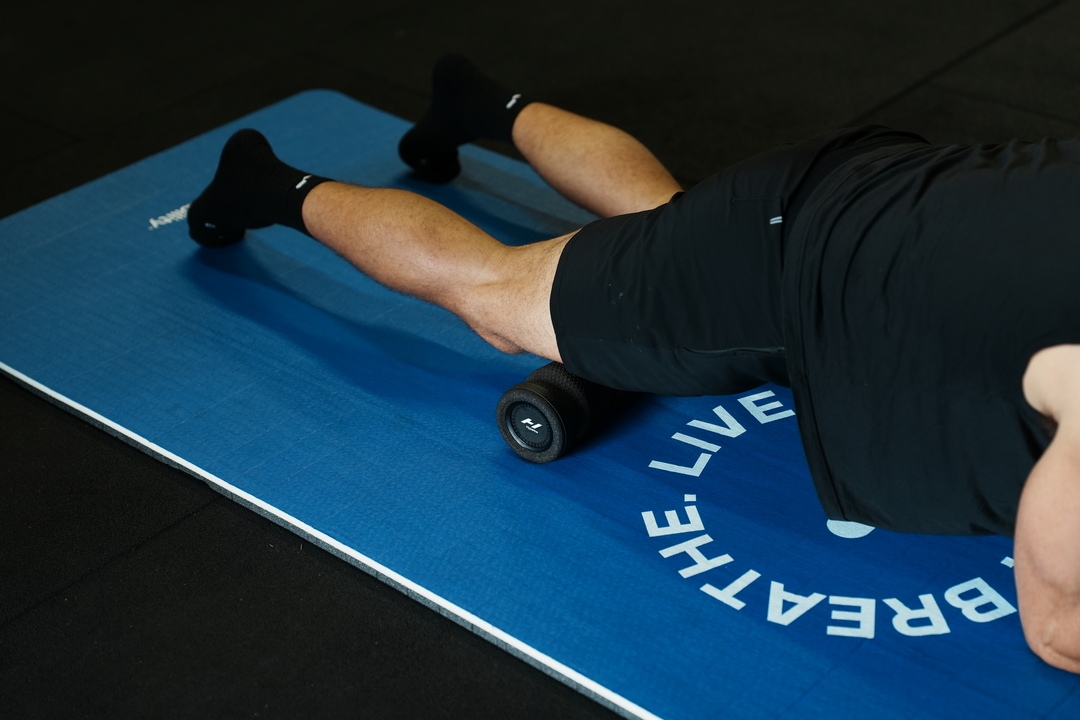
The first 48 hours after a quad strain aren't about healing. They're about damage control. Your body is flooding the injured area with inflammatory cells, blood is pooling around torn muscle fibers, and swelling is compressing surrounding tissue.
What you do right now determines whether you're dealing with a clean two-week recovery or a messy six-week saga complicated by excessive scar tissue and prolonged inflammation.
The Science Behind RICE
The RICE protocol exists because it works against these specific processes. Rest prevents the tear from widening. Ice constricts blood vessels and slows the inflammatory cascade. Compression prevents fluid from accumulating in spaces between muscle fibers.
Elevation uses gravity to drain excess fluid away from the injury site. According to Reform Athletica, ice should be applied for 30 minutes at a time to effectively reduce inflammation without causing tissue damage from excessive cold exposure.
Ice, Compression, Elevation Done Right
Most people apply ice for 5 seconds here and there, wrap it too loosely, or skip elevation because sitting with their leg propped up feels inconvenient. The protocol only works when you follow it precisely. Ice packs should be applied for the full duration, with at least 4 hours between applications to prevent ice burns and allow tissue temperature to normalize.
Compression wraps should be snug enough to support the muscle without cutting off circulation. Your leg needs to rest above heart level, not just propped on a pillow at knee height.
What Actually Accelerates Tissue Repair
Protein isn't optional during recovery. It's the raw material your body uses to rebuild torn muscle fibers. Every day you're injured, your body is synthesizing new tissue to bridge the gap where fibers are separated. If you're not consuming enough protein, that synthesis slows or stalls.
The muscle heals, but it heals weaker and slower than it could have. Aim for at least 1.6 grams of protein per kilogram of body weight daily, spread across meals to maintain a steady supply throughout the day.
Nutrients for Muscle Repair
Vitamin C drives collagen production, the connective tissue that holds muscle fibers together. Without adequate vitamin C, the new tissue that forms lacks structural integrity. It's more prone to re-tearing under load. Zinc supports immune function and cellular repair.
Omega-3 fatty acids modulate inflammation, helping your body transition from the acute inflammatory phase to the repair phase without getting stuck in chronic low-grade inflammation that delays healing.
Hydration Affects Recovery
Hydration matters more than people realize. Blood carries nutrients to the injury site and removes metabolic waste from damaged cells. When you're dehydrated, blood viscosity increases and circulation slows. Nutrient delivery drops. Waste products accumulate.
The entire repair process operates at reduced efficiency. Drink enough water that your urine stays pale yellow throughout the day.
Sleep Fuels Muscle Repair
Sleep is when growth hormone secretion peaks, and growth hormone is the primary driver of muscle repair. Cutting your sleep shortens the window your body has to rebuild tissue.
Deep sleep stages matter most. Alcohol disrupts those stages even if it helps you fall asleep initially. You spend eight hours in bed but only get four hours of restorative sleep. The math doesn't work in your favor.
Rebuilding Range of Motion Without Reinjury
Gentle stretching begins earlier than most people realize, but it must align with the healing stage. In the first 48 hours, you're not stretching. The muscle fibers are still torn and inflamed. Any lengthening force risks widening the tear.
After 48 hours, once acute inflammation begins to subside, you can begin passive range-of-motion exercises. This means moving the joint through its available range without forcing it or pushing into pain, while maintaining whatever mobility exists so scar tissue doesn't lock the muscle into a shortened position.
Active Stretching for Quads
By week two, assuming pain has decreased significantly, you can introduce active stretching. This is where you use your own muscle contraction to lengthen the quadriceps, holding each position for 20 to 30 seconds and repeating several times per day.
The goal isn't to regain full flexibility immediately. It's to progressively increase the range of motion as the muscle fibers reorganize and strengthen. Pushing too hard, too fast tears newly formed tissue and restarts the inflammatory cycle.
Progressive Quad Strengthening
Strengthening follows a similar progression. Isometric exercises come first, where you contract the muscle without moving the joint. These activate muscle fibers and promote blood flow without stressing the healing tissue.
Once you can perform isometrics without pain, you move to light resistance exercises with controlled movement. Bodyweight squats, leg lifts, step-ups. The load increases gradually, week by week, as the muscle demonstrates it can handle more force without breaking down.
When Professional Intervention Changes Outcomes
Physical therapists don't just prescribe exercises. They identify compensation patterns you've developed to avoid pain. You've been limping for two weeks, so your hip flexors are overworked, your hamstrings are tight, and your lower back is starting to ache.
Those secondary issues won't resolve on their own, even after the quad heals. A therapist assesses the entire kinetic chain, corrects imbalances, and ensures you're not trading one injury for another.
Restoring Muscle Elasticity
Manual therapy techniques, such as soft-tissue mobilization, break up scar tissue that forms during healing. Left alone, that scar tissue creates stiff, inflexible areas within the muscle.
The next time you sprint or jump, those areas may not lengthen properly, creating new tear points. Mobilization restores elasticity before the tissue fully matures and becomes permanent.
Red Flags for Quad Injuries
Some strains require imaging to rule out complete ruptures or bone involvement. If you can't bear weight on the leg, there is a visible gap in the muscle, or pain doesn't improve after a week of proper RICE, you need an evaluation beyond self-treatment.
Waiting too long to seek care turns a manageable injury into a chronic problem that requires months of rehabilitation instead of weeks.
Related Reading
- How To Prevent Stress Fractures From Running
- How To Fix Lower Back Pain From Running
- Care And Prevention Of Athletic Injuries
- Knee Injury Prevention Exercises
- Compression Therapy For Athletes
- Soccer Injury Prevention Exercises
- Best Foam Roller For Runners
- Ankle Injury Prevention Exercises
Recover from Quad Strains Faster with Guided Mobility Programs
Consistency matters more than intensity. You can read every recovery protocol, understand the science of tissue repair, and still fail to execute the daily work that actually rebuilds your quad. The gap between knowledge and action is where most recoveries stall.
You need a system that removes the guesswork, shows you exactly what to do at each stage, and keeps you accountable when motivation fades. Pliability gives you expert-designed routines that match your current recovery phase, whether you're managing acute inflammation or rebuilding strength for your first training session back.
Guided Rehab That Works
The app guides you through mobility work to restore the range of motion before scar tissue locks your muscle into restricted patterns, then progresses you through strengthening exercises that prepare the tissue for real-world loads.
You're not searching YouTube for stretches or wondering if you're pushing too hard. You're following a structured path built by people who understand how muscle tissue heals and what it needs to perform again.
Smarter Recovery, Lasting Strength
Track your progress with body-scanning features that pinpoint where tightness or weakness persists, and access a library of movements designed not just for recovery but also for preventing future injuries.
Sign up for seven days free on iPhone, iPad, Android, or web, because building a body that lasts requires more than rest. It requires deliberate, progressive movement that meets you where you are and takes you where you need to go.
.jpg)