What is Injury Prevention and How Can You Do It Right?
.webp)
Jamie’s sprinting toward the bus when her ankle rolls on the curb. A wince, a limp, and suddenly the whole day is ruined. Like Jamie, you don’t plan to get hurt, but injuries have a way of sneaking up on you. A twist, a fall, or one wrong move can bench you for days or worse. The good news? Most injuries don’t have to happen. With the right moves, habits, and awareness, you can stay active, strong, and pain-free. This guide shows you exactly how to prevent injuries the smart way, so you can keep doing what you love without setbacks.
To help with that, Pliability's mobility app guides you through short mobility routines, simple movement assessments, and targeted prehab to improve movement patterns, posture, recovery, and resilience while reducing the risk of sports injuries and overuse issues.
Summary
- Sports injuries create a predictable, measurable burden: over 3.5 million children under age 14 receive medical treatment each year, which helps explain seasonal spikes in clinic visits and school absences.
- About 70 percent of sports injuries are preventable with proper education, equipment, and progressive training, reframing prevention as an implementation problem rather than a matter of bad luck.
- Short, consistent preparation works, for example, 8 to 12 minute dynamic warm-ups, produced fewer early-game strains when retooled over an eight-week period, showing small time investments pay off.
- Strength plus specificity matters: two focused 30- to 40-minute strength sessions per week, plus single-leg stability drills over eight weeks, reduce post-play soreness and preserve court time for weekend athletes.
- Measurable metrics drive better outcomes, so track incidence per 1000 athlete exposures, days lost, recurrence rates, and adherence. Note that safety training programs achieved a 25 percent decrease in accidents, and ergonomic changes produced a 40 percent drop in musculoskeletal disorders.
- Concrete load and recovery rules reduce tissue failure risk, for example, monitor abrupt changes over the prior two weeks, hydrate with 300 to 500 milliliters 60 minutes before exercise, eat 0.25 to 0.4 grams of protein per kilogram at meals around training, and taper by reducing volume 30 to 50 percent over 7 to 14 days.
This is where Pliability's mobility app fits in: it delivers brief daily mobility routines, simple movement scans, and adherence logs that help teams maintain consistent warm-ups and targeted prehab.
What is Injury Prevention and Why is it Important?
.jpeg)
Sports and activity injuries cost time, income, confidence, and long-term health, and injury prevention means establishing systems that prevent those losses before they start, not just treating them afterward. It is a proactive, systematic approach that combines education, equipment, movement training, and data so athletes miss less time and recover with less long-term damage.
Why Should People Who Coach, Parent, or Hire Care About This?
When you add up missed practices, lost workdays, and slow recoveries, you get a real cost: teams fall behind, learners lose skills, and adults lose pay. According to Coastal Orthopedics, “Over 3.5 million children under the age of 14 receive medical treatment for sports injuries each year”.
The health system treats millions of young athletes annually, which explains why seasonal spikes in clinic visits and school absences are predictable and preventable. This is not abstract; it is the reason a single ankle sprain can derail a scholarship run or a workweek.
How Do We Prevent Injuries in Practice?
Prevention works when programs are specific, repeatable, and monitored. Start with targeted education for athletes, coaches, and parents about load, recovery, and technique.
Layer in appropriate protective gear and progressive strength and neuromuscular training that teaches safer movement patterns. Research from Coastal Orthopedics, “70% of sports injuries are preventable with proper education and equipment,” shows that most injuries respond to these levers, meaning prevention is a solvable implementation challenge, not an inevitable hazard.
What Patterns Cause Prevention Programs to Fail?
This problem appears across youth clubs and adult recreational leagues. Programs begin with good intent, but compliance drops, warm-ups get shortened, and progressions are skipped. The failure point is rarely the exercises themselves; it is the delivery and follow-through.
When coaching staff lack time or a simple plan, athletes return to old habits and injuries recur. It is exhausting for athletes who lose confidence after a long rehab and then watch teammates keep improving, a pattern that deepens dropout and reduces lifetime physical activity.
Closing the Gap Between Scattered Notes and Faster Clinical Action
Most teams handle prevention by improvising with drills and posters, which makes sense because it is familiar and low-cost. But that familiar approach masks rising costs and fails to account for the accountability and progression required as athletes move from one level to the next.
Platforms like Pliability provide centralized programs, automated progression logic, compliance tracking, and simple feedback for coaches, helping teams maintain consistent warm-up quality and objective progression across seasons rather than relying on memory and goodwill.
How Should Success Be Measured so Programs Actually Change Outcomes?
Track incidence per 1000 athlete exposures, days lost to injury, recurrence rates, and adherence to prescribed warm-ups and strength sessions. Pair objective tests, like hop symmetry or balance, with return-to-play benchmarks so decisions are driven by function, not optimism. The emotional payoff matters as much as the numbers: when athletes regain strength and confidence within an evidence-based schedule, they return to training less fearful and perform better.
Think of prevention like maintaining a car, not waiting for the engine to seize; regular, modest investments avoid catastrophic repairs and keep people moving.
Related Reading
- Injury Prevention Strategies
- Cold Therapy for Athletes
- Can Tennis Elbow Cause Shoulder Pain
- Basketball Injury Prevention
- How to Prevent Pickleball Injuries
- How To Stop Wrist Pain From Lifting Weights
- Most Common Tennis Injuries
- How to Prevent Knee Pain When Running
- How Can You Prevent Injury While Cycling
- Injury Prevention for Athletes
Common Sports Injury and Recovery Myths
Most injuries follow predictable patterns tied to workload, movement quality, and recovery behaviors, not random chance. When people accept myths about heat, rest, or one-off sounds, they miss clear signals and delay appropriate evaluation and treatment.
Why Does Thinking “Injuries are Random” Harm Recovery?
Treating injuries as luck makes you reactive rather than strategic. Instead of tracking spikes in training load, sleep, hydration, or changes in technique, teams and families chalk pain up to bad days and keep pushing.
That mindset creates a repeatable failure mode: small tissue stress builds, then collapses into a longer absence. Think of a load like a bank account, deposits and withdrawals add up; ignore the ledger, and you will overdraft.
Can Simple Fixes Like Stretching Really Prevent Most Problems?
Stretching reduces transient stiffness but does not address poor movement patterns, progressive overload, or neuromuscular control deficits that drive most injuries. Short, daily mobility work helps, but when recovery habits are poor or volume jumps suddenly, flexibility alone is a Band-Aid. The smarter path pairs range-of-motion work with strength, timing drills, and measured load increases so tissues adapt in sequence.
Is Injury Prevention Only for Elite Athletes?
No. Weekend warriors, high-school players, and busy adults all face the same drivers of breakdown:
- Rapid increases in load
- Fatigue
- poor mechanics
- Inadequate recovery windows
Because roughly UT Health Austin, “Over 50% of sports injuries in children are preventable”, prevention is a public health and performance issue, not an elite hobby. Small, systematic steps reduce time lost and limit long-term consequences.
A Practical Product Note About How Teams Often Manage This
Most teams keep prevention on spreadsheets or memory because it is familiar and low-cost, which feels fine early on. As seasons lengthen and player counts rise, that familiar approach fragments communication, compliance drops, and recovery plans get inconsistently applied, increasing injury recurrence and days lost.
Platforms like Pliability centralize warm-ups, prescribe progressive loads, and track adherence and objective test results, helping teams reduce administrative overhead while keeping programs consistent across coaches and seasons.
Numbered Myths and What Really Matters
1. Applying Heat to an Acute Injury.
Heat increases local circulation and can worsen swelling when tissue is freshly injured. For new sprains or strains, target inflammation and pain first with cold, compression, and elevation so you limit secondary tissue stress and pain-driven guarding, which otherwise prolongs dysfunction. Use heat later when spasms or chronic stiffness are the dominant problem, not in the first 48 to 72 hours.
2. Rest is Always Best.
Immediate cessation of the offending activity is the right first step, but prolonged inactivity leads to stiffness, muscle loss, and impaired circulation. Gentle, pain-free movement and graded, alternative training preserve function and speed healing. Reintroducing load should follow measurable milestones, not arbitrary timelines, and ideally include clinical oversight to prevent reinjury.
3. If You Can Move It, It Must Not Be Broken.
Small fractures and stress injuries sometimes allow movement and only modest swelling, especially in the feet, toes, or the outer lower leg. Persistent tenderness, night pain, or loss of performance should prompt imaging and specialist input, as treating a fracture as a sprain risks deformity or delayed union.
4. You Can Run Through Shin Pain, and It Will Go Away.
Repeated training on painful shins can lead to soft-tissue overload and microfractures of the tibia, a structural issue that requires rest, imaging, and a staged return. Monitoring load, shoe surface, gait mechanics, and recovery beats bravado. Ignoring progressive pain prolongs time away from the sport and raises the chance of a stress fracture.
5. “Feeling A Pop” is a Definitive Bad Sign.
A pop can indicate a ligament rupture, but it can also be a benign cavitation or tendon shift. What matters is the whole clinical picture, including immediate function, swelling, and pain pattern. Any acute incident with persistent pain or instability merits prompt evaluation rather than waiting for a dramatic disability.
6. Being Strong Will Prevent Injury.
Strength is necessary but not sufficient. Strength without durability, movement control, or appropriate recovery leaves tissues vulnerable when fatigue or rapid load changes occur. Training should build capacity and teach robust movement patterns under realistic fatigue, because a tired, strong muscle remains high-risk tissue.
Clinical Perspective and Practical Guidance
J. Mica Guzman, MD, MS, DABFM, RMSK, CAQSM, the Primary Care Sports Medicine Clinical Director at UT Health Austin, emphasizes that incorrect treatments often prolong recovery or worsen injuries, and that seeing a sports medicine specialist typically provides the safest, fastest route back to activity.
He works with both acute injuries and chronic problems that failed to heal under improper care, and he emphasizes that many minor injuries can be managed safely at home when guided by credible sources and clear red flags. When in doubt, get a professional evaluation so you avoid actions that turn a solvable problem into a long-term setback.
Quick Clinical Rules That Change Outcomes
- Track abrupt changes in training load over the prior two weeks, because spike patterns predict tissue failure.
- Watch for pain that increases at night or with low-level activity, a red flag for stress injury.
- Prioritize sleep, hydration, and nutrition during high-volume training phases; small deficits amplify tissue stress and slow repair.
Related Reading
- Do Muscle Tears Heal On Their Own
- Forearm Strain
- How Can Strengthening Muscles Prevent Injury
- Quad Strain Recovery Time
- Urgent Care For Pulled Muscle
- How To Heal A Calf Strain Quickly
- How To Prevent Hamstring Injuries
- How Long Does a Sprained Knee Take to Heal
- How Does Stretching Prevent Injury
- How Long Should Swelling Last After an Injury
- How To Strengthen Shins For Running
- Athletic Injury Recovery
11 Key Injury Prevention Strategies and Best Practices
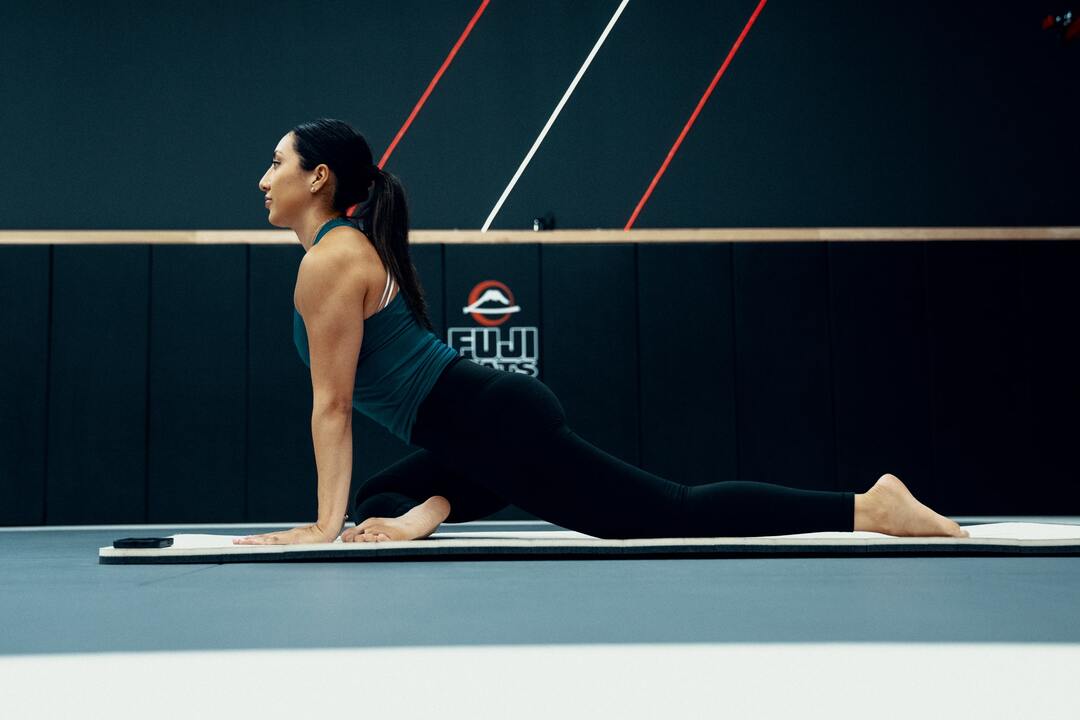
1. Prioritize a Thorough Warm-Up
When we retooled warm-ups for a community team over eight weeks, the immediate effect was fewer early-game strains and steadier movement under fatigue.
- Spend 8–12 minutes on dynamic drills that raise heart rate and prime the movement patterns you will use.
- Start with 2 minutes of light aerobic work, then 3 sets of 20 seconds each of high knees, leg swings, and arm circles, followed by movement-specific lunges or hip bridges.
- Avoid static holds before load, because static lengthening temporarily reduces force output and can blunt power when you need it.
Use Progression Rules
Increase complexity or reps only after two sessions, and ensure technical cleanliness. Pliability can generate warm-ups matched to your sport, update them automatically as you progress, and log compliance so you stop guessing who actually does the prep.
2. Don’t Skip Strength Training
The failure point will see most often be seen as one-sided strength, not a lack of effort.
- Build balanced strength by pairing agonist and antagonist work, for example, two pulling movements for every pressing movement, and schedule a focused lower-body heavy day plus a dynamic upper-body day each week.
- Use 3–5 sets of 3–8 reps for maximal strength blocks and 2–3 sets of 8–15 for durability phases; increase load only when form is pristine across all sets.
- Add core stability circuits at the end of sessions, 3 rounds of front plank variations and anti-rotation chops for 45–90 seconds total, to protect the spine under load.
If you’re juggling court time and work, we recommend two targeted 30–40-minute sessions per week, not daily, vague lifting, because consistent, focused work beats sporadic, unfocused sessions.
3. Stretching & Mobility
This is where movement becomes usable, not just pleasant.
- Use mobility sessions as targeted daily primers
- 10–15 minutes of dynamic joint flows that match your sport demands
- Reserve longer static holds for post-session recovery.
Mobility Drills Should Be Progressive
Assess a restriction with a simple screen, assign two corrective drills, and re-test weekly. Pliability provides daily-updated custom mobility programs and a body-scanning feature that pinpoints the exact joint or pattern limiting you, converting guesswork into a short, prioritized routine you can follow in minutes.
4. Emphasize Proper Technique
Do fix form, and do push intensity:
- Fix the form first, then add the load.
- Technique errors compound under fatigue, so prioritize movement quality at the same or higher frequency than you add weight.
- Use video analysis or a PT movement screen once every 4–6 weeks, and implement one small correction at a time, for example, moving knee tracking 1–2 centimeters over several sessions.
- Repetition with clean mechanics builds safer motor patterns; add complexity only after you can string 3 sets without form breakdown.
5. Respect Your Rest Days
Rest days are actually useful:
- Schedule at least 1 full rest day each week and 1 active recovery day that maintains blood flow without high impact.
- Treat rest like an investment, not a penalty.
- When we shifted players from passive rest to an active recovery routine of 20 minutes of light cycling and 10 minutes of mobility, they returned to sessions feeling less stiff and reporting lower perceived exertion.
- If persistent fatigue or mood changes occur, reduce session intensity by 30 percent for 5–7 days rather than canceling all sessions.
6. Try Balance and Proprioception Drills
Train single-leg balance under progressive challenge. Start with eyes open for 30 seconds, then move to eyes closed, and finally add a light perturbation, such as a tossed ball or a foam pad.
Include wobble board work twice a week and agility ladder sequences once a week to practice coordination at speed. Practice these drills after fatigue in at least one session per week so your nervous system learns to stabilize when you are tired, mimicking late-game conditions and cutting the chance of missteps.
7. Stay Hydrated and Eat for Performance
Simple, consistent fueling matters. Aim for 0.25–0.4 grams of protein per kilogram of body weight at each meal around training to support repair, and prioritize complex carbs before long sessions.
Hydrate by drinking 300–500 milliliters 60 minutes before exercise, then sip every 15–20 minutes during prolonged activity. Small, repeatable habits protect tendon and muscle health far more than occasional “big fixes” after a problem appears.
8. Cross-Train Strategically
Use cross-training to maintain cardiovascular fitness while reducing repetitive strain on tissues. If you run twice per week, replace one session with cycling or swimming during high-volume weeks to reduce impact.
Match intensity, not duration; a 30-minute zone 3 bike ride can maintain conditioning while reducing load on knees or ankles. When returning from a flare of joint pain, prioritize low-impact options for 2–4 weeks, then reintroduce sport-specific stress with progressive exposure.
9. Core Stability
Core stability controls force transfer across the body; when it fails, distal joints such as the knees and shoulders compensate. Use mixed stability training by combining anti-extension holds, Pallof presses, and loaded carries to build real-world stiffness.
Do short, focused circuits three times per week, and assess progress with simple performance checks, such as a 60-second plank or a 20-meter farmer carry with a fixed load. When core control improves, I consistently see reduced lateral knee collapse and fewer compensatory shoulder strains during overhead work.
10. Tapering
Taper to preserve power and glycogen while reducing mechanical fatigue. For events, reduce total volume by 30–50 percent over 7–14 days, keep intensity spikes short and sharp twice during taper weeks, and prioritize sleep and nutrition.
The goal is to reduce cumulative tissue stress so the nervous system and connective tissues recover, not to erase stimulus. In practice, athletes who taper by this rule report higher force output and fewer muscle strains on event day.
11. Don’t Ignore Pain and Work with a Physical Therapist Regularly
Any persistent change in performance, swelling, night pain, or instability needs evaluation within 7–10 days. Early intervention stops small problems from becoming chronic.
Regular PT check-ups, quarterly or biannually depending on load, catch asymmetries and correct them before they limit you. A movement screen paired with targeted corrective programming reduces the risk of recurrence, and using objective tests such as single-leg hop symmetry or balance scores provides clear return-to-play criteria rather than subjective judgment.
Stop Chasing Logs and Start Scaling Safety with Pliability
Most teams manage their injury prevention programs with spreadsheets, PDFs, and good intentions because that approach is familiar and low-cost; it works until schedules get busy and compliance lapses. As complexity grows, training details scatter, adherence declines, and small problems escalate into greater time lost.
Platforms like Pliability centralize programs, automate progression rules, deliver daily mobility scans, and track adherence, giving teams a consistent program without adding admin burden and freeing clinicians and coaches to focus on decisions rather than chasing logs. Across organizations, the power of structured training and ergonomic change is clear, as shown by the TWG OSH National Practices Report, “Implementation of safety training programs has led to a 25% decrease in accident rates” and “Companies that adopted ergonomic interventions saw a 40% reduction in musculoskeletal disorders”, which is exactly the kind of outcome teams get when training, environment, and monitoring align.
Building Lasting Strength Between Games
The truth is, many athletes in their 30s and 40s push through consecutive play, then wonder why soreness lingers. When we added two weekly strength sessions and single-leg stability drills to a group of weekend players over eight weeks, players maintained more court time and reported less post-play joint soreness by targeting the exact weak links rather than just stretching.
That pattern repeats across settings:
Short, specific interventions delivered consistently beat occasional long sessions and sympathy.
That solution works until you hit the one obstacle nobody talks about.
Reduce Injury Risk by Improving How Your Body Moves
If you want to keep moving well and avoid preventable setbacks, we often recommend folding a habit-friendly mobility tool like Pliability into your routine to protect joint health and movement quality. Injury prevention isn’t just about avoiding accidents.
It’s about maintaining mobility, joint health, and movement quality over time. That’s where Pliability fits naturally into an injury-prevention routine.
Optimizing Your Movement and Recovery
Pliability is a performance-focused mobility app designed for athletes and active individuals who want to move better, recover faster, and reduce pain before it becomes an injury. With daily-updated mobility programs, targeted flexibility sessions, and a body-scanning feature that identifies movement limitations, Pliability helps address the stiffness, imbalances, and restricted range of motion that often lead to injuries.
Whether you’re training hard, returning from time off, or simply feeling limited by tightness or discomfort, Pliability complements your existing workouts and recovery habits, helping you stay consistent, resilient, and pain-free.
Reduce Stiffness and Stay Training
Try Pliability free for 7 days on iPhone, iPad, Android, or the web, and start building mobility into your injury-prevention strategy today.
Give it a short trial and watch whether consistent, brief mobility checks and sessions reduce stiffness, guide recovery choices, and keep you training without the nagging fear of lost time.
Related Reading
- How To Prevent Stress Fractures From Running
- How To Fix Lower Back Pain From Running
- Care And Prevention Of Athletic Injuries
- Knee Injury Prevention Exercises
- Compression Therapy For Athletes
- Soccer Injury Prevention Exercises
- Best Foam Roller For Runners
- Ankle Injury Prevention Exercises
.jpg)