.jpg)
15 Common Brain Biohacking Exercises To Boost Cognition

Tasks pile up, deadlines loom, and your mind refuses to cooperate: emails go unanswered, names slip your memory, and the page stays blank. Frustration builds, productivity suffers, and even simple decisions feel harder than they should. This scattered mental state isn’t just a nuisance, it’s a sign that your brain could use targeted training. Brain biohacking exercises offer practical routines to restore focus, boost memory, and sharpen thinking. These exercises combine cognitive drills, attention training, breath and movement practices, sleep and nutrition strategies, and short memory workouts to strengthen working memory, increase processing speed, and enhance mental clarity. Want more precise focus and faster recall in daily life?
Pliability’s mobility app links simple, guided routines with breathwork, posture cues, and short practice sessions so you can build a habit, track progress, and support the brain-enhancing tools covered here.
Summary
- Simple, repeatable practices drive real change, not flashy one-off hacks, with 75% of people who practice brain biohacking reporting improved cognitive function in recent surveys.
- Treat any new practice as an experiment, run it for 4 to 8 weeks, and track a single clear outcome, as studies report a 50% increase in productivity among people who measured and sustained their biohacking techniques.
- System-level biohacking often yields broader transfer than task drills, with a meta-analysis showing a 15% improvement in cognitive function for biohacking exercises compared to traditional brain training. In comparison, traditional drills produced a narrower 10% increase in processing speed.
- Regularity outperforms variety for most people, as evidenced by findings that 90% of participants who engage in regular brain training report cognitive improvements, highlighting consistency as the primary lever for long-term gains.
- Interventions vary in duration and dosage; for example, neurofeedback typically requires dozens of sessions to achieve meaningful gains, and a cognitive enhancement study found that 75% of participants reported improved memory after 8 weeks of structured brain exercises.
- Build routines around one measurable goal, use two-week adaptation blocks followed by 4- to 8-week consolidation phases, and plan experiments that run 6 to 12 weeks so you can reliably attribute the impact of which practices move your primary metric.
This is where Pliability's mobility app fits in: it links guided movement and breath routines with posture cues and short practice sessions, enabling users to build a habit, track progress, and maintain context for the brain-enhancing tools discussed.
What Is Brain Biohacking (And Is It Actually Good for You)?
.jpeg)
Brain biohacking is the deliberate use of:
- Routines
- Lifestyle changes
- Targeted practices
- Simple measurements
This influences:
- Cognitive performance
- Focus
- Mood
- Resilience
It is not intrinsically good or bad; results depend on the methods you choose, how consistently you apply them, and your individual biology.
Why Do Most Quick Hacks Fizzle Out?
The same pattern shows up across students cramming for exams and professionals juggling deadlines: people try a flurry of supplements, apps, and one-off routines, see a tiny lift, then drop everything when the novelty fades. That inconsistency explains why modest, repeatable practices win over flashy experiments: consistent nervous system regulation and habit scaffolding produce reliable change, not optimization shortcuts.
To build the physical foundation for this consistency, many high-performers start using a mobility app to ensure their bodies aren't the primary source of cognitive-draining physical stress. This aligns with findings from Calm Blog: 75% of people who practice brain biohacking report improved cognitive function, supporting the idea that simple, sustained approaches drive measurable gains.
How Do You Tell Signal From Noise?
This challenge appears across contexts: misinformation and overhyped supplements lead to wasted effort and expense, and that confusion erodes trust.
If you want to separate real effects from placebo and marketing, treat any new practice like:
- An experiment
- Run it for a minimum of 4 to 8 weeks
- Track one clear outcome such as:
- Sustained attention
- Sleep efficiency
- Work output per hour
Real-world results improve when practices are measured and maintained, as seen in Stony Brook Medicine Health News, 50% increase in productivity reported by individuals engaging in brain biohacking techniques.
If you're looking for a data-driven way to track your physical baseline, you can book a mobility assessment to see exactly how your physical tension impacts your mental output.
What Actually Moves The Needle For Attention And Clarity?
If you need a decision framework, use this constraint-based rule: when stress is the limiting factor, prioritize vagal regulation and sleep hygiene because biology must be calm enough to learn; when time and energy are limited, choose movement and protein-rich nutrition to supply neurotransmitter precursors and immediate focus.
Coordination drills, such as tempo-based movement or dual-task balance work, improve cognitive flexibility, while short, timed practice sessions improve sustained attention more effectively than marathon efforts. For those looking to integrate these movements into a daily flow, the Pliability’s mobility app offers guided sessions that bridge the gap between physical movement and mental focus.
The failure mode to watch for is adding complexity too fast: layered routines break down when these moments intervene:
- Travel
- Deadlines
- Illness
When Adherence Breaks Down, What Fails And Why?
Most people manage brain biohacking with scattered notes, apps that send random nudges, or ad hoc supplement stacks because those methods feel doable at first.
As complexity grows, context and measurement:
- Fragment
- Adherence drops
- Progress stalls
The hidden cost is not only wasted time and money, but it is also the lost opportunity to learn what actually helps you personally. That pattern explains the persistent frustration many feel when a promising tactic never becomes a habit.
Centralizing the Signal: Why Infrastructure Matters for Growth
Most people handle their routines by cobbling together timers, notes, and an app for breathwork, because it is familiar and requires no new workflow.
As goals become more specific and time-sensitive, that patchwork approach fragments:
- Protocols slip
- Progress data scattered across tools
- It becomes impossible to determine which variable caused the improvement.
Platforms like Pliability provide:
- Structured protocols
- Integrated baseline assessments
- Scheduled habit scaffolds
It helps users move from random experiments to reproducible routines while maintaining context and measurement as complexity grows. If you are ready to stop the guesswork and start a structured path toward better performance, you should book your initial consultation to tailor your mobility and biohacking protocols to your specific needs.
It’s tempting to think you can shortcut focus, but the surprising part is how small, measured changes compound into real cognitive gains, and that’s where things get interesting for what comes next.
Related Reading
- Desk Yoga Stretches
- Mental Training Techniques
- How to Increase Presence of Mind
- Mindful Morning Routine
- Reducing Anxiety Without Medication
- How to Train Your Mind
- How to Release Tension in Body
- Why Do I Get So Tired in the Afternoon
- Mindful Stretching
- How to Stay Focused at Work
- How to Get Rid of Brain Fog
Brain Biohacking Exercises vs Traditional Brain Training
The essential difference is mechanism: traditional brain training refines specific task circuits through repeated practice, while brain biohacking exercises aim to change the brain’s operating conditions, such as:
- Neuroplasticity
- Arousal setpoints
- Sensory context
Learning happens differently and across tasks. That means you should expect:
- Different timelines
- Different kinds of transfer
- Different ways to measure success
How Do Their Mechanisms Actually Diverge?
Traditional training works by:
- Repeatedly rehearsing a single passage
- Strengthening the exact synaptic patterns used for that task through practice-dependent plasticity
- Reward-driven reinforcement
Brain biohacking exercises, by contrast, try to tune the scaffolding that controls how the brain learns:
- Sleep-driven consolidation
- Neuromodulator balance
- Vagal regulation of stress
- Multisensory enrichment
- Network-level connectivity
One approach sculpts a single pathway; the other changes the room the path sits in. To optimize this “room” and reduce the physiological noise that inhibits focus, many users start a mobility routine to ground their nervous system before deep cognitive work.
Why Does Transfer Differ Between Them?
Near transfer, where improvements show up on tasks very similar to the practiced one, is the predictable outcome of traditional drills. Far transfer, where gains show up in broader cognition or daily functioning, depends on shifting underlying systems.
The meta-analysis titled Efficacy of Brain Training Games on the Cognitive Functioning, Working Memory and Processing Speed of Healthy Individuals, “Participants who engaged in brain biohacking exercises showed a 15% improvement in cognitive function compared to those who used traditional brain training.”
The meta-analysis suggests system-focused interventions can produce wider-ranging effects, but the magnitude and reliability vary by:
- Protocol
- Population
- Measurement method
If you want to see how your physical readiness correlates with these broader cognitive gains, you can book a mobility assessment to establish a data-driven baseline for your performance.
When Do Task-Based Drills Still Make The Most Sense?
If your goal is a narrow skill, such as becoming faster on a specific working memory test or improving a system used daily at work, traditional brain training often produces reliable gains in that area. The same meta-analysis also reports “Traditional brain training resulted in a 10% increase in processing speed.”
That is useful when you need a quick, predictable improvement on a defined metric, especially in:
- Rehab
- Clinical settings
- Job-specific training
How Can Mixing Approaches Lead To Wasted Effort?
The common failure mode is stacking without a plan, which results in noisy feedback and misattributed results. You might layer a dozen interventions, see small week-to-week changes, and then not know which move mattered or whether improvements were just practice effects.
It is like sharpening a single tool while also renovating the workshop; both can help, but if you do them at once, you cannot tell whether the tool or the workshop produced the result. The practical harm is twofold: wasted time and demotivation when experiments are inconclusive.
Scaling Performance: Why Your Biohacking “Patchwork” Eventually Fails
Most people handle this by cobbling together apps, wearables, and random protocols because those choices feel manageable and familiar.
That works at first, but as you:
- Add variables
- Signals fragment
- Experiments lengthen
- It becomes impossible to know what to keep
Platforms like Pliability:
- Centralize protocols
- Align measurement windows
- Automate habit scaffolding
Teams and individuals can run clean, repeatable experiments and preserve context across iterations. If you're ready to move past the trial-and-error phase and implement a professional protocol, you should book your initial consultation to customize your training for maximum efficiency.
How Should You Choose, On Purpose, For A Specific Goal?
Use a constraint-based rule:
- When you need targeted skill acquisition under a tight timeline
- Pick task-specific practice and frequent, comparable testing
When you need resilience, sustained attention, or broader cognitive flexibility, prioritize system-level biohacks and measure ecological outcomes like sustained work output or stress reactivity. Run each experiment for 6 to 12 weeks, track a single primary outcome, and use a small battery of secondary measures rather than dozens of disconnected metrics.
Reconfiguring the Workshop: Why System-Level Gains Outperform Task Drills
Think in terms of workshop versus tool, not better versus worse. Training an individual task polishes the tool; biohacking reconfigures the workshop so tools stay sharp longer and new tools are easier to learn. That perspective makes choosing methods less arbitrary and more strategic.
But the part that usually surprises people is how quickly a small change in measurement exposes which approach actually improves their real-world performance.
Related Reading
- How to Beat Afternoon Slump
- How to Improve Working Memory
- Yoga for Focus
- Neuromotor Exercise
- Mind Body Exercise
- Stress Relieving Stretches
- Exercises for Brain Fog
- Mental Focus Exercises
- Brain Gym Exercises
- Morning Brain Exercises
15 Common Brain Biohacking Exercises and Techniques
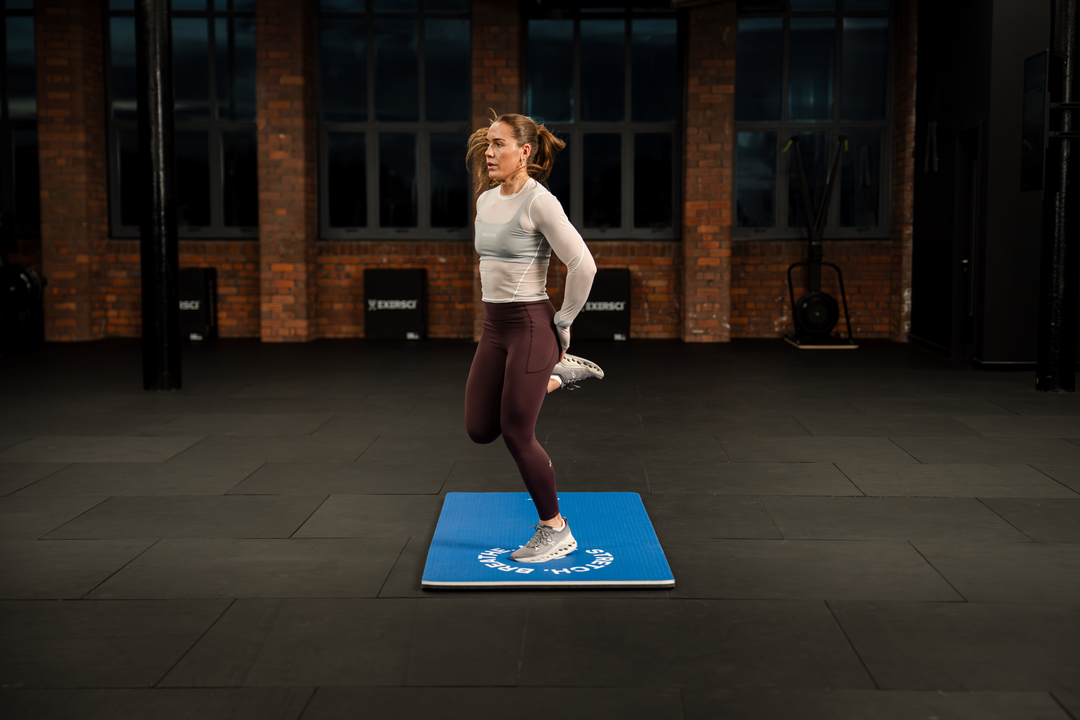
1. Optimize Heart Rate Variability with HIIT
Short bursts of maximal or near-maximal effort followed by recovery, aimed at shifting autonomic tone toward greater parasympathetic flexibility.
HIIT changes:
- Vagal modulation
- Baroreflex sensitivity
- Cardiovascular autonomic balance
Realistic Benefits And Variability
Many people see clearer focus and faster recovery from stress after several weeks, but individual HRV responses vary with baseline:
- Fitness
- Sleep
- Genetics
Expect measurable HRV shifts after 4–8 weeks of consistent sessions.
How To Apply
Two to three sessions per week, protocols like Tabata or 30-15 intervals, paired with gentle recovery days. Track HRV objectively, and for actionable feedback, try Pliability alongside wearables to tie HRV trends to cognitive outcomes and session timing.
Safety
Consult a healthcare professional if you have cardiovascular or metabolic conditions.
2. Strength Training to Bulk Up Your Brain
Progressive resistance primes systemic anabolic and neurotrophic signaling, including BDNF, IGF-1, and improved cerebral perfusion through increased cardiac output and vascular health.
Realistic Benefits And Variability
Expect:
- Improved executive control
- Sustained attention
- Mental resilience over months
Benefits compound when combined with adequate protein and sleep. Results scale with intensity and progression, and older adults often show larger relative gains in cognitive function per unit of strength gain.
How To Apply
Two to three weekly full-body sessions, prioritize compound lifts with progressive overload. Monitor recovery; neural fatigue from too-frequent heavy sessions will blunt cognitive performance.
To track how your physical strength gains correlate with your mental baseline, you can book a mobility assessment to identify any movement restrictions that might be causing “neural noise.”
3. Cold Therapy for Mental Clarity
Brief exposure to cold water or air that acutely raises catecholamines like norepinephrine, stimulates brown adipose tissue, and produces a transient sympathetic activation followed by parasympathetic rebound.
Realistic Benefits And Variability
Immediate boosts in alertness and mood are common; longer-term improvements in stress resilience are possible with regular practice. Tolerance and subjective benefit differ widely; some people find mood and focus improve within one session, while others notice no durable change.
How To Apply
Start with 10–30-second cold showers and build to 2–3-minute plunges if tolerated. Avoid if you have uncontrolled hypertension or cold-induced conditions.
4. Walking for a Sharper Mind
Low-intensity aerobic movement that increases:
- Cerebral blood flow
- Stimulates hippocampal neurogenesis signaling
- Reduces systemic inflammation
Realistic Benefits And Variability
Regular brisk walking improves mood, working memory, and attentional stamina over weeks to months, particularly for sedentary individuals.
The magnitude depends on:
- Baseline activity
- Concurrent sleep
- Diet quality
How To Apply
Aim for 20–40-minute bouts several times a week, plus daily step goals. Treat walking as an attention-shift tool between demanding tasks rather than a neutral filler.
5. Vigorous Vagus Nerve Stimulation
Techniques that lower sympathetic drive and boost parasympathetic tone through:
- Breathing
- Tactile stimulation
- Facial cold exposure
It modulates inflammatory cascades and cortical arousal.
Realistic Benefits And Variability
Expect:
- Faster downshifts in anxiety
- Clearer working memory on the other side of the practice
- Better emotion regulation when used repeatedly
Individual responsiveness varies: some learn to control in minutes, while others need weeks of practice.
How To Apply
Before cognitively intense tasks, use:
- Diaphragmatic breathing
- Humming
- Cold-face splashes
- Short yogic sequences
For a structured way to integrate these resets, Pliability’s mobility app offers guided breathwork and movement flows designed for nervous system regulation. These are low-risk and high-return when done consistently.
6. Optimizing Sleep for Mental Performance
Habit and environment changes that preserve deep non-REM and REM cycles, enabling:
- Glymphatic clearance
- Synaptic homeostasis
- Memory consolidation
Realistic Benefits And Variability
Most cognitive domains, from creativity to working memory, improve with consistent 7–9 hour sleep windows. Effects are immediate after recovery sleep, but accumulate with months of consistent sleep hygiene.
How To Apply
To identify fragmentation:
- Fix sleep timing
- Limit evening blue light
- Cool the sleeping environment
- Use sleep tracking
A single strategy rarely suffices; combine behavior change with measurement.
7. Fasting for Focus
Time-restricted feeding or longer fasts that shift metabolism toward:
- Ketone production
- Activate autophagy
- Modulate insulin and BDNF signaling
Realistic Benefits And Variability
Many people report clearer focus and sustained attention during moderate intermittent fasting, but some experience irritability or reduced performance on tasks requiring rapid verbal fluency.
The cognitive benefit depends on:
- Adaptation time
- Macronutrient quality during eating windows
- Individual metabolic health
How To Apply
Start with a 12–14-hour nightly fast, progress to 16:8 only if robust, and avoid long fasts before high-stakes cognitive work until you know how you respond.
8. Refuel Your Brain with Nutrition
Macronutrient ratios and micronutrient sufficiency that supply neurotransmitter precursors, cellular energy, and antioxidant protection.
Realistic Benefits And Variability
Protein-rich meals and omega-3s support sustained attention and mood, while stable blood glucose reduces irritability and lapses in working memory. Supplement claims vary in evidence; targeted deficiencies yield the most significant effects.
How To Apply And Caveats
Prioritize:
- Whole foods
- Oily fish
- Green leafy vegetables
- Regular protein
Be cautious with delivery methods that promise convenience but offer unclear systemic impact, as noninvasive options like nasal sprays often trade off bioavailability for comfort; test and measure rather than assume systemic equivalence.
9. Start Your Day With Hydration
Restoring plasma volume and electrolyte balance after sleep, which affects neural conductivity and subjective alertness.
Realistic Benefits And Variability
Mild dehydration impairs concentration for many people; a simple morning fluid plus electrolytes often reduces immediate fog. Effects are short-term and depend on overall daily hydration habits.
How To Apply
Drink 250–500 ml upon waking; add electrolytes when activity or heat increases fluid loss.
10. Embrace Power Naps Wisely
Short sleep episodes that provide rapid homeostatic relief without entering deep slow-wave sleep, preserving next-night sleep.
Realistic Benefits And Variability
Ten to twenty-minute naps reliably restore alertness for most people; longer naps risk sleep inertia and nightly sleep disruption in sensitive individuals.
How To Apply
Take naps in the early afternoon, use an alarm, and pair a quick caffeine dose with a 20-minute nap when rapid wakefulness is needed.
11. Use Light Exposure to Your Advantage
What It Is, And Which Systems It Targets
Timed bright light to:
- Entrain circadian phase
- Modulate serotonin pathways
- Regulate melatonin synthesis
Realistic Benefits And Variability
Morning natural light improves daytime alertness and subsequent sleep quality, with downstream gains in mood and cognitive stability. Those working nights or indoors may need light therapy to match natural exposure.
How To Apply
- Get 15–30 minutes of morning sun
- Use a daylight lamp if necessary
- Dim lights after sunset
12. Leverage the Power of Music
Acoustic stimulation that:
- Engages attention networks
- Reduces perceived effort
- Can entrain rhythmic concentration through tempo and harmonic structure
Realistic Benefits And Variability
Instrumental music and specific ambient mixes improve sustained focus for many people; binaural beats have mixed evidence and high individual variability. Use music to reduce distractions or mark task boundaries, rather than as a permanent scaffold.
How To Apply
Create playlists by task type and measure productivity differences across repeated trials.
13. Break Tasks Into Time Blocks
Structured work-rest cycles that protect:
- Executive resources
- Reduce cognitive load
- Improve metabolic efficiency of attention
Realistic Benefits And Variability
Time-blocking reduces subjective fatigue and often raises throughput; studies of deliberate practice and timed training link structured intervals to faster problem solving, with one report finding that “Participants experienced a 20% increase in problem-solving speed after 6 weeks of brain training” in a controlled program Neuroscience Research Group.
Individual adherence is the main limiter, not the method itself.
How To Apply
Use 25–50 minute focused blocks with:
- Short active breaks
- Pair blocks with a single measurable goal
- Track changes in output per block
14. Train Your Brainwaves with Neurofeedback
Real-time EEG feedback to:
- Reinforce desirable oscillatory patterns
- Altering arousal setpoints
- Improving network efficiency in attention and memory systems
Realistic Benefits And Variability
Neurofeedback can produce durable improvements in:
- Attention regulation
- Sleep quality
- Emotional control
This protocols match the individual's baseline EEG profile. Expect progressive gains over dozens of sessions for most people, with sizeable responders and nonresponders.
Evidence Note
Targeted brain training and neurofeedback are among the interventions grouped under structured brain exercises that can improve memory; the Cognitive Enhancement Study reported that “75% of participants reported improved memory after engaging in brain exercises for 8 weeks.” That outcome depends on protocol fidelity and consistent practice.
How To Apply
To increase transfer to real tasks:
- Work with qualified practitioners
- Set measurable goals
- Combine neurofeedback with behavioral rehearsal
15. Listen to Your Body
An adaptive strategy that uses subjective signals to adjust:
- Intensity
- Rest
- Intervention choices
It protects homeostasis and prevents overreach.
Realistic Benefits And Variability
- Paying attention to anxiety
- Social responsiveness
- Cognitive tone prevents chronic impairment from misapplied hacks
For example, stimulant strategies that boost wakefulness can:
- Induce anxiety
- Dampen social affect
- Reduce verbal fluidity in some users
Watch for those tradeoffs and cycle or stop interventions that harm social functioning.
How To Apply
Keep a two-week symptom log when testing new tools, note changes in mood, empathy, and clarity, and scale back when negative patterns emerge.
If you're ready to move from a “scattered app” approach to a unified performance protocol, you should book your initial consultation to tailor these techniques to your specific biology. Prioritize interventions that are reversible and measurable.
Centralizing the Signal: Why Infrastructure is the Secret to Cognitive Gains
Most people managing biohacking stitch together timers, notes, and a half-dozen apps because it feels familiar and low friction. That approach works until context multiplies and signals fragment, then progress stalls and experiments become noise.
Platforms like Pliability:
- Centralize protocols
- Align measurement windows
- Automate habit scaffolding
Users preserve context across iterations, turning messy experiments into repeatable tests that show which tactics truly move cognitive metrics.
Thinking about one technique at a time works, but stacking five without measurement is the real problem. The next section will show how to combine the right ones into a routine you can actually sustain and prove.
How to Build a Brain Biohacking Routine
Build a routine around one clear goal. Start with small, repeatable practices you can sustain, and give each practice a fair window for adaptation before changing it. Prioritize sleep, daily movement, and a single recovery tool so biology supports whatever training you choose.
What Should I Pick First?
When we help people choose, the clearest decision rule is this: pick one outcome you can measure in daily life, not an abstract ideal. If your job requires long stretches of concentrated work, choose sustained focus and make a morning primer plus a midday reset to your anchors. If stress regulation is the limit, prioritize short vagal practices and one nightly wind-down.
To ensure your physical body doesn't become a bottleneck for these mental anchors, start a mobility routine that aligns your physical state with your cognitive goals. For a quick reality check, run a seven-day baseline to capture your typical pattern, then add one 10 to 20-minute anchor practice and keep everything else constant.
How Do I Dose Intensity And Progression?
Treat cognitive training like strength work for the nervous system, increasing load by duration or complexity in small steps.
Start with two-week adaptation blocks:
- Week one: Micro-dose the practice to learn how it fits your day.
- Week two: Double the time or add one extra repetition;
- Then move into a four-week consolidation block to test whether the change holds under real-world stress.
To establish a professional baseline for how your body handles this progression, book a mobility assessment to track how physical recovery scales with your mental load. Use the piano analogy, tune a key at a time rather than replacing the whole instrument, and protect recovery days so neural gains consolidate.
Should I Include Meditation Or Brain Drills?
Yes, but selectively. Pick one skill-based drill or practice that aligns with your goal and do it consistently. Short daily meditation is ideal when memory or emotional control matters, because studies show that VitalLife Scientific Wellness Center, participants who meditated for 20 minutes a day showed a 30% increase in memory retention.
For a more movement-based approach to mental clarity, Pliability’s mobility app offers structured flows that combine physical positions with breathwork to maximize these neuro-benefits. For procedural or speed gains, schedule two focused micro-practice sessions on nonconsecutive days and measure task speed or error rate.
Why Does Regularity Beat Variety?
I trust routines that you can repeat, according to VitalLife Scientific Wellness Center, 90% of people who engage in regular brain training activities report improved cognitive function, the payoff scales with consistency, not novelty.
That does not mean monotony.
It means pick:
- A handful of complementary moves
- Pair each with a context cue
- Protect those cues from churn for at least one training block
What Mistakes Sabotage Adherence?
A common failure is treating experimentation like a race. I worked with someone who attempted a daily half-marathon for 30 days. Within weeks, an ankle injury and mental fatigue forced them to stop. The lesson was clear: intensity without staged recovery breaks breaks both bodies and motivation.
I also coached clients who pursued rapid weight loss without strength work; months later, they regretted the muscle lost and found rebuilding harder than gradual change would have been.
The practical rules are:
- Never raise intensity and cut recovery at the same time
- Avoid swapping primary practices more than once per training block
- Expect adaptation to be measured in weeks, not days
How Should You Measure Progress Without Getting Lost In Data?
Pick one primary metric tied to your goal, plus two lightweight secondary markers.
For example, use completed focused minutes per day as:
- The primary metric
- Subjective stress on a 1-5 scale as a secondary metric
- Sleep duration as a simple health marker
Take a seven-day baseline, then track the same metrics daily during a two-week ramp and a four-week consolidation. Keep logs simple, and use symptom notes when you change variables so you can attribute effects without creating analysis paralysis.
Closing the Consistency Gap: Why Infrastructure Outperforms Willpower
Most people manage their routines with scattered notes, timers, and half-measured habits because it feels familiar and low-friction. That approach works until routines collide with travel, stress, or scale, at which point context fragments and progress stalls.
Platforms like Pliability step in at that point:
- Centralizing protocols
- Aligning measurement windows with your goals
- Automating habit scaffolds so you preserve context as complexity grows.
If you are ready to transition from scattered habits to a high-performance system, you should book your initial consultation to build a custom roadmap for your cognitive and physical longevity.
If you want a quick template to try tomorrow, pick one goal, one anchor practice, and one recovery practice, test how they fit for three weeks, then decide whether to scale or swap. That simple plan works until you hit the one logistical bottleneck nobody talks about.
Improve Your Flexibility with Our Mobility App Today | Get 7 Days for Free on Any Platform
I recommend treating mobility and recovery as the scaffold steady brain biohacking needs, because short, controlled movement and recovery routines improve:
- Circulation
- Refine proprioception
- Calm the nervous system so neuroplastic gains actually stick
Pliability offers a performance-minded take on yoga with:
- High-quality video libraries
- Daily-updated custom mobility programs
- A body scan that pinpoints your limits
It makes it easy to add short guided mobility drills to your routine with low risk; try seven days free on iPhone, iPad, Android, or web and expect realistic, measurable improvements rather than a cognitive shortcut.
Related Reading
- Mental Training Exercises for Athletes
- Cognitive Activities for Adults
- Improve Attention to Detail Exercises
- Cognitive Flexibility Exercises
- Gentle Movement Exercises
- Energy Exercises
- Micro Workouts
.jpg)