21 Best Energy Exercises To Boost Your Focus and Beat Fatigue
.webp)
You know the feeling: a morning full of plans, then mid-morning slump, stiff shoulders, and a fogged mind that slows everything down. Energy exercises blend simple breathing work, joint mobility, dynamic stretching, and short movement breaks to restore circulation, improve posture, and sharpen attention. Want quick routines you can do at your desk, between meetings, or before a big task? This article gives clear, practical techniques and desk yoga stretches to boost energy, sharpen focus, and overcome fatigue so you can stay productive, alert, and energized throughout the day.
To help with that, Pliability's mobility app offers guided movement flows, breathing drills, and mobility routines you can follow in minutes to lift energy, clear brain fog, and keep your body ready for focused work.
Summary
- Standing energy exercises can reset circulation and nervous system balance in about 3 to 5 minutes, making them the fastest, lowest-friction tool to turn mid-morning or afternoon fog into usable focus.
- Caffeine reliance is widespread and physiologically costly, with roughly 85% of people in the United States consuming at least one caffeinated beverage per day, and caffeine has been shown to raise adrenaline production by up to 30%, which helps explain the subsequent crashes.
- Designing movement as microbreaks is more effective than long sessions. Use a 60- to 90-minute timer and a 2- to 6-minute window for a mobility mini-set, and anchor three to five movement stacks throughout the day to make breaks automatic.
- Short, repeatable drills produce measurable gains: one study reported that 75% of participants felt increased focus after adding energy exercises, and another showed a 30% reduction in fatigue after four weeks.
- Build for frequency, not duration: engaging in energy exercises five times per week can boost productivity by about 20%. The article provides 21 compact rotation exercises to ensure variety does not hinder adherence.
- Expect quick returns and trackable progress, starting with a 3-minute mobility scan. Notable changes appear within a few sessions, and more substantive shifts by day 10 to 14.
This is where Pliability's mobility app fits in, as it provides guided movement flows, breathing drills, a 3-minute mobility scan, and simple mobility scoring to help teams schedule and track 3 to 5 short sessions per week.
Why Do You Feel So Tired Despite More Sleep and Coffee?
.jpeg)
Standing energy exercises are the fastest, lowest-friction way to turn sluggish mornings and afternoon fog into usable mental fuel, because:
- They restore circulation
- Recruit large muscle groups
- Reset the nervous system in minutes
Do them correctly and regularly, and you replace reliance on short-lived fixes with a compounding reserve of alertness you can measure and improve.
Why Does This Keep Happening?
This pattern appears across office workers, students pulling all-nighters, and parents juggling irregular sleep:
- You wake tired
- Reach for caffeine mid-morning
- Crash by mid-afternoon
It is exhausting when a full night’s sleep does not translate into daytime clarity, and that frustration is real.
The root causes are simple and cumulative:
- Prolonged sitting reduces blood flow
- Stress locks the nervous system into a low-efficiency state
- Mental overload depletes glycogen and neurotransmitter reserves
- Irregular microbreaks never allow circulation and posture to recover
How Does Movement Interrupt The Cycle?
Standing movement forces coordination: balance, breath, spinal alignment, and joint loading work together to increase oxygen delivery and engine-room blood flow. Short sequences reset the sympathetic-parasympathetic balance toward a more practical state, so you feel mentally sharper within three to five minutes.
At the same time, many people use caffeine to bridge energy gaps, and that reliance has a physiological cost. According to the Sleep Foundation, “Caffeine can increase adrenaline production by up to 30%,” which explains why the boost feels powerful but often ends in a deeper dip.
What Daily Habits Are Secretly Draining Your Energy?
The familiar approach is to treat caffeine and more sleep as the only levers. That works in the short term, but as demands pile up, it creates a brittle system: your body expects external stimulation rather than internal regulation. Most people reach for coffee first thing, which makes that pattern sensible because the Sleep Foundation: “Approximately 85% of people in the United States consume at least one caffeinated beverage per day.”
The hidden cost is predictable, not mystical:
- Posture deteriorates
- The muscle pump shuts down
- Daytime recovery windows collapse into micro-crashes
When Does The Status Quo Break, And What Fixes It?
Most athletes treat mobility like an afterthought, using it only before workouts. That approach seems efficient, but it falls short when you need consistent daily energy and faster recovery, because intermittent mobility cannot alter systemic circulation or stability.
Solutions like Pliability provide structured, short practices with:
- Expert-designed daily videos
- A 3-minute mobility scan
- Customizable programs that make standing energy routines:
- Measurable
- Repeatable
It helps users build the habit pattern of 3 to 5 sessions per week, 15 to 25 minutes each, so gains compound rather than dissipate.
How Should You Structure Energy Exercises To Ensure They Stick?
If time is the constraint, choose high-return options: short, standing sequences that mix balance, hip hinge, loaded ankle, and thoracic movements, along with paced breathing. Start with a 3-minute mobility scan or baseline check, then select two to four standing drills you can complete without changing out of your clothes or leaving your desk.
Track one simple metric, such as perceived focus or a mobility score after each session, because measurable progress is what turns a one-off experiment into a routine you keep.
What Happens In The First Two Weeks?
Expect immediate shifts in alertness and posture within a few sessions, and more substantive changes by day 10 to 14 as circulation patterns reset and your brain learns the new stimulus pattern. The sensation is like opening a fogged window; the air clears incrementally, and small wins compound into confidence that you are changing how your body supplies energy, not just how you mask its absence.
The Neurobiology of “Background Drains” and Postural Reset
Think of your nervous system as a phone battery that drains faster when apps run in the background; standing energy exercises close those background drains and put the device into a more efficient state, so the next time you need a sprint of focus, the phone has charge to spare.
You can keep treating fatigue as something you fix with stimulants, or you can build brief, measurable standing practices that shift the physiology underneath the cravings and crashes. There is a deeper twist to this problem you probably haven’t considered yet, and it changes how you’ll choose the exercises that follow.
Related Reading
- Desk Yoga Stretches
- Mental Training Techniques
- How to Increase Presence of Mind
- Mindful Morning Routine
- Reducing Anxiety Without Medication
- How to Train Your Mind
- How to Release Tension in Body
- Why Do I Get So Tired in the Afternoon
- Mindful Stretching
- How to Stay Focused at Work
- How to Get Rid of Brain Fog
21 Best Energy Exercises To Boost Your Focus and Beat Fatigue
.jpeg)
When you want evidence that this matters, note that Strong Mama Moves reports that 75% of people reported increased focus after incorporating energy exercises into their routine, which explains why short, repeatable drills are worth protecting in your day. To make these habits stick, using Pliability's mobility app can help you automate your daily routine with guided sessions. These entries are designed to allow you to begin now and track progress over weeks.
1. Stretching (Crescent and Doorway)
Two brief mobility stretches that relieve tension in the upper back, neck, chest, and shoulders while encouraging diaphragmatic breathing.
Muscles trained:
- Upper traps
- Rhomboids
- Pecs
- Lats
- Obliques.
How to do it:
Crescent Stretch:
- Sit or stand
- Interlace fingers overhead
- Exhale as you slide to the right
- Breathe deeply for 20 seconds
- Repeat on the left.
Doorway Stretch:
- Stand in a doorway
- Arms on the frame at biceps height
- Step forward until you feel the chest open
- Hold 15–20 seconds
Recommended sets/reps:
- 2 rounds each stretch
- Hold times as above
Best variations:
Standing side bend with reach, doorway with staggered foot stance.
Form tip:
Keep ribs down and inhale into the belly to prevent shrugging.
Immediate benefits:
- Reduced shoulder tightness
- Easier deep breaths
- Clearer headspace
2. High Knees
A high-tempo march or run in place to quickly spike circulation and coordination.
Muscles trained:
- Hip flexors
- Quads
- Glutes
- Calves
- Core
How to do it:
- Stand tall
- Drive one knee to chest height while pumping the opposite arm
- Land softly and switch rapidly
Recommended sets/reps:
- 3 sets of 30–45 seconds
- 30 seconds rest
Best variations:
- Slow marching for warm-up
- Band-resisted high knees for power
Form tip:
Think tall spine, quick ankles, not exaggerated torso lean.
Immediate benefits:
- Alertness
- Faster reaction time
- Upright posture
3. Kettlebell Swings
An explosive hip-hinge movement that generates sustained energy through posterior chain recruitment.
Muscles trained:
- Glutes
- Hamstrings
- Core, lats
- Shoulders
How to do it:
- Hinge at the hips
- Grip the bell, load the hamstrings
- Snap hips forward to bring the bell to chest height
- Let it return under control between legs.
Recommended sets/reps:
- 4 sets of 15–20 reps
- 45 seconds rest
Best variations:
- Two-hand swing
- Single-arm swing for core anti-rotation
- Dead-stop swings
Form tip:
- Power comes from a hip snap
- Keep arms relaxed like ropes
Immediate benefits:
- Sustained wakefulness
- Increased blood flow
- Posterior chain activation
4. Dumbbell Push Press
A short-power lift that uses leg drive to accelerate overhead pressing, adding neural intensity.
Muscles trained:
- Delts
- Triceps
- Quads
- Glutes
- Core
How to do it:
- Hold dumbbells at your shoulders
- Dip knees slightly
- Explosively up and press the weights overhead; control the descent.
Recommended sets/reps:
- 3–4 sets of 8–10 reps
- 60 seconds rest
Best variations:
Single-arm push press, alternating push press.
Form tip:
Start movement with the legs, then lock the arms; do not press purely from the shoulders.
Immediate benefits:
- Mental alertness
- Coordination
- Systemic drive
5. Goblet Squats
A front-loaded squat that trains lower-body strength and trunk stability in one accessible move.
Muscles trained:
- Quads
- Glutes
- Hamstrings
- Core
- Upper back
How to do it:
- Hold a weight at the chest
- Sit hips back and down with your chest upright
- Drive through heels to stand
Recommended sets/reps:
- 3–4 sets of 10–12 reps
- 60 seconds rest.
Best variations:
- Tempo goblet
- Paused squat
- Heels-elevated goblet
Form tip:
Keep the weight close to the sternum and elbows tucked forward.
Immediate benefits:
- Grounded energy
- Improved posture
- Leg blood flow
6. See-Saw Dumbbell Rows
Alternating rows are performed with a hinged torso to create anti-rotation demand and control upper-back fatigue.
Muscles trained:
- Lats
- Rhomboids
- Rear delts
- Biceps
- Core
How to do it:
- Hinge, keep spine neutral
- Row the right dumbbell to the hip
- Lower, then row left without twisting the torso
Recommended sets/reps:
- 3 sets of 10–12 reps per side
- 45 seconds rest.
Best variations:
- Single-arm supported row
- Renegade row for core.
Form tip:
Lead with the elbow and imagine squeezing a coin between shoulder blades.
Immediate benefits:
- Clearer shoulder posture
- Reduced midday slouching
- Breathing ease
7. Cross-Body Marching
Slow, coordinated opposite-limb lifts that reinforce neural cross-talk and core rotation control.
Muscles trained:
- Obliques
- Hip flexors
- Glutes
- Shoulders
- Core
How to do it:
- Stand tall
- Lift right knee and reach left hand across the body
- Alternate with a steady rhythm.
Recommended sets/reps:
- 3 sets of 40–60 total marches
- 30 seconds rest
Best variations:
- Weighted hold
- Overhead reach
- Tempo slow marches
Form tip:
Keep torso upright and move with intention, not speed.
Immediate benefits:
- Sharper coordination
- Calmer breathing
- Reduced tension
For a structured approach to these movements, downloading a mobility app can provide the visual cues needed for perfect execution.
8. Jogging (short interval)
A compact, rhythmic run to rebuild aerobic capacity and clear cognitive fog.
Muscles trained:
- Heart
- Lungs
- Calves
- Hamstrings
- Glutes
- Spinal stabilizers
How to do it:
- Warm up for 5 minutes
- Jog at a comfortable pace for 20 minutes
- Cooldown 5 minutes
Recommended sets/reps:
- Single 30-minute session
- 3 x 10-minute bursts across the day
Best variations:
- Fartlek intervals
- Uphill jogs for power
Form tip:
- Keep torso tall
- Breathe rhythmically
- Land midfoot
Immediate benefits:
- Improved mood
- Steady energy
- Mental processing ease
9. Swimming (laps or water drills)
Low-impact, full-body aerobic work that combines resistance with breath control.
Muscles trained:
- Lats
- Shoulders
- Core
- Legs
- Chest
How to do it:
- Alternate strokes or do continuous laps at a steady pace
- Include 20–30 seconds of focused breath sets
Recommended sets/reps:
- 20–40 minutes total
- 10 x 50m with rest
Best variations:
- Water jogging
- Interval lap sprints
- Technique drills
Form tip:
Exhale steadily underwater to avoid breath-holding tension.
Immediate benefits:
- Calm alertness
- Joint-friendly circulation
- Stress reduction
10. Yoga Flow (brief sequence)
A compact sequence of mobility poses paired with paced breathing to restore clarity without draining energy.
Muscles trained:
- Spinal extensors
- Hip flexors
- Glutes
- Shoulders
- Deep core
How to do it:
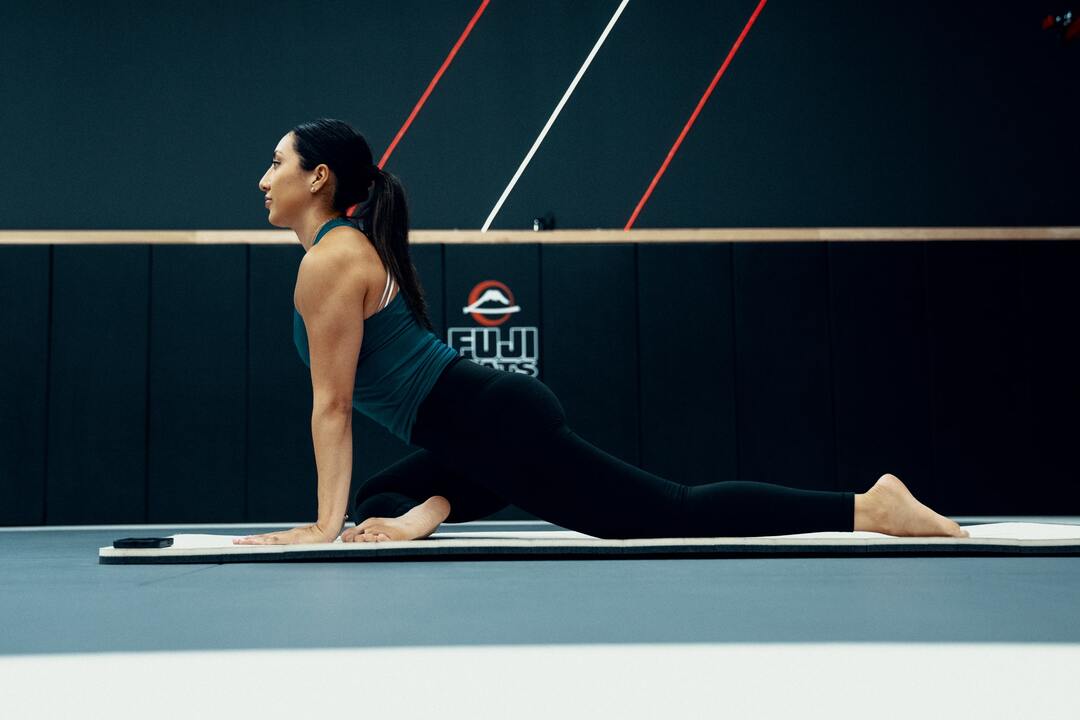
- Move through the up dog
- Bridge
- Extended mountain
- 3 breaths per pose
- Repeat 2 rounds
Recommended sets/reps:
- 10–20 minutes
- 3–5 sessions weekly
Best variations:
- Gentle vinyasa for warming
- Restorative holds for recovery
Form tip:
- Coordinate movement with the breath
- Prioritize range of motion over depth
Immediate benefits:
- Calmer heart rate
- Improved focus
- Reduced chest tightness
11. Walking Power Burst
A brisk 8 to 10 minute walk with periodic 20-30 second accelerations to reset mental energy.
Muscles trained:
- Calves
- Quads
- Glutes
- Postural muscles
How to do it:
- Walk at a steady pace, every 2 minutes
- Surge to a fast pace for 20–30 seconds
- Return to steady
Recommended sets/reps:
- One session
- 8–12 minutes total
Best variations:
- Stair intervals
- Incline walks
Form tip:
Pump arms and keep the chest open to maximize convective flow.
Immediate benefits:
- Clearer thinking
- Digestion support
- Gentle mood lift
12. Weights Circuit (compound lifts)
A short sequence of compound resistance moves for strength and hormonal stimulation.
Muscles trained:
Depends on chosen lifts, typically:
- Quads
- Glutes
- Chest
- Back
- Shoulders
- Core
How to do it:
- Choose 3 compound moves (squat, row, press)
- Perform them back-to-back with a moderate load
Recommended sets/reps:
- 3 rounds
- 8–12 reps per exercise
- 60–90 seconds rest between rounds
Best variations:
- Barbell
- Dumbbell
- Kettlebell circuits
Form tip:
Prioritize a full range on each lift and controlled tempo.
Immediate benefits:
- Durable energy
- Better sleep later
- Stronger metabolic response
13. Pilates Core Sequence
Focused core control work that improves breathing mechanics and spinal support.
Muscles trained:
- Transverse abdominis
- Obliques
- Pelvic floor
- Deep spinal stabilizers
How to do it:
- Roll-downs, controlled hundred-style breathing
- Single-leg circles, 2–3 reps per move
Recommended sets/reps:
- 2-3 sets of each drill
- Keep quality high
Best variations:
- Mat pilates
- Reformer-assisted for extra support
Form tip:
- Anchor the ribs and pelvis
- Breathe into movement
Immediate benefits:
- Steadier posture
- Less mid-back fatigue
- Focused calm
14. Squats (bodyweight quick set)
Rapid bodyweight squats to spike leg circulation and neural drive with minimal setup.
Muscles trained:
- Quads
- Glutes
- Hamstrings
- Core
How to do it:
- Feet shoulder width
- Sit back down
- Stand with force, repeat
Recommended sets/reps:
- 2 sets of 30 reps
- 3 sets of 15 with 30 seconds rest
Best variations:
- Chair-assisted
- Jump squats for plyometric input
Form tip:
Keep knees aligned over toes, press through heels.
Immediate benefits:
- Instant alertness
- Stronger ankles
- Reduced lethargy
Integrating these into a busy day is easier when you have a mobility app to track your consistency.
15. Cycling (commute or spin)
Steady or interval cycling to build cardiovascular reserve while integrating daily movement.
Muscles trained:
- Quads
- Hamstrings
- Glutes
- Calves
- Core for posture
How to do it:
- Cycle at a steady cadence for 20–30 minutes
- Do 6 x 1-minute hard efforts with recoveries
Recommended sets/reps:
- 20–45-minute sessions
- 3 times per week for consistent benefit
Best variations:
- Commute cycling
- Indoor trainer intervals
Form tip:
- Maintain neutral spine
- Engage the core through the pedal stroke
Immediate benefits:
- Energy for the day
- Mood lift
- Reduced stress
16. Reverse Lunges
A controlled step-back lunge emphasizing balance and unilateral strength.
Muscles trained:
- Quads
- Glutes
- Hamstrings
- Stabilizers
How to do it:
- Step one foot back into a lunge
- Lower until the front knee hovers
- Return to stand
Recommended sets/reps:
3 sets of 10 reps per side.
Best variations:
- Walking reverse lunge
- Bulgarian split squat for depth.
Form tip:
Keep the torso tall and the knee tracking aligned with the toes.
Immediate benefits:
- Steadier balance
- Improved single-leg power
- Reduced strain from asymmetries
17. Reaches (floor to sky)
A full-body reach sequence that blends spinal flexion and extension to mobilize calves, quads, and core.
Muscles trained:
- Calves
- Quads
- Hamstrings
- Core
- Shoulders
How to do it:
- Bend to touch the floor
- Reach both arms overhead toward the sky
- Repeat with controlled breaths
Recommended sets/reps:
2 sets of 10 reps per side.
Best variations:
- Reach with rotation
- Reach with a knee lift
Form tip:
- Use the breath to time each phase
- Avoid collapsing in the lower back
Immediate benefits:
- Increased movement range
- Circulation to the lower legs
- Refreshed posture
18. Squat Pulses
Small amplitude pulses at half-squat to tax the quads and burn off stationary stiffness.
Muscles trained:
- Quads
- Glutes
- Adductors
How to do it:
- Sit halfway into a squat and pulse up and down in small, controlled motions.
Recommended sets/reps:
- 3 sets of 10 pulses
- Short rest
Best variations:
- Add a tempo hold
- Hold a lightweight
Form tip:
Keep your knees behind your toes and your chest lifted.
Immediate benefits:
- Quick local blood flow to the legs
- Reduced heaviness
19. Alternating Toe Reaches
A star-shaped reach sequence that alternates toe touches to improve hamstring flexibility and coordination.
Muscles trained:
- Hamstrings
- Adductors
- Calves
- Core
How to do it:
- Form a star stance
- Reach toward the right toe, then the left toe, with a slight knee bend
- Alternate
Recommended sets/reps:
3 sets of 10 reps per side.
Best variations:
- Slow eccentric reaches
- Assisted in reaching with a strap
Form tip:
Lead with the chest toward the leg rather than rounding the spine.
Immediate benefits:
- Loosened posterior chain
- Smoother gait
- Easier bends
20. Jumping Jacks
A classic plyometric full-body move to quickly raise heart rate and neurotransmitter drive.
Muscles trained:
- Delts
- Calves
- Quads
- Glutes
- Core
How to do it:
- Jump feet shoulder-width apart while raising arms overhead
- Return to start
- Repeat
Recommended sets/reps:
- 30 seconds to 1 minute per set
- 3 sets.
Best variations:
Step-out jacks for:
- Low impact
- Star jumps for intensity
Form tip:
Land softly with knees slightly bent to protect joints.
Immediate benefits:
- Instant circulation boost
- Mood elevation
- Readiness to perform
21. Deep Breathing (4-4-6 pattern)
A breath control cycle that lowers sympathetic tone and increases cerebral oxygenation.
Muscles trained:
Diaphragm and accessory respiratory muscles.
How to do it:
- Sit or stand
- Inhale for 4 counts into the belly
- Hold 4, exhale for 6 counts
- Repeat for 5 minutes
Recommended sets/reps:
- One 5-minute session when focus drifts
- Repeat as needed
Best variations:
- Box breathing
- Diaphragmatic breathing with a belly band
Form tip: Keep shoulders relaxed, expand the ribcage outward more than upward.
Immediate benefits:
- Calmer prefrontal processing
- Reduced stress
- Clearer attention
Decision Fatigue and the “Complexity Penalty” in Physical Recovery
This pattern appears across busy athletes and office performers: complex, multi-page programs feel comprehensive, but they are abandoned when time is scarce, and instructions are dense. As complexity grows, consistency collapses, and measurable gains stall.
Solutions like Pliability, with:
- Expert-designed daily videos
- A 3-minute mobility scan
- Customizable programs
It gives teams a simpler path, allowing athletes to track mobility scores and maintain 3 to 5 sessions per week without the guilt of willpower.
When Consistency Turns Into Measurable Change
Consistent practice produces more than a brief mood lift; it shifts recovery capacity. In one line of evidence, Strong Mama Moves: Participants experienced a 30% reduction in fatigue after 4 weeks of energy exercises, which shows how short, repeatable sessions compound into real recovery gains.
The “Competence Loop” and The Psychology of Progress Tracking
After simplifying routines for time-pressed groups, the pattern became clear:
- Give people explicit cues
- Short timing windows
- A single metric to log
- They will actually do the work
That emotional relief is powerful because adherence feels like regaining competence, not just another item on a list. Using a mobility app can provide that sense of competence by offering a clear, data-driven map of your progress.
The “Perfectionism Trap” and the Minimum Effective Dose (MED)
Think of these exercises like a quick toolkit you carry in your posture and breath, not a checklist you have to complete perfectly. Try two mobility moves, one power move, and a breathing reset, then log your focus and mobility score so you can improve systematically.
Related Reading
- How to Beat Afternoon Slump
- How to Improve Working Memory
- Yoga for Focus
- Neuromotor Exercise
- Mind Body Exercise
- Stress Relieving Stretches
- Exercises for Brain Fog
- Mental Focus Exercises
- Brain Gym Exercises
- Morning Brain Exercises
How to Make Energy Exercises Part of Your Daily Routine
.jpeg)
Consistency comes from simple constraints you can trust, not from forcing longer workouts into a crowded day. Use time-based triggers, habit stacks, and lightweight accountability so movement becomes automatic, not optional.
When Should I Schedule Movement Windows?
Set a timer every 60 to 90 minutes and treat each alert as a micro-shift in your day, not an optional task. Make the window 2 to 6 minutes long: a focused mobility mini-set or a brisk walk to refill water will interrupt sedentary drift and reset attention without derailing flow.
Keep timing predictable, so your nervous system learns the rhythm, and you stop negotiating each break.
How Do I Make Movement Stick With Habit Stacking?
Stack movement onto existing, nonnegotiable actions. Walk when you take a phone call, stand and mobilize while you drink water, or do a short sequence before every long meeting. When we apply this constraint across busy schedules, the pattern is clear: pairing movement with existing behaviors removes the decision tax and converts intention into automatic practice.
Aim for three to five anchored stacks across your workday so sessions compound without adding planning overhead.
What Reminders And Tools Actually Work?
Use calendar blocks labeled with a single action, a repeating phone alarm with a micro-task, or an accountability thread where teammates confirm they completed a break. Lightweight tracking wins: log one number after each mini-session, like a 1-to-5 energy score, rather than chasing dozens of metrics.
For teams, a two-person check-in twice weekly keeps streaks alive without pressure, and simple integration with chat or calendar apps solves follow-through more reliably than willpower.
Why Small, Frequent Sessions Beat Sporadic Long Ones
Short bursts create a steady cumulative effect on circulation, posture, and recovery capacity, and they are much easier to manage on busy days. According to VP Fitness - Top Gym & Fitness Facility in Providence: “75% of people who incorporate energy exercises into their daily routine report increased energy levels.”
That cumulative effect shows up in everyday alertness. When you structure your days around many small wins rather than occasional heroic workouts, adherence increases and physiological gains compound.
What Frequency Actually Moves Performance Forward?
Focus on repeatable cadence more than duration. Engaging in energy exercises five times a week produces consistent output improvements, and VP Fitness - Top Gym & Fitness Facility in Providence, RI: “Engaging in energy exercises 5 times a week can boost productivity by 20%.”
That tells you the math: regularity buys performance, so design for schedule fit first, intensity second.
The “Friction Gap” and Data-Driven Adherence
Most people default to familiar habits because they feel low-friction, and that makes sense. The familiar approach is to tuck movement into “someday” or only on gym days, which works until travel, deadlines, or fatigue compress available time, and the habit evaporates.
Solutions like Pliability provide expert-designed daily videos, a short mobility scan, and customizable programs that let users schedule measurable mini-sessions and see mobility improvements over weeks, turning scattered intention into predictable progress without adding complexity.
How To Avoid The All-Or-Nothing Trap
If you think you must complete a long session to count, you will skip the day when it is messy. Instead, set a lowest acceptable dose: one movement cluster you will always do, even on bad days.
When energy is low, choose the shortest stack you committed to, log the result, and move on. That single rule preserves momentum and prevents guilt-driven dropouts.
A Quick Practical Template You Can Use Today
- Add recurring 60- to 90-minute timers to your calendar.
- Pair each timer with a single anchor, like “drink water” or “call walk.”
- Select one tiny movement cluster as the anchor and log a single energy rating afterward.
- Share a weekly check-in with one partner.
This reduces friction, scales across busy routines, and makes the habit measurable. Think of this like wiring a house: you run small, reliable circuits where you need light most, rather than waiting to install a single large generator that rarely runs.
That last change is the hinge between trying harder and actually getting better, and it reveals a question you will want answered next.
Boost Energy and Move Better with Pliability
Feeling drained, stiff, or mentally foggy during the day? Short energy exercises help, but consistent, guided mobility can supercharge your results.
Pliability’s mobility app turns quick daily exercises into a structured routine that improves:
- Flexibility
- Eases tension
- Enhances circulation
This all helps you feel more energized.
- Follow custom programs updated daily to target your body’s specific needs
- Use the body-scanning feature to identify tight spots and mobility gaps
- Reduce pain, improve range of motion, and support recovery
The mobility app is compatible with iPhone, iPad, Android, and web. Start your 7-day free trial today and combine energy exercises with guided mobility to feel more alert, flexible, and ready to tackle your day.
Related Reading
.jpg)