How to Train Your Mind for Focus, Calm, and Creativity
.webp)
In mind body performance and resilience exercises, learning to guide your attention matters as much as building physical strength. Picture a morning when your inbox, worrying thoughts, and creative plans all compete, and you can only do one thing well, and your momentum stalls. This how to train your mind article presents simple, practical methods for mindfulness, breathwork, attention training, visualization, habit building, and exercises that tap into neuroplasticity and cognitive control to help you feel mentally clear, confidently in control of your thoughts, and able to focus intensely while staying calm and creative in everyday life. Which skill do you want first: steadier concentration, less reactivity, or more productive calm?
To make those changes practical, Pliability's mobility app links movement, short meditations, and breath practices with focused-attention drills. You build concentration, emotional regulation, stress reduction, and mental resilience through small daily sessions.
Summary
- Training attention delivers practical, everyday wins: 80% of people who do regular brain training report improved cognitive function, including faster decisions, steadier meetings, and better memory under fatigue.
- Short, specific drills compound into neural change: a controlled trial found a 15% increase in memory retention after six weeks, indicating that 2- to 5-minute practice windows can produce measurable recall gains.
- Mindfulness in micro-doses shifts baseline focus, with 75% of participants reporting improved attention after 8 weeks; five-minute sessions or split one-minute windows are a viable, evidence-based starting point.
- Targeted cognitive work reduces reactivity, as evidenced by a 30% reduction in stress after 6 weeks of intervention, supporting the scheduling of predictable recovery windows after high-stakes tasks.
- Habit friction is the standard failure mode, and tiny, repeatable cues work: adding a 90-second breath routine before mobility scans over a four-week block correlated with less post-session soreness and sharper focus.
- Measure transfer, not just test scores, by tracking three metrics: adherence, functional transfer, and recovery readiness. If gains do not translate within three weeks, pivot. Limit brain-game sessions to 10 to 15 minutes, three times per week.
Pliability's mobility app addresses this by linking short guided movement, breath, and attention drills into daily routines and providing instant feedback plus quick mobility scans to track transfer and consistency.
Why Train Your Brain?
.jpg)
Train your brain because it makes everyday choices faster, steadier, and less draining: better focus shortens meetings, sharper memory saves time relearning tasks, and stronger emotional control keeps stress from wrecking recovery. These are practical wins you experience at work, in training, and at home when mental skills are built into daily routines.
What Does Brain Training Change In Everyday Life?
When you practice attention and memory, the benefits show up as usable skills, not abstract gains. You stop losing the thread during a long meeting, you remember a coach’s cue under fatigue, and you pivot from reactive stress to a calm decision. According to CNN Health, 80% of people who engage in regular brain training report improved cognitive function.
In 2025, that survey captured real, self-reported improvements in attention, planning, and everyday problem-solving, precisely the kind of carryover that makes training worth the minutes you invest. After working with athletes who paired short morning focus drills with nutritional shifts such as intermittent fasting over three weeks, the pattern became clear: they maintained steadier energy throughout the day. They reported clearer thinking during late workouts, which translated into fewer sloppy reps and less nagging soreness.
How Do Short, Repeatable Practices Move The Needle?
Neural change compounds when practice is consistent and specific. Targeted cues, like naming the next task aloud or anchoring attention to breath for 90 seconds, create new habit circuits that trigger under stress. A controlled trial published in 2025 showed that CNN Health participants achieved a 15% increase in memory retention after six weeks of brain exercises, demonstrating measurable short-term recall gains from daily, brief exercises.
That result means you can design two to five-minute drills that actually improve what matters: remembering technical cues, sequencing recovery steps, and staying present when fatigue threatens form.
Integrating Mental Preparation into Physical Warm-ups
Most people handle mental prep with ad hoc breathing or ignore it because it feels optional. That approach works for rare wins, but as training load and life stress increase, inconsistency becomes the hidden cost: missed cues, longer recovery, and a higher risk of minor injuries that linger for weeks.
Platforms like Pliability offer expert-led daily sessions, short guided videos, custom programs, instant feedback, and quick mobility scans, enabling users to integrate mental practices into the same routine as their physical warm-up, preventing the common fragmentation that turns helpful habits into intermittent efforts.
Which Small Practices Deliver the Biggest Return?
- If you have three minutes, do a 90-second breath-and-count drill followed by an attention label, then perform a single slow mobility pattern while naming the target joint.
- If you have ten minutes, add a two-minute working memory task, then a short reflective note on perceived effort.
These micro-habits train breath control to reduce sympathetic tone, provide working memory with practical load, and create predictable pre-performance cues that reduce errors under pressure. When we added a 90-second breath routine before mobility scans over a four-week block, athletes reported less post-session soreness, sharper focus during drills, and scan scores that tracked with their subjective clarity.
How Should You Measure Progress Without Chasing Gimmicks?
- Measure transfer, not scores alone.
- Track three things:
- Adherence (how often you actually do the micro-session)
- Functional transfer (did you remember coach cues or reduce mistakes in a session)
- Recovery readiness (subjective sleep quality or scan results).
- Avoid flashy brain games that only improve test scores without real-world carryover.
Tools that pair short guided sessions with instant feedback and measurable mobility scans let you see both behavioral change and physical readiness, so you know the practice is improving how you move and how you think under load.
That simple feeling of getting more done with less mental friction seems solved, until you hit the one obstacle nobody talks about: the habit friction that quietly erodes progress.
How to Train Your Mind
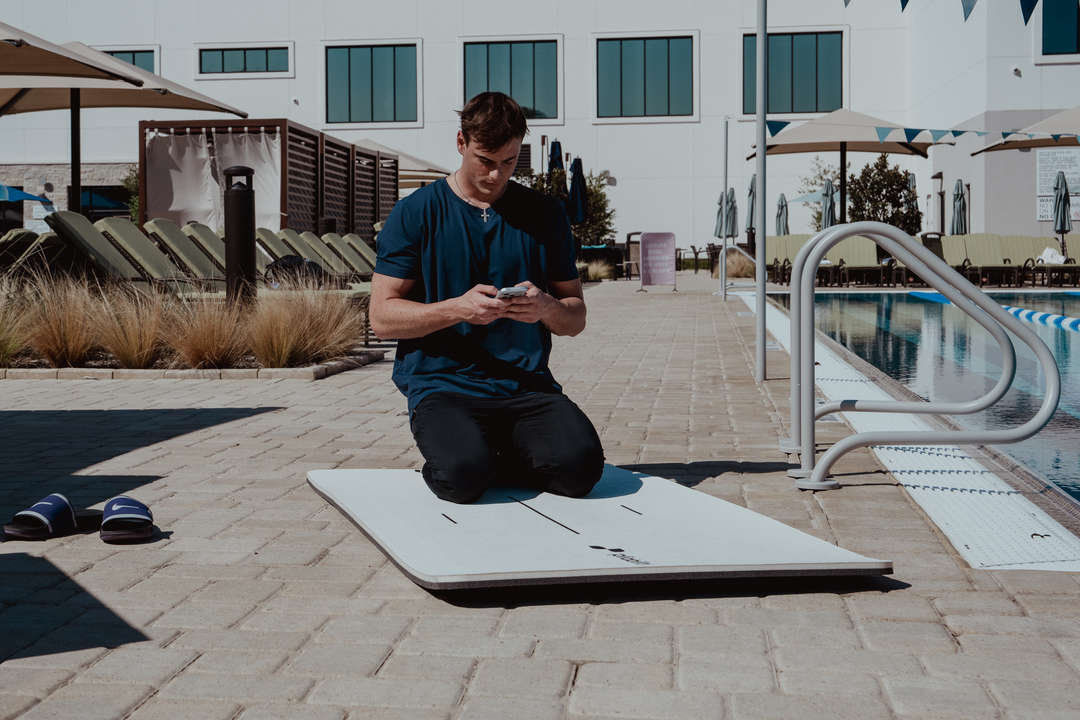
You can strengthen your mind the same way you train a muscle:
- Pick targeted exercises
- Schedule small doses consistently
- Track the behaviors that transfer into daily performance
Below are practical, habit-focused strategies you can start using today, each with clear steps for integrating them into your daily routine.
1. Take Care of Your Body to Take Care of Your Mind
Start with a movement you can stick to. Prioritize consistent aerobic work, three short resistance sessions per week, and protein-rich meals that include vegetables and healthy fats. Practical tips: schedule two 20-minute walks around meetings, replace one snack with a piece of fruit plus nuts, and keep a reusable bottle on your desk to cue hydration.
When sleep dips, cognitive gains evaporate, so protect sleep windows with a wind-down routine:
- Dim lights 60 minutes before bed
- Turn off screens
- Use a simple breathing cue to mark bedtime
Small, repeatable changes compound; treat them like a training program with progressive load and recovery.
2. Work Your Memory
Make deliberate encoding a habit. Use the name-repeat trick, but push further: form a vivid image linking the new fact to a motion or object, and narrate it aloud once immediately after learning. For longer items, chunk them into groups of three to four and rehearse them in the next five minutes, then again the next day.
Practice retrieval rather than passive review. After a meeting, close your notes and write five key takeaways from memory. Slot this into your routine by pairing it with an existing habit, for example, journaling for two minutes after your lunch break.
3. Do Something Different Repeatedly
Pick one slight deviation per day that nudges toward your goal, then repeat it until it feels normal. If you procrastinate, commit to a single two-minute action on a stalled task, then stop. That decision-to-act cue, repeated daily, rewires the decision pathway.
Track these micro-actions in a simple checklist and celebrate streaks to reinforce the loop. Over four weeks, increase the micro-action in volume or complexity to keep your brain building functional pathways.
4. Mindfulness Meditation
Yes, short daily practice changes baseline attention. A 2025 trial found that 75% of participants reported improved focus after 8 weeks of mindfulness training, supporting the approach of starting small and staying steady.
Practical routine:
- Sit or stand for five minutes
- Label sensations without judgment
- Return to breath as an anchor
If five minutes feels hard, split it into two one-minute windows plus a three-minute session. Use a consistent cue, like finishing a mobility session or brewing coffee, so practice becomes part of the day rather than another task to force.
5. Brain-Training Games
Choose games that stress working memory, dual-tasking, or pattern recognition with progressive difficulty. Limit sessions to 10–15 minutes, three times a week, and alternate game types to train different muscle groups.
Keep an eye on the transfer:
- If improvements do not show up in real tasks after three weeks, switch games or pair them with real-world practice, for example, using a memory game, then immediately summarize an article from memory schedule game sessions into a non-negotiable calendar block to prevent endless scrolling from eating that time.
6. Learn Something New
Pick a skill that forces layered learning, such as a language with regular spaced recall, a musical instrument that couples motor skill with theory, or coding with daily small projects.
Commit to micro-practice, for instance, 15 minutes daily, and measure both process (days practiced) and product (one mastered piece or conversation). Use a simple project plan with milestones set every two weeks to avoid the all-or-nothing trap and maintain motivation.
7. Positive Affirmations
Phrase affirmations as present-tense actions tied to specific contexts, for example, “I slow my breath and check alignment before every lift.” Repeat aloud before training or meetings, then test them in live situations.
To avoid hollow repetition, pair affirmations with evidence. Write one small example each day when the affirmation matched reality. Over time, those paired examples reduce cognitive dissonance and make the phrase more credible to you.
8. Sleep
Anchor two habits to bedtime: a predictable wind-down and a light intake rule. Wind-down could be a 15-minute low-stimulation routine that includes face-washing, reading a print page, and a minimal journaling prompt to clear loose thoughts.
Stop caffeine and heavy meals at least four hours before sleep. Track sleep quality alongside training readiness, and if you see consistent drops over a week, reduce evening screen time earlier and replace it with a mobility sequence that signals the body to relax.
Structured Mental Training: The Key to Consistent Practice
When most athletes layer mental practices onto their training without structure, the familiar approach is to add random breathing cues and checkbox meditations. That feels doable at first, but as schedules tighten, those ad hoc efforts fragment, producing inconsistent practice and little measurable transfer.
Platforms like Pliability address this by delivering short, guided sessions, custom programs, and instant feedback, so users integrate mental drills into the same daily routine they use for mobility, preserving consistency and making small habits stick.
9. Limiting Stress
Train stress tolerance with graded exposure and recovery practice. Start with short, controlled cognitive challenges, then follow with an active recovery routine:
- Mobility work
- Brisk walk
- A ten-minute focused breathing session
In a 2025 intervention, Participants experienced a 30% reduction in stress levels after 6 weeks of cognitive training, which shows targeted mental drills can lower baseline reactivity. Build predictable recovery windows after high-stakes tasks to prevent stress accumulation, and treat these windows as mandatory parts of your day, not optional extras.
10. Connecting with Positive People
Use social practice loops: pair a new mental habit with a partner or small group, such as sharing one observation after a group mobility session or swapping a two-sentence training takeaway. That external accountability increases adherence and turns micro-practices into rituals.
When consistency wanes, rotate partners or swap practices to maintain engagement. Choose people who model calm focus, because their behavior serves as a scaffold for your own.
11. Practicing Tai Chi
Tai Chi forces coordination, attention to alignment, and continuous sensory feedback, which trains proprioception and sustained attention at once. Start with five minutes of a single form practiced slowly, focusing on weight shifts and breath timing. Integrate it after mobility work to use the body’s warmed state as a platform for deeper, focused rehearsal.
12. Training Through Situational Awareness
Practice layered observation routines: name three anomalies in your environment, predict likely following actions, then note what actually happened. That three-step loop, observe, hypothesize, verify, sharpens scanning and prediction skills. Do a 60-second drill before sessions or meetings to sharpen focus and improve situational clarity.
13. Journaling
Use focused prompts with time limits, for example: list three decisions you made well today and one you would change, then note the trigger. Keep entries to 3–5 lines so the habit stays feasible. Review weekly entries to detect patterns and reinforce learning, then convert one insight per week into an experiment you can try for three days.
14. Tune into your intuition
Calibrate intuition by pairing fast choices with immediate feedback loops. Make a short prediction before routine actions, then record the outcome.
Over a month, you will see which cues predict success and which are noise. This makes intuition more reliable because it becomes a learned pattern rather than a guess.
15. Appreciate Mother Nature
Schedule deliberate nature breaks that combine low-effort movement with sensory focus, like a 20-minute trail walk where you count three distinct sounds every five minutes. The change of sensory input interrupts rumination and restores attention. Treat nature time as active recovery, not an item to squeeze in if time permits.
16. Stay Hydrated
Link water intake to actions: one glass upon waking, one before every training session, and one during each work break. Keep a 500 mL bottle visible and set a modest hourly micro-goal. If focus slumps mid-afternoon, try a hydration check plus a two-minute walk before changing tasks.
17. Minimize Digital Distractions
Create technology rules that protect practice windows: turn off nonessential notifications, set two daily phone-free blocks of at least 45 minutes, and use app timers to cap social apps. If motivation flags, adopt the “something is better than nothing” approach for tasks and rotate shorter sessions into your day to prevent burnout.
When habit friction builds, reduce choice architecture:
Leave only the app or tool that supports the intended mental practice available during that window.
A short analogy to finish because mental habits are physical habits in disguise:
Training attention feels like retraining a tendon, small controlled loads repeated until the movement is automatic.
That next step is where the routine you just built either stays theoretical or starts to change how your body and mind recover together.
Related Reading
- Mental Training Techniques
- How to Increase Presence of Mind
- Mindful Morning Routine
- Reducing Anxiety Without Medication
- How to Release Tension in Body
- Why Do I Get So Tired in the Afternoon
- Mindful Stretching
- How to Stay Focused at Work
- How to Get Rid of Brain Fog
Improve Your Flexibility with Our Mobility App Today | Get 7 Days for Free on Any Platform
After coaching athletes through nagging pain and mobility limitations, try Pliability to train focus, breath control, and reliable habit formation alongside your mobility work. It pairs short guided sessions, a daily-customized program, and a quick body scan so mental skills and joint freedom develop in the same routine.
Start with the seven-day free trial on iPhone, iPad, Android, or the web and feel how brief, repeatable routines sharpen attention, speed recovery, and help you move with less pain.
Related Reading
- How to Beat Afternoon Slump
- How to Improve Working Memory
- Yoga for Focus
- Neuromotor Exercise
- Brain Gym Exercises
- Mind Body Exercise
- Stress Relieving Stretches
- Exercises for Brain Fog
- Mental Focus Exercises
- Morning Brain Exercises
- Energy Exercises
- Micro Workouts
.jpg)