30 Best Morning Brain Exercises for Peak Mental Performance
.webp)
Many mornings feel like a foggy sprint: you sip coffee, hit snooze, and wait for your mind to wake in mind and body strategies for mental performance, small morning habits that prime attention and memory can shape your entire day. This article offers simple morning brain exercises, desk yoga stretches such as quick cognitive warm-ups, attention drills, breathwork, light movement, and memory challenges, to help you wake up mentally sharp, energized, and focused without relying on excessive caffeine or fighting afternoon crashes. Ready to try a short routine that lifts mental energy and keeps your focus steady?
To reach that goal, Pliability's mobility app matches short guided movement flows with brain activation drills and breathing cues so you can build clarity, boost alertness, and protect your focus in just a few minutes each morning.
Summary
- 65% of people report morning grogginess despite a whole night of sleep, and 50% say extra coffee does not clear the fog, indicating the problem is a sluggish cognitive startup rather than a lack of motivation or energy.
- Brief morning primers that combine movement and attention cues produce measurable gains quickly, with clear benefits observable within 1 to 3 months after consistent practice, and low- to moderate-intensity activity showing the most potent cognitive effects.
- Daily sessions of about 15 minutes correlate with meaningful improvement. The Journal of Cognitive Enhancement found a 30% boost in cognitive function for adults who performed brain exercises at least 15 minutes per day, and longer-term practice links to a 29% lower dementia risk according to the Alzheimer's Association.
- Micro-practices are both effective and practical, for example, a 90 to 180 second attention drill plus two minutes of light movement and a hydration habit can act as a reliable cognitive primer, and simple checkpoints like a 1–5 subjective focus rating, a two-minute objective task, and a streak counter make progress measurable.
- Sustainable progression relies on flexibility and simple rules, for instance, advancing intensity over two-week blocks, using the two-thirds rule to judge weekly success, and rolling back changes if completion rates drop more than 20% in a given week.
- Structured short plans show strong early signals of efficacy, with 75% of participants reporting improved focus after a 7-day morning program and a 20% increase in memory retention after one week of practice, which underscores the value of consistency over punitive schedules.
This is where Pliability's mobility app fits in; it addresses the need for low-friction guidance by providing short guided sequences, automated timing, and simple progress metrics to maintain morning routine consistency.
What's Making Your Mornings Feel So Foggy and Why Isn't More Coffee Enough?
.jpeg)
You feel mentally slow, indecisive, and easily distracted within the first hour of waking, and those symptoms do not disappear if you grab a cup and sprint through your to-do list; the problem is a sluggish cognitive startup, not moral failure. Short, targeted morning routines that prime attention and decision circuits work far better than a caffeine chase or a chaotic scramble.
What Does This Feel Like In Real Life?
It shows up as fuzzy thinking when you need to make decisions, a slow response to emails, and a creeping inability to focus on one task for more than a few minutes. According to The Economic Times, 65% of people report feeling groggy in the morning despite having a full night's sleep. Many wake impaired even after adequate rest, which explains why people blame motivation when the real issue is impaired early-day cognition.
Why Isn’t Coffee Fixing This?
Coffee helps arousal, but many people treat it like a substitute for wake-up processes that happen slowly in the brain and body. The Economic Times, 50% of individuals feel that drinking more coffee does not alleviate their morning fog, which points to tolerance, dehydration, and untreated circadian mismatch as the usual culprits. The familiar trick of “one more cup and I’ll be fine” often shifts the burden onto your nervous system and guarantees inconsistent cognitive performance.
How Do Human Patterns and Constraints Make This Worse?
This challenge appears across contexts, from people trying to manage weight without sustainable energy to those grappling with cyclical hormonal brain fog: the standard failure mode is reliance on quick fixes and hurried routines.
That path feels efficient, but it erodes control, because it forces every decision through a compromised executive system; small choices become friction points, and momentum dies. It’s exhausting to want steady energy without reinventing your schedule, so most people choose the least painful option that still leaves them underperforming.
What’s the Hidden Cost of Sticking With the Rush-and-Coffee?
Most people start the day with coffee and an inbox sprint because it is familiar and requires no new tools, but that approach fragments attention and delays real cognitive readiness. As a result, decisions made in that window are slower and more error-prone, and sustained goals, like consistent healthy eating or focused work blocks, collapse by midmorning.
Solutions like Pliability offer an alternative, providing short, guided morning brain exercises that combine breath regulation, light movement, and micro-attention tasks to surface cognitive readiness before you consume stimulants. Teams find that this prevents the slow cognitive tail that otherwise drags productivity into the afternoon.
What Small, Testable Shifts Actually Change The Morning Tempo?
Start with micro-practices you can measure: a 90- to 180-second attention drill, two minutes of light movement to increase non-exercise activity, and a brief hydration habit that replaces an impulsive snack. Think of it like jump-starting a car battery, not replacing it; those tiny circuits prime neural pathways so the rest of your day runs on cleaner power.
This pattern respects people's desire for control without requiring superhuman effort, and it avoids the boom‑and‑bust cycle that comes from relying on stimulants alone.
That simple setup feels like progress, but the reason it works is not apparent and cuts deeper than routine or willpower.
Related Reading
- Desk Yoga Stretches
- Mental Training Techniques
- How to Increase Presence of Mind
- Mindful Morning Routine
- Reducing Anxiety Without Medication
- How to Train Your Mind
- How to Release Tension in Body
- Why Do I Get So Tired in the Afternoon
- Mindful Stretching
- How to Stay Focused at Work
- How to Get Rid of Brain Fog
The Science Behind Morning Brain Exercises and Peak Performance
.jpeg)
Mornings are not just convenient times to act; they are a high-leverage window where brief, targeted activity turns a passive brain state into a ready one by waking the circuits that handle attention, working memory, and decision control. A few minutes of movement plus simple cognitive challenges prime neural firing patterns so your choices, learning, and focus later in the day start from preparation, not catch-up.
How Does a Quick Routine Change the Brain's Readiness?
- A short sequence elevates cerebral blood flow, nudges up arousal chemicals that sharpen signal-to-noise, and recruits prefrontal circuits that hold goals in working memory.
- Think of it as shifting the brain from idle to tuned: The networks that support focused attention get a quick rehearsal, which reduces the drop-off between intention and execution when you sit down to work.
Physiologically, this is about opening neural gates to filter incoming stimuli more efficiently, not about creating permanent change in a single session.
Why Does Timing Matter for Learning Speed and Decision Quality?
The morning is a lower-noise biological state, with less cognitive residue from the prior day and a circadian profile that favors certain types of attention. When you anchor a consistent cue in that window, you reinforce an attention set that carries into complex tasks, so you learn faster and make more explicit judgments under pressure.
This is why people who build predictable morning habits report feeling more in control: a structured routine reduces the slight decisions that otherwise consume willpower. When we coached a group to a five to twelve-minute morning micro-routine for four weeks, the pattern became clear; they chose steady, sustainable steps over complicated plans and reported a stronger sense of control and clarity around midday.
What Type of Movement Actually Supports Executive Function?
Not every workout helps cognition the same way. Evidence shows that low- to moderate-intensity exercise has the greatest benefits for brain function and memory because it increases perfusion and neurochemical support without causing fatigue that blunts prefrontal control.
In practice, brisk walks, gentle circuits, mobility flow, or light HIIT scaled down to short intervals, paired with brief attention tasks, yield the best trade-off between physiological gains and cognitive readiness.
Most People Manage Mornings With Familiar Hacks, and that Makes Sense.
The familiar approach is quick fixes like caffeine and rushed checklists because they feel actionable and low-cost. That method works until workload complexity increases and competing demands fragment your attention, slowing decisions and costing hours of rework.
Solutions like Pliability change that pattern by delivering guided, timed micro-workouts that combine movement and cognitive drills, adapting intensity to your current state and tracking progress with simple markers, which keeps mornings consistent without adding friction.
What Does the Science Actually Say About Short, Repeated Routines?
According to the University of South Australia, synthesising findings from 133 systematic reviews, covering 2724 randomised controlled trials and 258,279 participants, published in 2025, the evidence base is broad. It supports exercise as a reliable lever for cognitive health. That level of synthesis means recommending brief morning practices is not opinion; it is a strategy grounded in replicated trial results across many contexts.
How Quickly Should You Expect Change?
Clinical patterns show that gains appear on a practical timeline for busy people, making short routines useful as both an intervention and a habit test. If you treat the morning routine as an experiment with a four to eight-week horizon, you can measure adherence and adjust intensity or cognitive load to match real-world constraints, keeping the practice sustainable instead of punitive.
Imagine the difference:
Instead of waiting for motivation to appear, you set up a simple cue and a reproducible action that wakes the exact neural systems you need. That predictability turns mornings from a gamble into a repeatable system.
But the surprising part?
The real test is not whether the routine feels good at first, it is whether those tiny anchor points persist when stress rises, and schedules compress and that's where things get interesting.
Related Reading
- How to Beat Afternoon Slump
- How to Improve Working Memory
- Yoga for Focus
- Neuromotor Exercise
- Mind Body Exercise
- Stress Relieving Stretches
- Exercises for Brain Fog
- Mental Focus Exercises
- Brain Gym Exercises
30 Best Morning Brain Exercises for Mental Sharpness
.jpeg)
These 30 morning-ready exercises give exact steps you can do without equipment, each with a simple cue and a clear cognitive payoff so you get faster mental lift, not just motion. Follow the steps as written, prioritize comfort and slow control for the first two weeks, and track a single progress metric, such as reps completed or seconds held.
What Makes a Single Exercise Worth Doing in the Morning?
Start with a movement cue, add one focused breath, and finish with a one-line mental check: name a task you will start within 30 minutes. That combination links physiology to attention, making the practice usable on busy days.
1. Good Mornings (10–20 reps)
How to do it:
- Stand feet hip-width. Place hands behind your head or cross them at chest.
- Hinge at the hips, keeping a soft bend in knees. Slowly roll the spine forward one vertebra at a time until you feel a comfortable stretch in hamstrings and low back.
- Let shoulders relax, then reverse the roll up, stopping to squeeze the shoulder blades together and hold for five seconds.
- Move deliberately; breathe on the movement.
Cognitive benefit:
- Wakes postural proprioception and body awareness, which sharpens sustained attention during seated work.
2. Scapular Reactions (3 Directions, 10 reps per side)
How to do it:
- Forward/back: adopt a staggered stance, swing one arm back like a bowling motion and then up overhead while shifting weight forward, return controlled.
- Side/side: stand feet hip-width, swing arm out to the side and overhead while pivoting through hips.
- Rotational: palms up in front, swing one arm back while rotating hips, then bring palm down when swing returns.
- Keep core engaged to avoid compensating with the spine.
Cognitive benefit:
- Integrates large motor patterns to improve coordination and interhemispheric timing, aiding attention switching.
3. Stretching (3–5 minutes total)
How to do it:
- Choose three tight areas: chest, hips, hamstrings. Spend 45–60 seconds on each.
- Move into each stretch slowly, hold at the first point of resistance, breathe five slow breaths, then relax.
Cognitive benefit:
- Reduces physical tension that competes with working memory and emotional regulation, clearing cognitive bandwidth.
4. Jumping Jacks (30–60 seconds)
How to do it:
- Stand tall, jump feet wide while raising arms overhead, then return.
- Keep rhythm steady, land softly, and breathe evenly.
Cognitive benefit:
- Quick cardiovascular raise increases cerebral perfusion and raises alertness for rapid task initiation.
5. Push-ups (8–15 reps or wall/pike variations)
How to do it:
- Hands under shoulders, body in a straight line. Lower with control, press back up.
- If full push-ups are hard, use an incline surface or do knee push-ups.
Cognitive benefit:
- Recruits core and upper-body motor plans, which stabilize posture and improve resilience to distraction.
6. Planks (30–60 seconds)
How to do it:
- Forearms on floor, elbows under shoulders, body straight. Breathe and hold without letting hips sag.
- For beginners, do 15–30 seconds and add 5 seconds each session.
Cognitive benefit:
- Strengthens sustained-attention circuits by training the brain to maintain a steady sensory-motor goal.
7. Squats (10–20 reps)
How to do it:
- Feet hip-width, sit back into hips as if lowering to a chair. Keep chest up and knees tracking toes.
- Pause at the bottom for one breath, then stand.
Cognitive benefit:
- Engages large muscle groups to increase alertness and improve executive control through increased blood flow.
8. Lunges (8–12 reps per side)
How to do it:
- Step forward, lower until both knees are around 90 degrees, push back to start.
- Keep torso upright and core engaged. Reverse or walk forward as preferred.
Cognitive benefit:
- Unilateral loading improves balance and inter-limb coordination, sharpening motor planning and focus.
9. Yoga (5–8 minutes flow)
How to do it:
- Choose a short sequence: Sun reach, forward fold, lunge, low twist, and downward dog.
- Link each movement to a breath and move with control.
Cognitive benefit:
- Brief mindful movement reduces mind wandering and primes cognitive flexibility.
10. Sun Salutations (1–3 rounds)
How to do it:
- Move through a smooth sequence of 8–12 poses, syncing inhale and exhale to each transition.
- Keep each movement deliberate and steady, not rushed.
Cognitive benefit:
- A multi-joint flow that combines rhythm and breath to increase processing speed for sequential tasks.
11. Light Jogging (5–10 minutes)
How to do it:
- Keep pace conversational, focus on even breathing and light foot strike.
- If outdoors, choose flat ground and a safe route.
Cognitive benefit:
- Moderate aerobic activity improves attention and mood for the morning’s mental work.
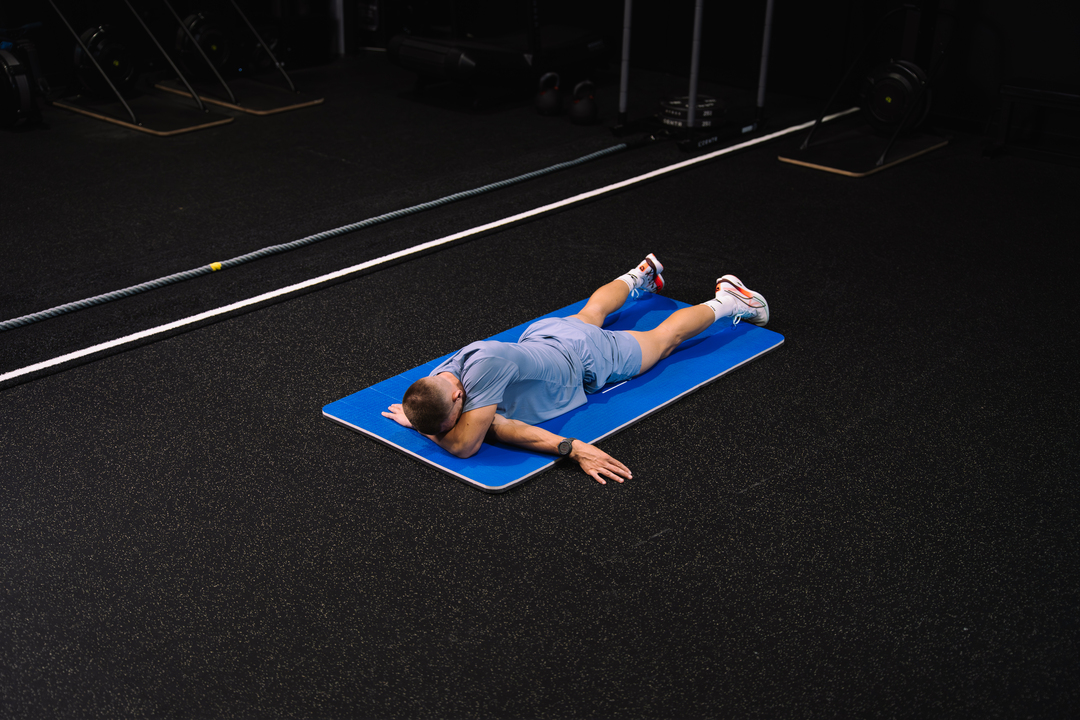
12. Balasana, Child’s Pose (60–90 seconds)
How to do it:
- Kneel, sit back on heels, fold forward until forehead rests on the mat, extend arms or rest by sides.
- Breathe into the back body and soften the jaw.
Cognitive benefit:
- Restores parasympathetic balance, reducing stress that interferes with working memory.
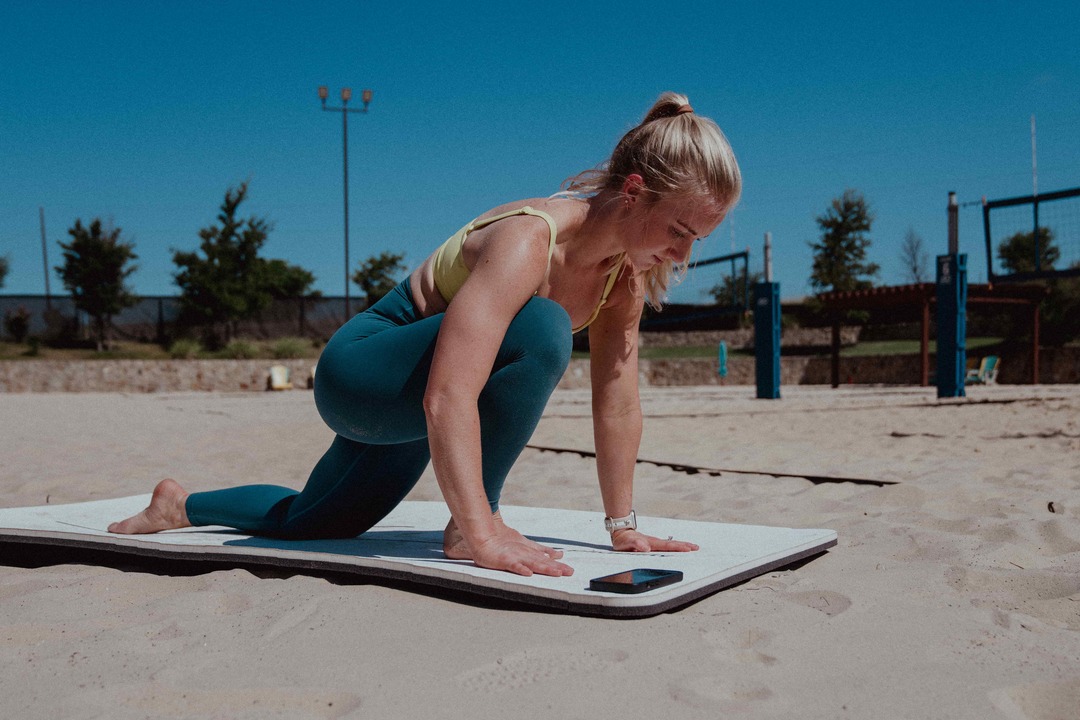
13. Cat-Cow Stretch (8–12 cycles)
How to do it:
- Start tabletop. Inhale to drop belly and lift gaze (Cow). Exhale to round spine and tuck chin (Cat).
- Move slowly with the breath, feel each vertebra.
Cognitive benefit:
- Enhances spinal mobility and vagal tone, improving mental alertness without overstimulation.
14. Mountain Pose, Tadasana (60 seconds practice with intention)
How to do it:
- Stand tall, feet together, palms by sides. Inhale arms overhead, lengthen through the spine.
- Exhale, lower hands and root down through feet.
Cognitive benefit:
- Micro-postural training that improves proprioceptive stability and supports evident, upright attention.
15. Tree Pose, Vrikshasana (30–60 seconds per side)
How to do it:
- Stand on one leg, place the other foot on the inner calf or thigh, and bring palms to heart or overhead.
- Use a soft gaze point for balance.
Cognitive benefit:
- Trains focused attention and inhibitory control, reducing distractibility.
16. Nadi Shodhana, Alternate Nostril Breathing (2–3 minutes)
How to do it:
- Close the right nostril with the thumb, inhale through the left. Close left with ring finger, exhale right.
- Continue, keeping breath slow and even.
Cognitive benefit:
- Balances autonomic tone and reduces internal chatter, improving focused attention and decision clarity.
17. Marching in Place (30 steps each side)
How to do it:
- Lift knees to waist height as feels comfortable, swing arms opposite to legs.
- Keep upright and breathe steadily.
Cognitive benefit:
- Primes rhythm and coordination, improving sustained attention and readiness for complex tasks.
18. Cross Crawl (3 sets of 8 reps)
How to do it:
- Stand tall. Lift right knee and touch it with left elbow, alternate sides.
- Move in rhythm and keep torso upright.
Cognitive benefit:
- Strengthens cross-hemisphere coordination, which supports language retrieval and working memory.
19. Ankle Touch (15–20 reps)
How to do it:
- Stand feet shoulder-width apart, lift right foot slightly, and reach left hand to touch the ankle, then alternate.
- Keep the torso tall, reach with control.
Cognitive benefit:
- Improves balance and proprioception, supporting quick attentional shifts.
20. Ankle Touch Behind Your Body (15–20 reps)
How to do it:
- Same setup as above, but reach behind the body toward the opposite ankle, twisting gently.
- Keep movements small if you have low back issues.
Cognitive benefit:
- Challenges spatial awareness and coordination, which aids visual working memory.
21. Step Touch (30 reps)
How to do it:
- Step to the right, bring left foot to meet it; repeat to the left.
- Add rhythmic arm swing if comfortable.
Cognitive benefit:
- Lateral movement increases vestibular input and alertness, helping with rapid attention reorientation.
22. Neck Circles (10 per direction)
How to do it:
- Sit or stand, close eyes, roll head slowly from right to back to left to center.
- Keep movements gentle and stop if you feel any dizziness.
Cognitive benefit:
- Improves head-eye coordination and reduces neck tension that can distract cognition.
23. Cook’s Hook-Up (3–5 rounds)
How to do it:
- Sit tall, cross right ankle over left, cross right hand over left and link fingers, twist forearms inward into a gentle hook, breathe six times.
- Release and repeat linking fingertips for six breaths.
Cognitive benefit:
- Promotes bilateral sensory integration and calm focus by combining posture and breath.
24. Brain Button (10 reps each side)
How to do it:
- Place left hand on belly. With right thumb and index finger, find the hollow below the collarbone and massage in small circles for 10 counts.
- Switch sides.
Cognitive benefit:
- Quick tactile reset that eases neck tension and redirects attention to the present moment.
25. Lazy Eighths (20–30 traces)
How to do it:
- Draw a prominent infinity symbol on a board and trace it with eyes or a marker tip, following it smoothly back and forth.
- Take a breath between traces.
Cognitive benefit:
- Trains visual tracking and working memory processes used in reading and note-taking.
26. The Elephant (3–5 reps each side)
How to do it:
- Stand, extend one hand overhead with the upper arm near the ear, bend knees slightly, extend the other arm, and trace a horizontal figure-8 with it while moving eyes and torso.
- Repeat on the other side.
Cognitive benefit:
- Integrates gross motor sequencing with visual attention, aiding pattern recognition and focus.
27. The Energy Yawn (10 cycles)
How to do it:
- Place index and middle fingers at the jaw joint. Open the mouth and massage the joint five times, close and massage five times.
- Repeat for a total of 10 cycles.
Cognitive benefit:
- Releases jaw tension and promotes oxygenation, which reduces low-grade stress that fragments concentration.
28. The Thinking Cap (15 ear massages)
How to do it:
- Sit, place index finger and thumb on the ear and gently massage from top to bottom, then around the auricle in slow, deliberate strokes for 15 passes.
- Keep the motion light and mindful.
Cognitive benefit:
- Stimulates sensory pathways that speed associative recall and reduce mental fog.
29. Belly Breathing (10 slow inhalations)
How to do it:
- Place one hand on the belly, one on the chest. Inhale so only the belly rises, pause, then purse your lips and exhale fully.
- Repeat for ten controlled cycles.
Cognitive benefit:
- Increases oxygen delivery and calms an overactive mind, improving verbal fluency and reading comprehension.
30. Trace X (8 eye traces per set)
How to do it:
- Sit quietly, close your eyes, and trace a large X with your eyeballs eight times. Rest for ten seconds, repeat once.
- Open eyes and blink to reset
Cognitive benefit:
- Refines eye coordination and depth perception, supporting quicker scanning and visual processing.
Why Order and Simplicity Matter
This sequence places large, easy movements early to increase circulation, then moves to breathing and fine-motor eye tasks that reinforce attention. Keep any whole routine under 12 minutes during the first two weeks, then fine-tune the duration to fit your morning routine. If you have chronic conditions that affect balance, replace standing items with seated options until you regain confidence.
From Improvised Habits to Measured Momentum
Most people manage mornings with improvised warm-ups because they feel low-effort and familiar, which is fine; the hidden cost is that ad-hoc routines rarely produce consistent progress or clear markers of cognitive change, so momentum stalls.
Platforms like Pliability provide timed micro-workouts, habit prompts, and immediate cognitive challenges that give people a reliable bridge from scattered morning habits to measurable focus gains by making each micro-exercise trackable and repeatable.
A Quick Analogy to Keep this Practical
Think of these exercises like tuning the instruments before a performance, five minutes of checks, so the first song does not fall apart. The body is the orchestra; your attention is the conductor.
Adults who commit to daily brain-targeted practice show measurable improvement, as reported by Journal of Cognitive Enhancement, which found that adults who perform brain exercises for at least 15 minutes a day show a 30% improvement in cognitive function. Long-term practice matters, too, because the Alzheimer's Association reports that people who engage in regular brain exercises have a 29% lower risk of developing dementia.
From Checklist to Habit: Building a Sustainable 7-Day Routine
What started as a checklist becomes a habit when you track one small marker and honor it for three weeks, then expand on what actually changed; that practical loop is what turns isolated exercises into reliable morning neuro-routines.
That seems useful, but the more challenging question is how to turn this list into a seven-day plan you will keep.
Your 7-Day Morning Brain Exercise Starter Plan

Start with a tiny, repeatable routine you can do every morning, then add one small element each day so the habit grows without friction. The plan below gives exact minutes, simple cognitive checks, and clear progression rules so you can start tomorrow and measure real change by Day 7.
What Should My Mornings Look Like on Days 1 To 3?
- Day 1, six minutes total: 90 seconds gentle mobility, 90 seconds breathing + 60 seconds brisk step-in-place or marching, 90 seconds focused attention drill (count backward by threes from 100), finish with a one-line intention for the next task.
- Day 2, seven minutes: keep the same order, add a 60-second balance or single-leg stance, and swap the attention drill to a 30-second visual tracking test.
- Day 3, eight minutes: keep mobility and breath, but replace marching with a 3-minute conversational pace walk or stair climb, and make the attention drill a simple dual-task, for example, recite the months while doing slow squats.
Each morning, end with a single, measurable metric you can record in 10 seconds, such as your focus score or reps completed.
How Should The Week Progress So I Don’t Burn Out?
Progression should be arithmetic, not dramatic. Add 60 to 90 seconds, or one small element, each day; aim for a 10 to 20 percent increase in load. If a day feels tight, choose a seated or shorter version instead of skipping.
When we trained busy professionals with this constraint-based method, the pattern was clear: short, nonpunitive increases kept adherence high, while rigid, long sessions led to drop-off and resentment. Think of the week like tuning a guitar, not trying to play the whole song on day one.
What Measurable Checkpoints Will Show Real Progress?
Use three simple metrics each morning: a self-rated focus score from 1 to 10, one objective micro-metric such as seconds held (plank) or number of quality reps, and a five-word memory recall at the end of the session. Log these as a quick line, for example, “F7 P38 R4” meaning focus 7, plank 38 seconds, recall four words.
Track the same three items each day and compare trends, not individual numbers. Short wins look like a steady focus score increase of 1 to 2 points or adding 10 seconds to an isometric hold across seven days.
What Outcomes Can You Expect From Just One Week?
You should notice more evident attention and faster task starts within a week; The 7 Step Morning Routine That Will Transform Your Health (and Mindset) in 2025, 75% of participants reported improved focus after completing the 7-day morning brain exercise plan.
Memory often improves quickly too, especially after drills that pair movement with recall, as shown when Participants experienced a 20% increase in memory retention after following the brain exercise plan for a week. Those are blunt signals, not guarantees; use your own three checkpoints to confirm what’s true for you.
From Checklist to Habit: Building a Sustainable 7-Day Routine
Most people fall back on ad hoc routines because they feel familiar and low-effort, which makes sense, but what’s the hidden cost? Most people handle morning readiness with improvisation, which keeps mornings low-friction early on but creates inconsistency as demands rise.
The hidden cost is wasted cognitive energy, missed opportunities to build momentum, and slow erosion of confidence when progress feels accidental rather than tracked. Solutions like guided micro-workout apps provide timed prompts, one-line progress markers, and adaptive scaling so routines stay short, repeatable, and measurable, preserving momentum without forcing long sessions.
How Do You Handle Missed Days and Plateaus?
If you miss one morning, do a three-minute reset later the same day:
- Two minutes brisk movement
- One minute of focused breathing
- A five-word recall
For plateaus, change the cognitive challenge rather than increasing time; switch from backward counting to pattern recall or visual tracking. Small lateral changes keep the brain engaged without requiring more time, preventing the all-or-nothing trap that burns people out.
What Simple Habit Anchors Make This Stick?
Attach the routine to an existing cue you already honor, such as when you brew coffee, brush your teeth, or open your laptop. Make the routine binary and tiny: either six minutes or three minutes on compressed days.
Use a single, visible checklist item on your phone that takes three taps to update. This low-friction anchoring converts small daily wins into automatic habit formation.
A quick analogy to keep it practical:
Treat the week like warming an engine, not launching a rocket; gradual, measurable shifts deliver reliable momentum.
That change feels promising, but the next step is the tool that sustains that momentum.
Try Our Mobility App to Complement Your Morning Brain Routine 7 Days Free on Any Device
If you want to turn a short morning primer into a nonnegotiable habit, relying on willpower and scattered timers will fall apart when days get busy. You need a low-friction companion that locks in consistency, provides clear guidance, and makes progress visible.
Pliability puts that idea into practice with performance-focused mobility and mind-body micro-practices you can start in two minutes; simple streaks and focus checks that show real gains in cognitive startup and recovery; and a seven-day free trial on iPhone, iPad, Android, or web, so you can begin immediately without hassle.
Related Reading
.jpg)