What Are Neuromotor Exercises and How Can You Get Started?
.webp)
You miss a step or your arm jerks when you reach, and suddenly your body feels less reliable than your mind. In mind-and-body strategies for mental performance, neuromotor exercise trains the nervous system to enhance coordination, improve balance, and refine motor control by sharpening proprioception, reaction time, and postural control. Want to quickly and safely improve coordination, balance, and motor control through simple neuromotor exercises that fit easily into your routine? This article offers practical drills and progressions—from sensory integration and gait work to agility and fine-motor practice—that enhance movement quality, yoga desk stretches and motor learning.
That makes Pliability's mobility app a practical tool, guiding short sessions that build stability, sensorimotor awareness, and muscle activation so you can make steady gains without long workouts or fancy equipment.
Summary
- Many people skip neuromotor work, and the consequences are measurable: the World Health Organization reports that 30% of adults aged 65 and older are at risk of falls due to a lack of neuromotor exercise.
- Short, targeted sessions are effective and practical, with the article recommending 5 to 15 minutes per day to retrain automatic responses and reduce reliance on slow compensatory patterns.
- Neuromotor training benefits cognition and movement; one structured program reported a 20% increase in cognitive function after consistent practice.
- Clinical outcomes are tangible, including reports of a 30% improvement in balance and a 15% reduction in fall risk from neuromotor-focused programs.
- Progression should be staged, for example, using a three-week microcycle with week 1 at 8 to 12 minutes, week 2 at 12 to 18 minutes, and week 3 at 15 to 25 minutes to raise tempo and complexity safely.
- Adherence and safety hinge on regressions and short formats, so pick two to three focused moves per session, use a chair or rail for the first 2 to 4 sessions of new single-leg drills, and slot 6 to 12-minute micro-sessions into existing routines.
Pliability's mobility app addresses this by guiding short neuromotor sessions, providing a 3-minute phone mobility scan, and tracking progress with an evolving mobility score.
Why and When Is Neuromotor Exercise Necessary?
.jpeg)
Neuromotor exercise is the missing link between raw strength and reliable, safe movement. Add it when you want movement that holds up under stress, fatigue, or surprise. It trains the nervous system so that balance, coordination, and timing work together, reducing fall risk, improving sport-specific skills, and accelerating functional recovery after injury.
What Exactly Counts as Neuromotor Exercise?
Neuromotor or neuromuscular exercise targets the nervous system's control of movement. It includes:
- Balance training (e.g., standing on one foot)
- Agility drills (e.g., side steps or quick changes in direction)
- Proprioceptive stimulation (e.g., walking on uneven surfaces)
- Dual-task training (e.g., walking while talking or solving problems)
These exercises encourage the body and brain to work in harmony, reinforcing connections that may have weakened due to injury, disease, or age.
When Should You Prioritize Neuromotor Work?
Neuromotor exercise becomes essential whenever the connection between the brain and body is disrupted, whether from:
- Neurological disease
- Injury
- Aging
- Surgery
After a stroke, for example, preserved muscle strength may mask severe deficits in motor planning and safe walking.
Neuromuscular Decline
In older adults, declines in proprioception and reflexes raise fall risk and reduce daily freedom. This pattern appears across athletes and older adults: strength and cardio receive attention because they are measurable, while coordination and confidence are overlooked, leading to awkward movement, compensations, performance anxiety, or falls.
How Does Neglect Show Up in Daily Life?
You feel it as a series of small failures that add up, not a single catastrophe. An athlete who can squat heavy but stumbles on a cut, a runner who gets sore because movement timing is altered after an injury, an older adult who avoids stairs because balance feels unreliable, these are the everyday symptoms.
The emotional side matters: people describe a helpless, frustrating loop of getting stronger but not feeling safer, which erodes confidence and leads to more guarded movement patterns.
What Does the Evidence Suggest About Early-Life Trends and Why Prevention Matters?
The trend lines are sobering for prevention. The 2020 study "Trends in Neuromotor Fitness in 10-to-12-Year-Old Dutch Children: A Comparison Between 2006 and 2015/2017" found that the prevalence of low neuromotor fitness increased from 20% in 2006 to 30% in 2015/2017, indicating deficits emerged early and widened over a decade.
The same research reported that children with low neuromotor fitness are 2 times more likely to have poor self-esteem, linking movement skills to psychological development and long-term engagement in activity.
Why Does Neuromotor Training Close Gaps That Strength Work Misses?
Strength builds force, cardio builds endurance, but neither reliably corrects timing, sequencing, or reactive balance. Neuromotor training re-teaches when muscles fire, how joints coordinate, and how sensory feedback maps to action, supporting neuroplasticity so new movement patterns stick.
Think of it like updating firmware for the movement system, not just replacing hardware; if timing is off, a stronger muscle only amplifies the incorrect movement.
Most people manage mobility by adding stretching and strength exercises because those approaches are familiar and easy to measure. That works at first, but as demands become sport-specific or life-specific, movement inefficiencies persist and recovery stalls.
The Quantifiable Mobility Standard
Platforms like Pliability provide daily expert-designed videos, a 3-minute phone-camera mobility test, and customizable programs that make neuromotor progress measurable and sport-specific, helping athletes translate short, consistent sessions into more precise movement and less injury risk.
How Short Should Sessions Be, and What Actually Stacks Over Time?
Short, focused practice compounds more than occasional long sessions. When we added three- to five-minute neuromotor circuits to athlete routines for four weeks, the consistent pattern was fewer compensatory movements, more precise single-leg control, and steadier confidence in sport tasks.
Practical progress includes adding simple balance and dual-task elements into warmups, tracking a daily test, and increasing complexity stepwise so the nervous system learns under realistic load.
Which Low-Risk Exercises Give the Biggest Return Quickly?
Single-leg balance variations, controlled lateral step drills, unstable-surface proprioception (for example, stepping onto a soft mat), and pairing movement with a cognitive task are high-return starters. They force timing, sensory integration, and decision-making in one package. For athletes, sport-specific adjustments such as cutting with a visual cue or reacting to a coach’s signal tie the training directly to performance demands.
It is exhausting to put hours into strength and conditioning and still feel unreliable in the moments that matter. Still, that gap is fixable through short, consistent neuromotor practice that is measured and progressed.
Related Reading
- Mental Training Techniques
- How to Increase Presence of Mind
- Mindful Morning Routine
- Reducing Anxiety Without Medication
- How to Train Your Mind
- How to Release Tension in Body
- Why Do I Get So Tired in the Afternoon
- Mindful Stretching
- How to Stay Focused at Work
- How to Get Rid of Brain Fog
How Does Neuromotor Exercise Enhance Cognitive and Physical Health?
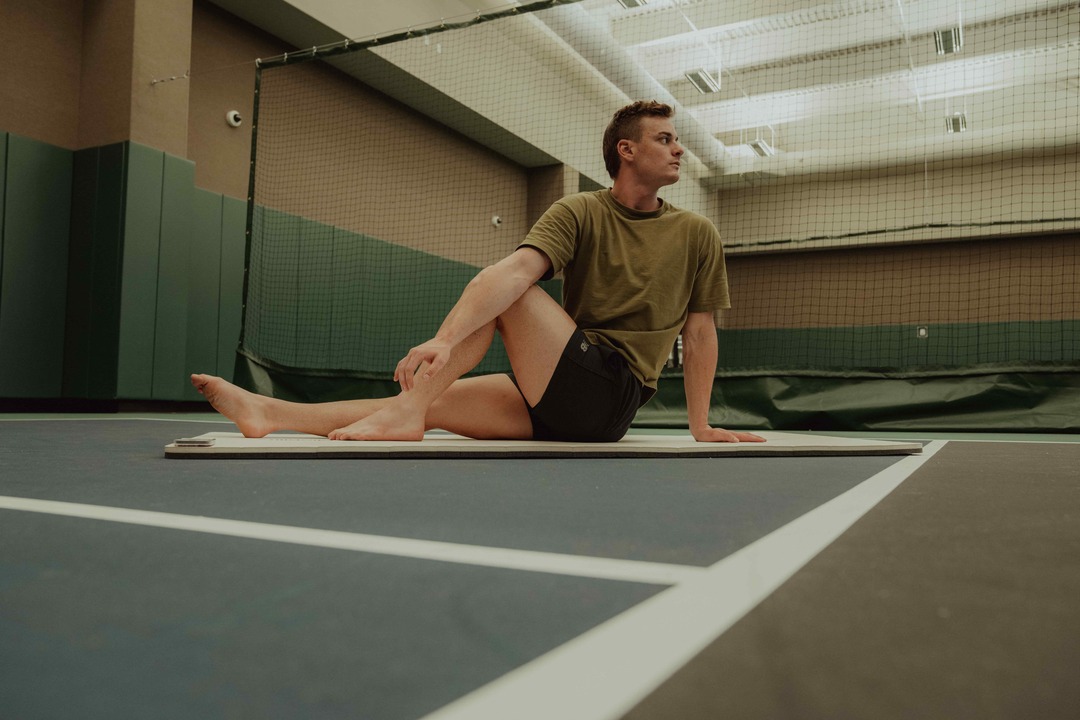
Neuromotor work forces the nervous system to rewire how it senses, plans, and executes movement, which speeds reaction time and tightens stabilizing control; those changes show up as:
- Better posture
- Fewer trips
- More explicit mental focus
When you layer cognitive challenge onto movement, you recruit attention, working memory, and sensorimotor circuits simultaneously, so physical and mental gains compound.
What Exactly Changes Inside the Nervous System When You Challenge Balance and Coordination?
When you challenge balance, proprioceptors, the vestibular system, and vision send richer, faster signals to the cerebellum and sensorimotor cortex, which refine timing and sequencing. Synapses strengthen where:
- Signals are used most
- Cortical maps adjust so that relevant muscles get more precise commands
- White matter efficiency improves, so signals travel faster between sensing and action centers.
On the muscular side, anticipatory postural adjustments become crisper; the smaller stabilizing muscles learn to fire in coordinated patterns with prime movers, reducing late corrective actions that cause stumbles or joint stress.
How Do Open Versus Closed Skill Activities Load the Brain Differently?
Open-skill tasks demand real-time stimulus evaluation and rapid decisions, so they disproportionately tax executive control, response selection, and attentional shifting. Closed-skill tasks require sustained motor planning, precise timing, and internal focus, which hone motor programs and reduce movement variability.
The Dual-Pathway Neural Synergy
Both pathways change the nervous system, but open skills bias toward faster processing speed and more flexible problem-solving, while closed skills strengthen consistent motor control and error-free execution. You get distinct neural benefits from each, so mixing them is the most efficient way to cover both speed and stability.
What Cognitive Benefits Appear, and on What Timeline Should You Expect Them?
Early neural adaptations appear within weeks, as reaction times shorten and dual-task performance improves; structural changes, such as modest gray matter increases or hippocampal volume shifts, typically take months of consistent practice. These adaptations translate into:
- Better sustained attention
- Improved working memory
- Quicker decision-making under pressure
Clinical observations link regular neuromotor practice to broader long-term gains, including a 30% reduction in the risk of cognitive decline, suggesting these activities have real preventive value for aging brains.
How Do Neuromotor Drills Sharpen Reaction Time and Strengthen Stabilizing Muscles?
Reaction time improves because the loop from sensory input to motor output becomes shorter and more reliable, both through faster synaptic firing and better prediction of common perturbations. Stabilizing muscles in two ways: neural coordination improves, so they activate at the right time, and reflex pathways become more sensitive, so corrective responses are quicker and less forceful.
Practically, that means fewer exaggerated brace-and-fall responses and more small, controlled corrections that keep you upright and moving efficiently.
The Hidden Cost of Neuromotor Neglect
Most people add neuromotor work as an afterthought because their routines already focus on strength and mobility, and that makes sense—it is familiar and measurable. But when you treat neuromotor training as optional, the hidden cost shows in brittle performance under fatigue, longer recovery, and avoidable injuries when conditions change.
Platforms like Pliability provide expertly designed daily progressions, quick, camera-based assessments, and sport-specific programs, enabling practitioners to deliberately measure and scale neuromotor load, turning that afterthought into a consistent, tracked part of training.
What Practical Progression Principles Produce Durable Change?
- Train unpredictability before intensity, then layer complexity.
- Start with controlled variations that force new sensorimotor mappings, add a cognitive demand once the pattern is stable, and increase speed or environmental variability only after coordination is reliable.
- Measure change using simple, reliable functional metrics you can track weekly, and aim for minor, consistent adjustments rather than dramatic one-off sessions.
- Think of it like tuning steering precision on a car, not replacing the engine; subtle adjustments make the whole system safer and faster.
Here is one concrete sign you can watch for in the first six weeks: less corrective motion during balance tasks, not just longer hold times. That means the nervous system is anticipating errors, not just reacting to them, and anticipation is what separates brittle strength from dependable movement.
There is a surprising wrinkle ahead that most coaches and athletes miss, and it changes which drills you should prioritize next.
Related Reading
- How to Beat Afternoon Slump
- How to Improve Working Memory
- Yoga for Focus
- Brain Gym Exercises
- Mind Body Exercise
- Stress Relieving Stretches
- Exercises for Brain Fog
- Mental Focus Exercises
- Morning Brain Exercises
Examples of Neuromotor Exercises and Implementation Tips
What Simple Ladder Drills Should I Start With?
Agility ladder, no expensive gear required. Try three ladder patterns:
- Quick feet in-and-out, one foot per box, eight reps down the ladder, walk back as rest, repeat three rounds. Goal: tempo and rhythm, not power.
- 2-step lateral shuffle, face forward, drive knees high, six down, rest 30 seconds, repeat four rounds. Add a hand-catch task for the dual-task challenge.
- Single-foot hops, alternate legs each box, 6–10 hops per side, two rounds. Progress by shortening ground contact time or closing eyes briefly (only after mastering stable form).
Keep a chair or rail within arm’s reach for the first 2–3 sessions until your nervous system learns the pattern.
How Do You Train Reactive Balance Without Risking a Fall?
Use graded instability and an always-available support plan. Two drills I use with older athletes and busy lifters:
- Star reach, single-leg: stand on one foot and reach with the opposite hand to 12, 3, 6, 9 o’clock targets on the floor, touch lightly, return to center. Do 6 reps per direction, switch sides, and complete 2–3 rounds. Progress by standing on a foam pad, then by adding a simple cognitive task, such as counting backward by 3s.
- Partner ball-drop reactive step: partner drops a tennis ball at random while you stand relaxed; on cue, take one controlled step to intercept. Start with feet hip-width apart and both hands on a table if needed; once reliable, remove the table and increase unpredictability. This trains fast corrective stepping without repeated loss-of-balance exposure.
When risk is present, keep sessions short and supervised. This pattern appears across rehab and weekend athletes; safety concerns prevent people from practicing these drills unless support and clear regressions are provided.
Which Coordination Drills Sharpen Hand-Eye and Cross-Body Timing?
Mix simple implements with movement:
- March-and-toss, 60 seconds: march in place, toss a small ball hand-to-hand at chest height, then add a head turn every five tosses. Repeat three rounds. Increase speed or reduce ball size to raise difficulty.
- Mirror-step, 30 seconds per side: stand facing a partner or a mirror, mirror their step patterns with opposite limbs, then switch roles. Add clapping patterns or verbal callouts to force cognitive switching.
These drills improve interlimb timing and attentional switching without heavy loading, making them a seamless fit for mobility or cooldown windows.
What Agility Drills Build Change-of-Direction and Timing?
Choose drills that emphasize deceleration and re-acceleration, not just sprinting:
- Cone 5-0-5: set two cones 5 meters apart, accelerate to cone A, decelerate and change to run to cone B. Perform 4–6 reps per side, rest 60–90 seconds. Focus on quick foot placement and a low center of mass on the turn.
- Carioca ladder with quick pivots: step laterally through the ladder while crossing the trailing leg in a rhythmic pattern, then add a reactive light or whistle to force random directional shifts.
Progress by shortening rest, adding a cognitive call, or completing with a controlled stick landing to emphasize precise foot contact.
How Should I Progress Safely Across Weeks?
Use a three-week microcycle: week 1 build technical control, week 2 raise tempo and unpredictability, week 3 add cognitive load or mild instability. Example plan:
- Week 1: 8–12 minutes, focus on form, supervised if needed.
- Week 2: 12–18 minutes, increase speed or add a small balance element.
- Week 3: 15–25 minutes, introduce dual-tasking or a softer surface.
If fatigue or dizziness appears, drop back a phase and reduce speed. Consistency beats intensity early on; short, frequent practice wins over sporadic, intense sessions.
Where Do Dance-Based Movements Fit and How Do You Do Them?
Dance patterns are neuromotor gold because they combine rhythm, direction changes, and motor planning. Try an 8-count salsa basic: eight steps with weight shifts, then add a 180-degree turn on counts 5-8. Repeat for 2 minutes, rest 60 seconds, do three rounds. Or play a 2-minute upbeat song and improvise grapevine steps and arm patterns, with a focus on coordination and forward planning.
These sessions are engaging, reduce monotony, and increase adherence—a critical barrier to long-term practice.
What About Plyometric or Power-Focused Neuromotor Work?
Keep volume low and emphasize posture and deceleration, not height. Use:
- Single-leg step-downs to an 8–12 inch box with a slow controlled descent followed by a controlled hop, 5–8 reps per side, three sets.
- Broad-step stick landings from a low hop, hold the landing for 2 seconds to ingrain precision.
These build explosive control without the repeated high-impact stress that causes aversion.
How Can You Incorporate This Without Adding Time to Your Week?
Slot 6-12-minute micro-sessions into existing routines: between warm-up and main set, after a run cooldown, or as a focused mobility break midday. Replace one set of light accessory work with a 10-minute neuromotor circuit twice weekly to preserve total training time.
This breaks the status quo: most athletes default to measurable lifts and miles because they are familiar and straightforward, but that logic leaves sensorimotor skill underdeveloped and creates gaps under fatigue.
The Data-Driven Recovery Standard
Platforms like Pliability provide short, guided videos and sport-specific progressions, plus a 3-minute phone mobility scan and an evolving mobility score, so users can program consistent micro-sessions that fit into the time they already carve out for training.
What Safety Rules Should Guide Every Session?
Always have a clear regression and immediate support option, particularly for people with fall concerns. Use a chair or wall for the first 2–4 sessions of any new single-leg or eyes-closed drill. Keep total session volume low when adding cognitive tasks, because mental fatigue raises fall risk.
If someone reports dizziness, pause and reintroduce vestibular-friendly progressions over several sessions.
Proof That This Work Pays Off
Clinical programs focused on neuromotor skills report measurable reductions in real-world risk, including a 15% reduction in fall risk, as research on the benefits of neuromotor exercise for brain and body health shows. Other structured routines show notable balance gains within a short timeframe, with a 30% reported in neuromotor-focused clinical programs.
A Quick Reality Check From Practice
This challenge occurs among both competitive athletes and clinic patients: people skip the awkward drills because they find them tedious or risky, and then they are surprised when coordination breaks down. The antidote is short, varied, measurable sessions that feel doable and safe, not long lists of perfect repetitions.
Treat neuromotor work like tuning the steering on a fast car, not a separate gym day, and you keep speed without losing control. That simple habit change pays off in movement you actually trust.
Related Reading
- Mental Training Exercises for Athletes
- Brain Biohacking Exercises
- Cognitive Activities for Adults
- Improve Attention to Detail Exercises
- Cognitive Flexibility Exercises
- Gentle Movement Exercises
- Energy Exercises
- Micro Workouts
Improve Your Flexibility with Our Mobility App Today | Get 7 Days for Free on Any Platform
The familiar approach is to chase bigger lifts and more miles because they are easy to measure, and that makes sense. Still, it often leaves timing, balance, and sensorimotor control undertrained, so movement confidence unravels when you need it most.
Platforms like Pliability offer a practical bridge, with a fresh take on yoga tailored for performance, an extensive library of guided videos to improve flexibility, aid recovery, reduce pain, and expand range of motion, daily-updated custom mobility programs, a body-scanning tool to pinpoint mobility gaps, and a seven day free trial on iPhone, iPad, Android or web, so you can start today and integrate neuromotor exercise consistently into your routine.
.jpg)